Introduction
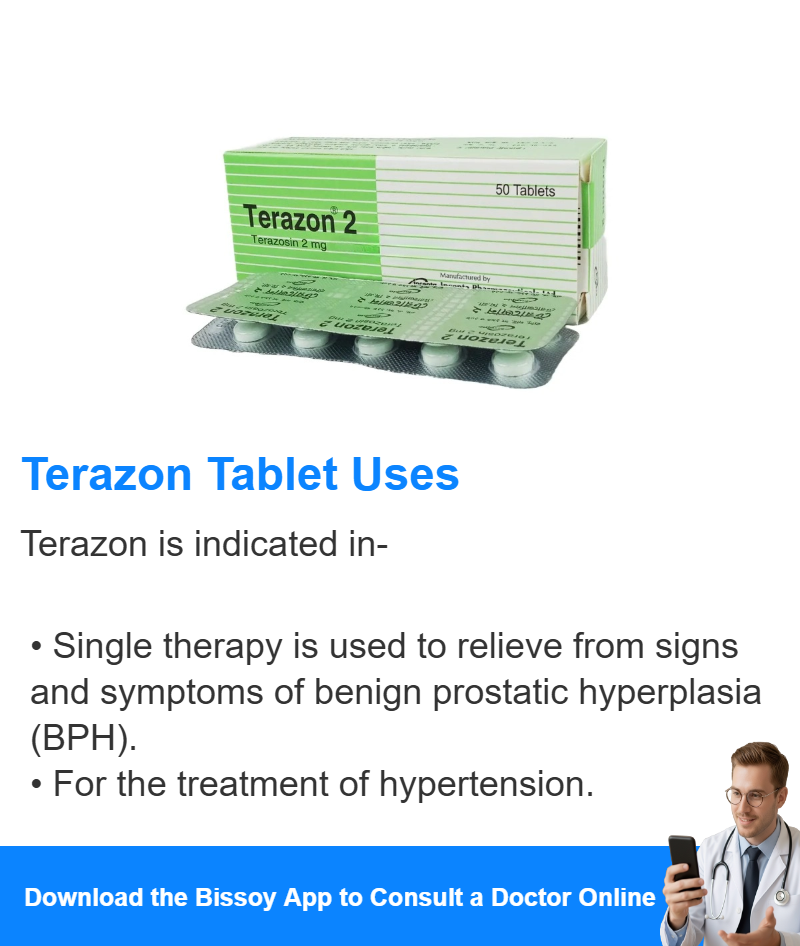
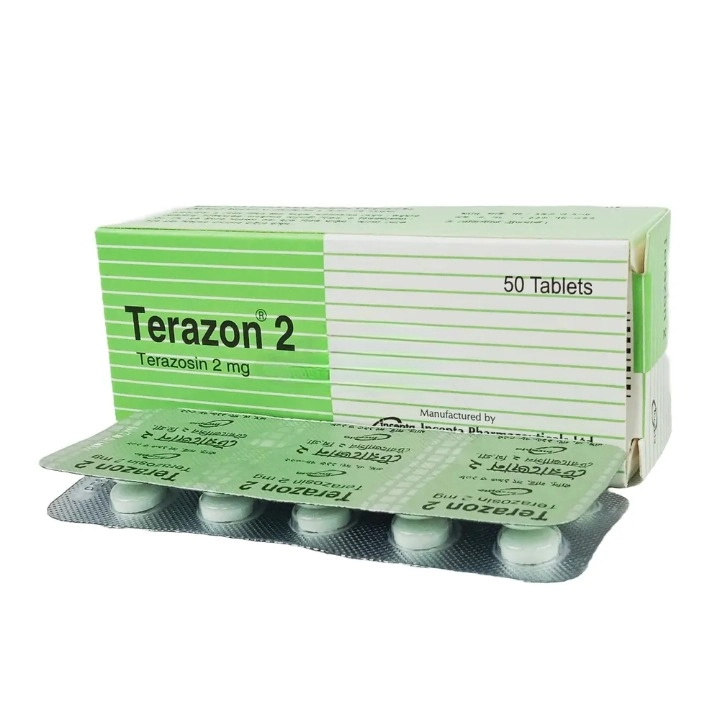
Terazosin is a quinazoline derivative alpha-1-selective adrenergic blocking agent indicated for benign prostatic hyperplasia and hypertension. Terazosin blocks adrenaline's action on alpha-1 adrenergic receptors, causing relaxation of smooth muscle in blood vessels and the prostate.
Uses
Terazosin is an alpha-1 adrenergic antagonist used in the treatment of symptomatic benign prostatic hyperplasia and management of hypertension.
Terazosin is indicated for use in treating symptomatic benign prostatic hyperplasia and hypertension.
Associated Conditions
Pharmacodynamics
Terazosin is a quinazoline derivative alpha-1-selective adrenergic blocker.
Mechanism of Action
Terazosin is selective for alpha-1-adrenoceptors but not their individual subtypes. Inhibition of these alpha-1-adrenoceptors results in relaxation of smooth muscle in blood vessels and the prostate, lowering blood pressure and improving urinary flow. Smooth muscle cells accounts for roughly 40% of the volume of the prostate and so their relaxation reduces pressure on the urethra.
It has also been shown that catecholamines induce factors responsible for mitogenesis and alpha-1-adrenergic receptor blockers inhibit this effect.
A final long term mechanism of terazosin and other alpha-1-adrenergic receptor blockers is the induction of apoptosis of prostate cells. Treatment with terazosin enhances the expression of transforming growth factor beta-1 (TGF-beta1), which upregulates p27kip1, and the caspase cascade.
Absorption
Approximately 90%.
Volume of Distribution
25L to 30L.
Protein Binding
90-94%.
Route of Elimination
Approximately 10% of the oral dose is excreted unchanged in the urine and approximately 20% is excreted in the feces. 40% of the total dose is eliminated in urine and 60% of the total dose is eliminated in the feces.
Half Life
Terazosin has a mean half life 12 hours though this can be as high as 14 hours in patients over 70 years and as low as 11.4 hours in patients 20 to 39 years old.
Clearance
Plasma clearance is 80mL/min and renal clearance is 10mL/min.
Toxicity
In the event of an overdose, patients may experience hypotension. Blood pressure and heart rate should be controlled by having the patient lie down or by treating with volume expanders or if necessary vasopressors. Patients should be monitored for renal function. Because terazosin is highly protein bound, dialysis is unlikely to provide benefit to overdosing patients.
The oral LD50 in mice is 5500mg/kg.
Food Interactions
- Take with or without food. A meal does not significantly affect the extent of absorption but delays Tmax by 40 minutes.
Dosage
- Initial dose: 1 mg at bedtime is starting dose of all patients and this dose should not be exceeded.
- Subsequent dose: The dose slowly increases to achieve the desired response. The usual recommended dose range is 5-10 mg administered once a day.
- Initial dose: 1 mg at bedtime is starting dose of all patients and this dose should not be exceeded.
- Subsequent dose: The dose slowly increases to achieve the desired response. The usual recommended dose range is 2-10 mg administered once a day.