Introduction
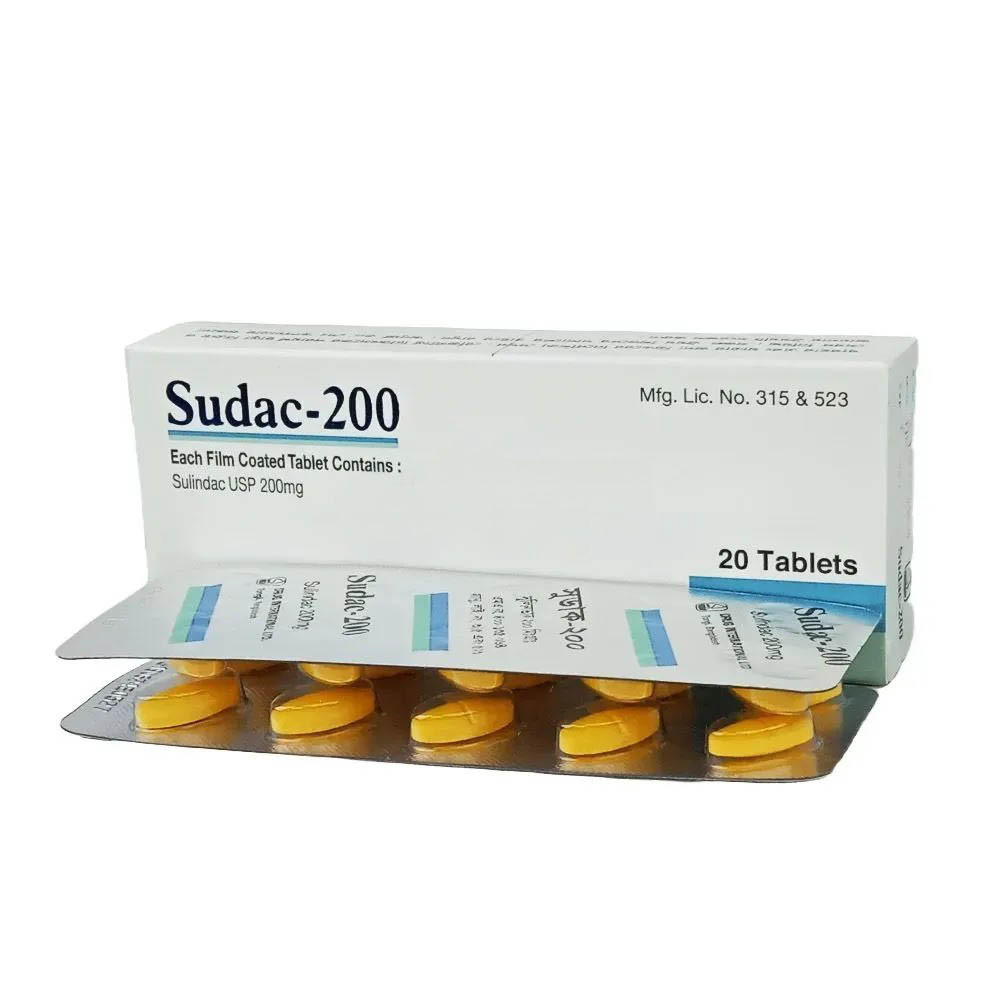
Sudac Tablet 200 mg is an arylalkanoic acid nonsteroidal anti-inflammatory drug (NSAID) used to treat acute and chronic inflammatory conditions. It is a prodrug that is converted in the liver to an active sulfide metabolite, which inhibits cyclooxygenase (COX-1 and COX-2) enzymes, reducing prostaglandin synthesis and thereby relieving pain and inflammation. Due to enterohepatic circulation of its active metabolite, sulindac may be associated with fewer gastrointestinal side effects than some other traditional NSAIDs, although its exact mechanism of action is not fully understood.
Uses
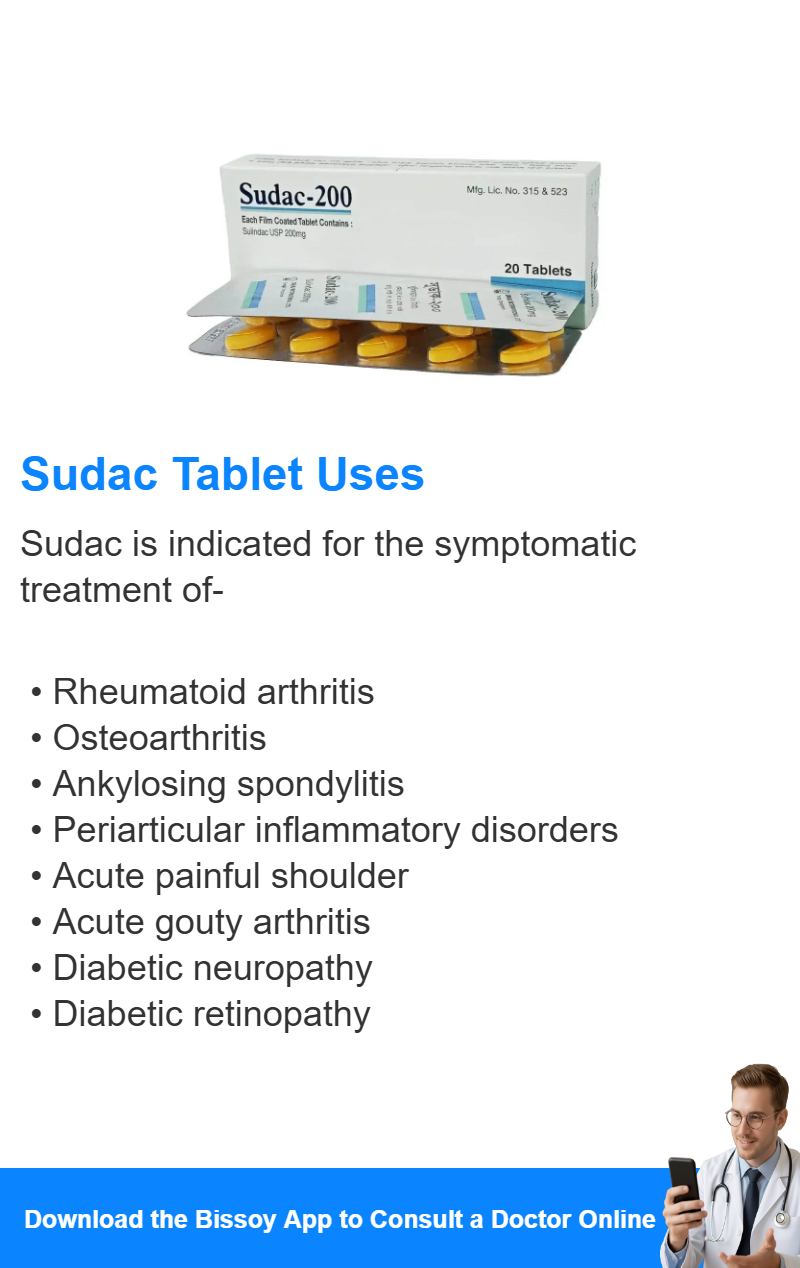
Sudac Tablet 200 mg is an NSAID used to treat osteoarthritis, rheumatoid arthritis, ankylosing spondylitis, acute subacromial bursitis or supraspinatus tendinitis, and acute gouty arthritis.
For acute or long-term use in the relief of signs and symptoms of osteoarthritis, rheumatoid arthritis, ankylosing spondylitis, acute painful shoulder (acute subacromial bursitis/supraspinatus tendinitis), and acute gouty arthritis.
Associated Conditions
Pharmacodynamics
Sudac Tablet 200 mg is a non-steroidal anti-inflammatory indene derivative, also possessing analgesic and antipyretic activities.
Mechanism of Action
Sudac Tablet 200 mg's exact mechanism of action is unknown. Its antiinflammatory effects are believed to be due to inhibition of both COX-1 and COX-2 which leads to the inhibition of prostaglandin synthesis. Antipyretic effects may be due to action on the hypothalamus, resulting in an increased peripheral blood flow, vasodilation, and subsequent heat dissipation.
Absorption
Approximately 90% absorbed in humans following oral administration.
Protein Binding
At 1 mcg/ml concentrations, approximately 93% sulindac and 98% of its sulfide metabolite are bound to human serum albumin.
Route of Elimination
Sudac Tablet 200 mg is excreted in rat milk; concentrations in milk were 10 to 20% of those levels in plasma. It is not known if sulindac is excreted in human milk. Approximately 50% of the administered dose of sulindac is excreted in the urine with the conjugated sulfone metabolite accounting for the major portion. Hepatic metabolism is an important elimination pathway.
Half Life
The mean half-life of sulindac is 7.8 hours while the mean half-life of the sulfide metabolite is 16.4 hours.
Clearance
- Renal cl=68.12 +/- 27.56 mL/min [NORMAL (19-41 yrs)]
Toxicity
Acute oral toxicity (LD50) in rats is 264 mg/kg. Cases of overdose have been reported and rarely, deaths have occurred. The following signs and symptoms may be observed following overdose: stupor, coma, diminished urine output and hypotension.
Food Interactions
- Avoid alcohol. Ingesting alcohol may increase the risk of gastrointestinal bleeding.
- Take with food.