Introduction
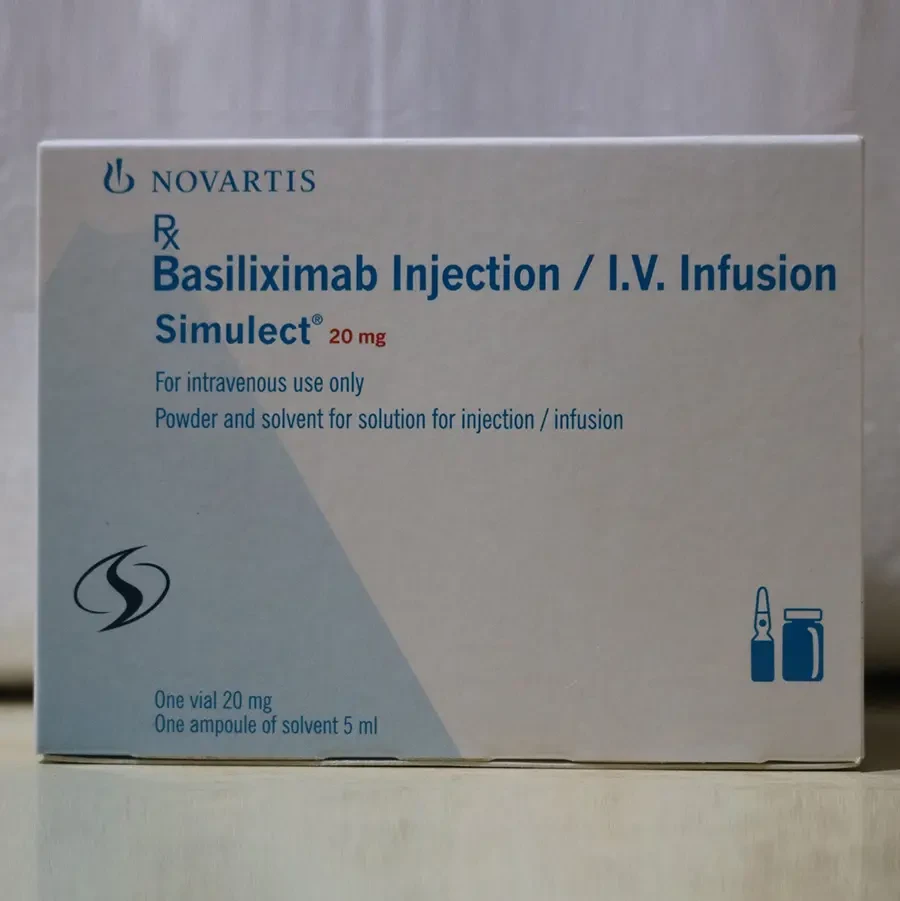
Simulect IV Infusion 20 mg/vial is a monoclonal antibody used primarily in the prevention of organ transplant rejection. It is a chimeric antibody that targets the interleukin-2 receptor alpha chain (CD25), which is expressed on activated T lymphocytes. By inhibiting this receptor, Simulect IV Infusion 20 mg/vial helps to prevent the proliferation of T cells that can lead to transplant rejection.
Uses
Simulect IV Infusion 20 mg/vial is used in clinical settings for:
- Prevention of acute rejection in kidney transplantation, particularly in patients receiving a renal transplant.
- It may also be used in conjunction with other immunosuppressive therapies to enhance transplant outcomes.
| Brand Name | Simulect |
|---|---|
| Type | IV Infusion |
| Weight | 20 mg/vial |
| Generic | Basiliximab |
| Manufacturer | Novartis (Bangladesh) Ltd. |
| Available in | English বাংলা |
Mechanism of Action
Simulect IV Infusion 20 mg/vial works by specifically binding to the alpha chain of the interleukin-2 receptor (CD25) on activated T lymphocytes. This binding inhibits the receptor’s activation and the subsequent T cell proliferation. By preventing T cell activation, Simulect IV Infusion 20 mg/vial helps to reduce the immune response against the transplanted organ.
How Long Does It Take to Work?
The onset of action for Simulect IV Infusion 20 mg/vial is typically within hours after administration. Its effects on T cell proliferation are immediate, but the full clinical benefits in preventing transplant rejection are usually observed within a few weeks.
Absorption
Simulect IV Infusion 20 mg/vial is administered intravenously. As a monoclonal antibody, it is directly delivered into the bloodstream, bypassing the gastrointestinal tract and absorption issues associated with oral medications.
Route of Elimination
Simulect IV Infusion 20 mg/vial is primarily eliminated via the reticuloendothelial system, particularly through the liver and spleen. It is broken down into smaller peptides and amino acids which are then further metabolized and excreted.
Dosage
Adults: In adult patients, the recommended regimen is two doses of 20 mg each. The first 20 mg dose should be given within 2 hours prior to transplantation surgery. The recommended second 20 mg dose should be given 4 days after transplantation. The second dose should be withheld if complications such as severe hypersensitivity reactions to Basiliximab or graft loss occur.Pediatric: In pediatric patients weighing less than 35 kg, the recommended regimen is two doses of 10 mg each. In pediatric patients weighing 35 kg or more, the recommended regimen is two doses of 20 mg each. The first dose should be given within 2 hours prior to transplantation surgery. The recommended second dose should be given 4 days after transplantation. The second dose should be withheld if complications such as severe hypersensitivity reactions to Basiliximab or graft loss occur.
The standard dosing regimen for Simulect IV Infusion 20 mg/vial involves:
- A 20 mg dose administered intravenously before transplantation.
- A second 20 mg dose given 4 days after the first dose.
Administration
Simulect IV Infusion 20 mg/vial is administered intravenously. The infusion is typically given over a period of 20-30 minutes. The first dose is given just before transplantation, and the second dose is administered 4 days later.
Side Effects
Common side effects may include:
- Fever
- Chills
- Headache
- Nausea
- Allergic reactions
- Infections
- Infusion-related reactions
Toxicity
High doses or prolonged use of Simulect IV Infusion 20 mg/vial could potentially lead to toxicity. Symptoms might include severe allergic reactions or signs of an increased risk of infection. Monitoring and dose adjustments are necessary to manage potential toxic effects.
Precautions
Use Simulect IV Infusion 20 mg/vial with caution in patients with a history of hypersensitivity to monoclonal antibodies or those with active infections. Regular monitoring for signs of infection or allergic reactions is recommended.
Interaction
Interactions with other medications are generally minimal. However, co-administration with other immunosuppressive agents should be monitored to avoid excessive immunosuppression and increased risk of infection.
Disease Interaction
Simulect IV Infusion 20 mg/vial should be used cautiously in patients with pre-existing conditions that may increase the risk of infection or hypersensitivity reactions. It is important to consider the overall health status and potential disease interactions before initiating therapy.
Drug Interaction
Simulect IV Infusion 20 mg/vial may interact with other immunosuppressive drugs. Careful management and monitoring are required to avoid potential additive effects on the immune system, which can increase the risk of infections or other complications.
Food Interactions
There are no known food interactions with Simulect IV Infusion 20 mg/vial. It is administered intravenously, so dietary considerations are not typically a concern.
Pregnancy Use
The safety of Simulect IV Infusion 20 mg/vial during pregnancy has not been well established. It should be used during pregnancy only if the potential benefit justifies the potential risk to the fetus. Consult with a healthcare provider for individualized advice.
Lactation Use
It is not known whether Simulect IV Infusion 20 mg/vial is excreted in breast milk. Caution should be exercised when administering Simulect IV Infusion 20 mg/vial to breastfeeding mothers, and a risk-benefit assessment should be made.
Acute Overdose
In the event of an acute overdose, supportive care should be provided. There is no specific antidote for Simulect IV Infusion 20 mg/vial overdose. Monitoring and supportive measures should be implemented as necessary.
Contraindication
Simulect IV Infusion 20 mg/vial is contraindicated in patients with known hypersensitivity to the drug or any of its components. It should also be avoided in patients with severe infections until the infection is adequately treated.
Use Direction
Follow the prescribed dosing regimen and administration protocol. Simulect IV Infusion 20 mg/vial should be administered by trained healthcare professionals to ensure proper infusion and monitoring.
Storage Conditions
Simulect IV Infusion 20 mg/vial should be stored in a refrigerator at 2°C to 8°C (36°F to 46°F). It should not be frozen or shaken. Once diluted, the solution should be used immediately or stored at 2°C to 8°C for up to 24 hours.
Volume of Distribution
The volume of distribution for Simulect IV Infusion 20 mg/vial is approximately 8 liters, indicating its distribution throughout the extracellular fluid.
Half Life
The elimination half-life of Simulect IV Infusion 20 mg/vial is approximately 7 to 10 days. This extended half-life allows for its efficacy in preventing transplant rejection over an extended period.
Clearance
Simulect IV Infusion 20 mg/vial is primarily cleared from the body through the reticuloendothelial system, including the liver and spleen. Its clearance rate is consistent with other monoclonal antibodies, with a gradual reduction over time.
See in details version Simulect IV Infusion 20 mg/vial also Simulect IV Infusion 20 mg/vial in bangla
Social card

Some Frequently Asked Questions About Simulect IV Infusion 20 mg/vial



Brig. Gen. Prof. Dr. Md. Azizul Islam
Mental Diseases, Drug Addiction & Psychiatry Specialist
