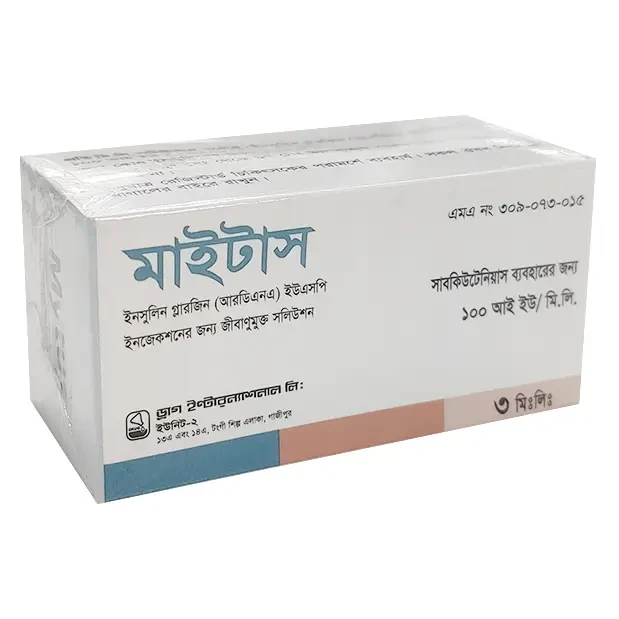
Semglee SC Injection 100 IU/ml
Insulin glargine is a long-acting insulin analogue used to help treat adult and pediatric patients with diabetes. This medication is designed to provide a more constant level of insulin in the body compared to other forms of insulin. It is used to help regulate blood sugar levels and improve glycemic control. Insulin glargine helps to reduce the risk of complications such as heart disease, kidney failure, and blindness associated with diabetes.
Uses
Insulin glargine is primarily used in people with type 1 diabetes or type 2 diabetes who do not achieve adequate glycemic control with other forms of insulin. It is typically used in combination with faster-acting insulins for maximum glycemic control. It can also be used alone to treat diabetes.
| Brand Name | Semglee |
|---|---|
| Type | SC Injection |
| Weight | 100 IU/ml |
| Generic | Insulin Glargine |
| Manufacturer | Beximco Pharmaceuticals Ltd. |
| Available in | English বাংলা |
Mechanism of Action
Insulin glargine works by binding to and activating the insulin receptor. This triggers the body to take up glucose (sugar) from the blood and store it in the form of glycogen in the liver and muscle cells, which lowers the amount of glucose in the blood. Insulin glargine also helps to reduce production of glucose by the liver while increasing its use in other cells, which further helps reduce blood glucose levels.
How Long Does It Take to Work?
Insulin glargine typically begins working in 6-14 hours. It reaches peak effects around 24 hours, and its effects may last up to 36 hours.
Absorption
Insulin glargine is designed to be slowly absorbed, providing a more constant level of insulin in the body. It is typically absorbed over a period of 12-24 hours.
Route of Elimination
Insulin glargine is eliminated from the body through urine.
Dosage
Insulin Glargine exhibits a relatively constant glucose-lowering profile over 24 hours that permits once-daily dosing. Potency of insulin glargine is approximately the same as human insulin.Insulin Glargine is recommended for once daily subcutaneous administration & may be administered at any time during the day. However, once started should be administered at the same time every day. The dose of Insulin Glargine must be individualized based on clinical response. Blood glucose monitoring is essential in all patients with diabetes. In patients with type 1 diabetes, Insulin Glargine must be used in regimens with short-acting insulin. Insulin Glargine is not recommended for intravenous administration. Intravenous administration of the usual subcutaneous dose could result in severe hypoglycemia.
Initiation of Insulin Glargine therapy:
- The recommended starting dose of Insulin Glargine in patients with type 1 diabetes should be approximately one-third of the total daily insulin requirements. Short-acting, premeal insulin should be used to satisfy the remainder of the daily insulin requirements.
- The recommended starting dose of Insulin Glargine in patients with type 2 diabetes who are not currently treated with insulin is 10 units (or 0.2 Units/kg) once daily, which should subsequently be adjusted to the patient's needs.
- If transferring patients from once-daily NPH insulin to once-daily Insulin Glargine , the recommended initial Insulin Glargine dose is the same as the dose of NPH that is being discontinued.
- If transferring patients from twice-daily NPH insulin to once-daily Insulin Glargine , the recommended initial Insulin Glargine dose is 80% of the total NPH dose that is being discontinued.
The usual starting dose of insulin glargine is 0.2 unit/kg body weight per day. The dose is increased by adding small increments of 0.1-0.2 units/kg per day until the desired glycemic control is achieved. The dose can further be adjusted as needed according to blood glucose levels.
Administration
Insulin glargine is typically taken once per day by injection. It should be injected in the same spot every day to ensure consistent absorption.
Side Effect
Common side effects of insulin glargine include weight gain, injection site reactions, nausea, vomiting, diarrhea, headache, hypoglycemia (low blood sugar), fatigue, muscle weakness and joint pain.
Toxicity
Insulin glargine is generally well-tolerated with few serious side effects. Overdose is possible but very rare, and its symptoms include hypoglycemia, coma, and cardiovascular collapse. Overdose of insulin glargine should be treated with a rapid-acting glucose source, such as intravenous dextrose.
Precautions
Before taking insulin glargine, patients should tell their doctor about any other medications they may be taking and if they have any other medical conditions. Patients should also inform their doctor of recent changes in diet or activity levels. It is important to check blood sugar levels regularly when taking this medication.
Interaction
Insulin glargine may interact with other medications, such as certain drugs used to treat diabetes, thyroid drugs, diuretics, antibiotics, antifungal medications, and oral contraceptives. It can also interact with certain herbs and supplements, including garlic, ginseng, and omega-3 fatty acids.
Disease Interaction
Insulin glargine can interact with certain diseases, such as kidney disease, liver disease, heart failure, and atherosclerosis. It may also interact with certain conditions, such as dehydration, fever, and infection.
Drug Interaction
Patients should inform their doctor of any other medications they are taking before taking insulin glargine, as certain medications may increase or decrease its effects. These medications include certain drugs used to treat diabetes, diuretics, antibiotics, antifungal medications, and oral contraceptives.
Food Interactions
Food can interact with insulin glargine, mainly by increasing the risk of hypoglycemia (low blood sugar). Patients should discuss their diet with their doctor before taking this medication.
Pregnancy Use
Insulin glargine is classified as a pregnancy category C medication, meaning it may be harmful to the fetus and should only be used during pregnancy if the benefits to the mother outweigh the potential risks to the baby. It is advised to avoid breastfeeding while taking insulin glargine.
Lactation Use
It is not known if insulin glargine passes into breast milk. It is recommended that mothers do not breastfeed while taking this medication.
Acute Overdose
An acute overdose of insulin glargine can be dangerous and should be treated as a medical emergency. Symptoms of an overdose can include hypoglycemia, coma, and cardiovascular collapse.
Contraindications
Insulin glargine should not be used in patients with hypersensitivity to insulin glargine or any of its components. It should also not be used in patients who have a history of diabetic ketoacidosis or other conditions associated with acidosis.
Use Direction
It is important to follow the directions of a healthcare provider when taking insulin glargine. Take the prescribed dose as directed and discuss any adjustments or changes with a healthcare provider.
Storage Condition
Insulin glargine should be stored at room temperature and must NOT be refrigerated or frozen. Keep this medication away from direct light and heat, and do NOT shake the vial or use a vial that has been frozen.
Volume of Distribution
The volume of distribution of insulin glargine is approximately 0.12 L/kg.
Half-Life
The half-life of insulin glargine is up to 24 hours.
Clearance
The clearance of insulin glargine is approximately 0.2 L/h/kg.
See in details version Semglee SC Injection 100 IU/ml also Semglee SC Injection 100 IU/ml in bangla
Social card


Some Frequently Asked Questions About Semglee SC Injection 100 IU/ml


Dr. Mst. Morjina Khatun Mukti
Gynecology, Obstetrics Specialist & SurgeonLaparoscopic & Hysteroscopic Surgeon