Introduction
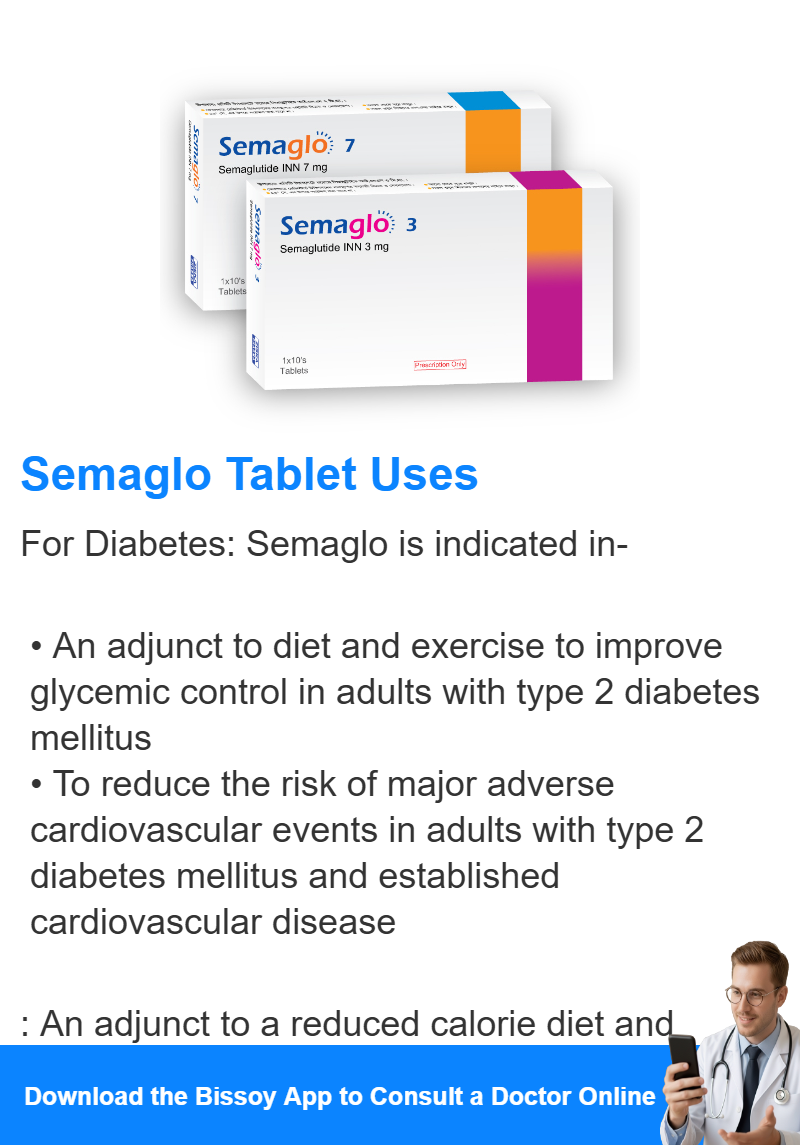
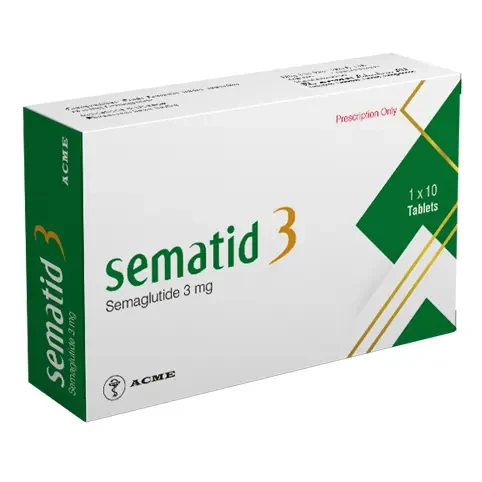
Semaglo Tablet 3 mg is a glucagon-like peptide 1 (GLP-1) analog used to manage type 2 diabetes along with lifestyle changes, such as dietary restrictions and increased physical activity. Other members of this drug class include Exenatide and Liraglutide. The tablet formulation was approved for oral administration in September 2019. Semaglo Tablet 3 mg works by binding to and activating the GLP-1 receptor, thereby stimulating insulin secretion and reducing blood glucose.
The subcutaneous injection is administered once weekly and the tablet is administered once a day. Semaglo Tablet 3 mg offers a competitive advantage over other drugs used to manage diabetes, which may require several daily doses. Clinical trials have determined that this drug reduces glycosylated hemoglobin (HbA1c) levels and reduces body weight, proving to be effective for patients with type 2 diabetes.
Uses
Semaglo Tablet 3 mg is a glucagon-like peptide 1 receptor agonist used to improve glycemic control in type 2 diabetes mellitus.
Semaglo Tablet 3 mg is indicated to improve glycemic control in adults diagnosed with type 2 diabetes mellitus, and is used as an adjunct to diet and exercise. However, semaglutide is not a suitable first-line drug for diabetes that has not been controlled by diet and exercise. In addition, it has not been studied in patients with pancreatitis. Semaglo Tablet 3 mg is not intended for use in patients with type 1 diabetes or to treat diabetic ketoacidosis.
Semaglo Tablet 3 mg is indicated for chronic weight management in adults with obesity or overweight with at least one weight-related condition (such as high blood pressure, type 2 diabetes, or high cholesterol), for use in addition to a reduced-calorie diet and increased physical activity.
Associated Conditions
Pharmacodynamics
Semaglo Tablet 3 mg reduces HbA1c, systolic blood pressure, and body weight. After 12 weeks of treatment, semaglutide decreased fasting and postprandial glucose by increasing insulin production and decreasing glucagon secretion (which is normally associated with increases in blood sugar). Semaglo Tablet 3 mg also lowers fasting triglycerides and VLDL cholesterol, exerting beneficial effects on cardiovascular health.
Special precautions
Semaglo Tablet 3 mg has been shown to cause medullary thyroid cell carcinoma in rodents. The relevance to humans is unknown, but its advisable not to administer this drug in those with a personal or family history of medullary thyroid carcinoma. Semaglo Tablet 3 mg also poses a risk of pancreatitis and dehydration. Patients must be adequately hydrated while on semaglutide and are advised to seek medical attention immediately in cases of abdominal pain radiating to the back. Because this drug delays gastric emptying, it is important to monitor for the efficacy or adverse effects of others drugs that are administered orally.
Mechanism of Action
Mechanism of glycemic control
GLP-1 is a physiological hormone that promotes glycemic control via several different mechanisms, including insulin secretion, slowing gastric emptying, and reducing postprandial glucagon secretion. The homeostasis of glucose is dependent on hormones such as insulin and amylin, which are secreted by the beta cells of the pancreas. Semaglo Tablet 3 mg is 94% similar to human GLP-1. Analogs of this hormone such as semaglutide stimulate the synthesis of insulin by stimulating pancreatic islet cells and reducing glucagon secretion. They directly bind with selectivity to the GLP-1 receptor, causing various beneficial downstream effects that reduce blood glucose in a glucose-dependent fashion.
Mechanism of cardiovascular benefit and weight loss
In hypercholesterolemia, semaglutide is believed to reduce the progression of atherosclerosis via decreased gut permeability and decreased inflammation. Weight loss is believed to occur via the reduction of appetite and food cravings after semaglutide administration.
Absorption
The Cmax of semaglutide was 10.9 nmol/L, with AUC of 3123.4 nmol h/L and a Tmax of 56 h in one clinical trial, achieved within 1-3 days. The absolute bioavailability is 89%. Steady-state concentration of the oral tablet is achieved in 4-5 weeks. Average steady state concentrations of semaglutide are the mean steady state concentrations after dosing at 0.5mg to 1mg range from 16 nmol/L to 30 nmol/L.
Volume of Distribution
The volume of distribution of semaglutide is 8L to 9.4L. It crosses the placenta in rats.
Protein Binding
Semaglo Tablet 3 mg binds with high affinity to plasma albumin, promoting high levels of drug stability. It is more than 99% bound to albumin.
Route of Elimination
This drug is mainly cleared by the kidneys, and is found excreted in both the urine and feces. The main elimination route is the urine by corresponding to 53% of an ingested radiolabeled dose, with 18.6% found in the feces. A smaller amount of 3.2% was found to be exhaled. Hepatic impairment does not appear to affect the clearance of this drug and dose adjustments are not required in patients with decreased liver function.
Half Life
One of the major properties of semaglutide is its long half-life of 168 h. The long half-life is attributed to its albumin binding. This lowers the renal clearance and protects semaglutide from metabolic breakdown.
Clearance
The clearance rate of semaglutide is 0.039 L/h according to one clinical study. On the FDA label, semaglutide clearance is reported to be about 0.05 L/h in patients with type 2 diabetes mellitus.
Toxicity
Overdoses of up to 4 mg in one ingestion have been reported, with nausea being the most commonly reported symptom. All patients in clinical trials who experienced an overdose recovered fully. Appropriate supportive care should be given according and dictated by the patient's condition. Prolonged observation and treatment may be required, as the half-life of this drug is about one week. There is no antidote to an overdose with semaglutide.
Food Interactions
- Take on an empty stomach. For oral use of semaglutide, take 30 minutes before the first meal of the day.
- Take with plain water. For oral use of semaglutide, do not exceed 4 ounces of water (1/2 cup).
Dosage
Semaglo Tablet 3 mg Tablet: Take Semaglo Tablet 3 mg at least 30 minutes before the first food, beverage, or other oral medications of the day with no more than 4 ounces (118 ml) of plain water only.
- Starter Dose: Start Semaglo Tablet 3 mg with 3 mg once daily for 30 days
- Maintenance Dose: After 30 days on the 3 mg dose, increase the dose to 7 mg once daily
- For Additional Glycemic Control: If additional glycemic control is needed after at least 30 days on the 7 mg dose, the dose can be increased to 14 mg once daily
Switching patients between Semaglo Tablet 3 mg injection and Semaglo Tablet 3 mg tablet-
- Patients treated with once weekly Semaglo Tablet 3 mg injection 0.5 mg subcutaneous injection can be transitioned to Semaglo Tablet 3 mg 7 mg or 14 mg tablet. Patients can start Semaglo Tablet 3 mg tablet up to 7 days after their last injection of Semaglo Tablet 3 mg injection. There is no equivalent dose of Semaglo Tablet 3 mg tablet for Semaglo Tablet 3 mg injection 1 mg
- Patients treated with Semaglo Tablet 3 mg 14 mg tablet daily can be transitioned to Semaglo Tablet 3 mg subcutaneous injection 0.5 mg once weekly. Patients can start Semaglo Tablet 3 mg injection the day after their last dose of Semaglo Tablet 3 mg tablet.
For Obesity: The starting dose is 0.25 mg Semaglo Tablet 3 mg once weekly for 4 weeks subcutaneously. If patients do not tolerate a dose during dose escalation, consider delaying dose escalation for 4 weeks. If patients do not tolerate the maintenance dose 2.4 mg, the dose can be temporarily decreased to 1.7 mg once weekly for maximum 4 weeks. After 4 weeks increase the dose to 2.4 mg. Weekly doses higher than 2.4 mg is not recommended. Semaglo Tablet 3 mg is to be administered once weekly at any time of the day with or without meals. Semaglo Tablet 3 mg is to be injected subcutaneously in the abdomen, thigh or in upper arm. The injection site can be changed without dose adjustment. Semaglo Tablet 3 mg should not be administered intravenously or intramuscularly. The day of weekly administration can be changed if necessary as long as the time between two doses is at least 2 days (>48 hours). After selecting a new dosing day, once weekly dosing should be continued.