Introduction
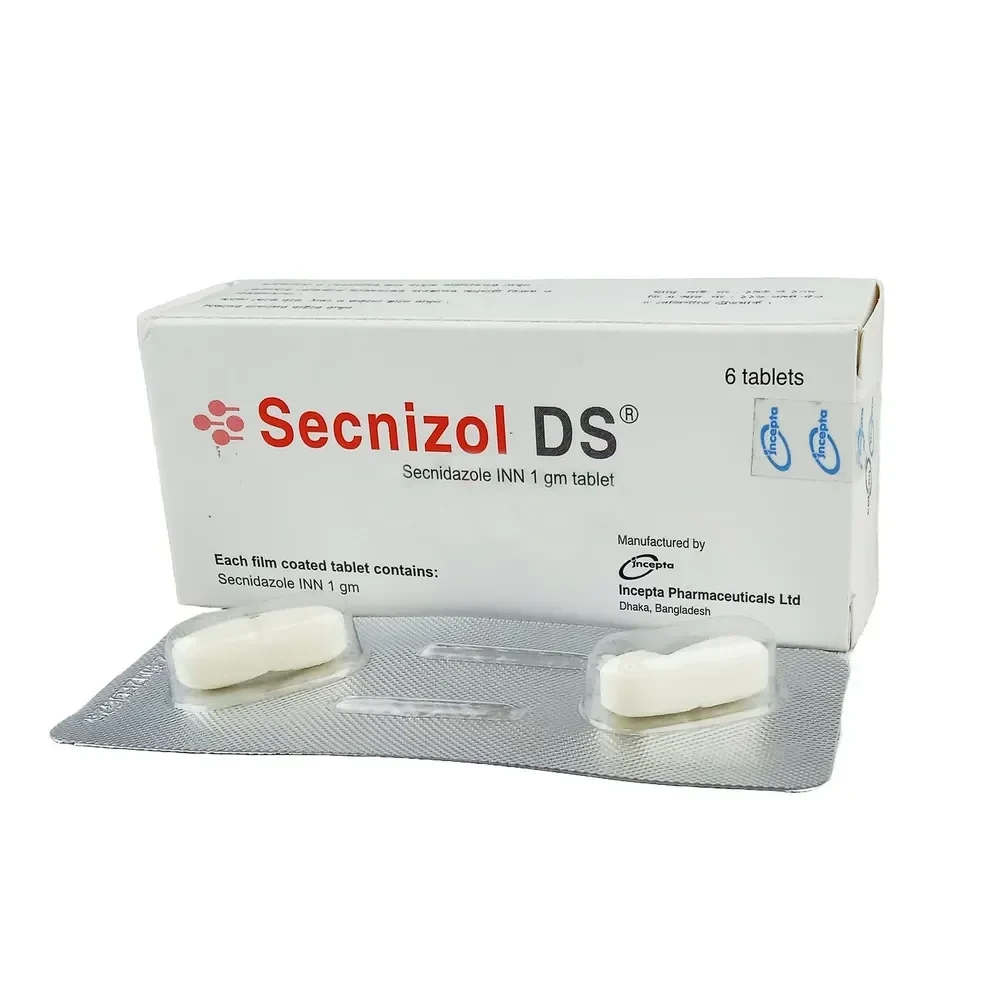
Secnizol DS Tablet 1000 mg is a second-generation 5-nitroimidazole antimicrobial that is structurally related to other 5-nitroimidazoles including Metronidazole and Tinidazole, but displays improved oral absorption and longer terminal elimination half-life than antimicrobial agents in this class . Secnizol DS Tablet 1000 mg is selective against many anaerobic Gram-positive and Gram-negative bacteria and protozoa. It is a single-dose oral treatment for bacterial vaginosis, which is a common vaginal infection in women aged 15 to 44 years. The antimicrobial therapy is only intended to treat or prevent infections that are proven or strongly suspected to be caused by susceptible bacteria .
Uses
Secnizol DS Tablet 1000 mg is a nitroimidazole antibiotic used to treat bacterial vaginosis.
Indicated for the treatment of bacterial vaginosis in adult women .
Associated Conditions
Pharmacodynamics
Secnizol DS Tablet 1000 mg is a nitroimidazole antimicrobial drug that displays selectivity against many anaerobic Gram-positive and Gram-negative bacteria and protozoa . In vitro studies demonstrates the effectiveness of the drug against Bacteroides fragilis, Trichomonas vaginalis, Entamoeba histolytica and Giardia lamblia . There is no significant bacterial or protozoal resistance reported from secnidazole treatment .
Mechanism of Action
Secnizol DS Tablet 1000 mg enters the bacterial cell as a prodrug without an antimicrobial activity. The drug is converted to an active form via reduction of nitro groups to radical anions by bacterial enzymes. The radical anions are thought to interfere with bacterial DNA synthesis of susceptible isolates .
Absorption
Secnizol DS Tablet 1000 mg is rapidly and completely absorbed after oral administration . Following a single oral dose of 2 g in healthy adult female subjects, the mean (SD) secnidazole peak plasma concentration (Cmax) of 45.4 (7.64) mcg/mL and mean (SD) systemic exposure (AUC0-inf) of 1331.6 (230.16) mcg x hr/mL was reached. Median (range) time to peak concentration (Tmax) was 4.0 (3.0-4.0) hours .
Volume of Distribution
The apparent volume of distribution of secnidazole is approximately 42-49 L .
Protein Binding
The plasma protein binding of secnidazole is < 5-15% .
Route of Elimination
The predominant route of elimination is renal elimination. Following a single oral dose of 2g secnidazole, approximately 15% of the drug is excreted as unchanged compoung in the urine .
Half Life
The plasma elimination half-life for secnidazole is approximately 17 hours .
Clearance
The total body clearance of secnidazole is approximately 25 mL/min. The renal clearance of secnidazole is approximately 3.9 mL/min .
Toxicity
Oral LD50 in mouse, rabbit and rat is 300 mg/kg, 3200 mg/kg and 980 mg/kg, in a respective order . Secnizol DS Tablet 1000 mg was positive in the Bacterial Reverse Mutation Assay, but was negative for the rat micronucleus test and mouse lymphoma test. No parental toxicity or signs of reproductive toxicity were observed in female rat fertility studies at doses of up to the maximum tolerated dose of 300 mg/kg/day .
Food Interactions
- Take with or without food. Sprinkle onto applesauce, yogurt, or pudding and ingest without crushing the granules.
Dosage
Acute Intestinal Amoebiasis:
- Adults: 2 gm single dose, taken preferably just before meal.
- Children: 30 mg/kg single dose, taken preferably just before meal.
- Adults: 2 gm once daily for only 3 days, taken preferably just before meal.
- Children: 30 mg/kg once daily for only 3 days, taken preferably just before meal.
- Adults: 1.50 gm/day in a single or divided doses, just before meal, for 5 days.
- Children: 30 mg/kg/day, in a single or divided dose, just before meal, for 5 days.
- Adults: 2 gm single dose, taken preferably just before meal.
- Children: 35-50 mg/kg single dose, taken preferably just before meal.
- Adults: 2 gm single dose, taken preferably just before meal. The partner should also receive the same treatment concomitantly.