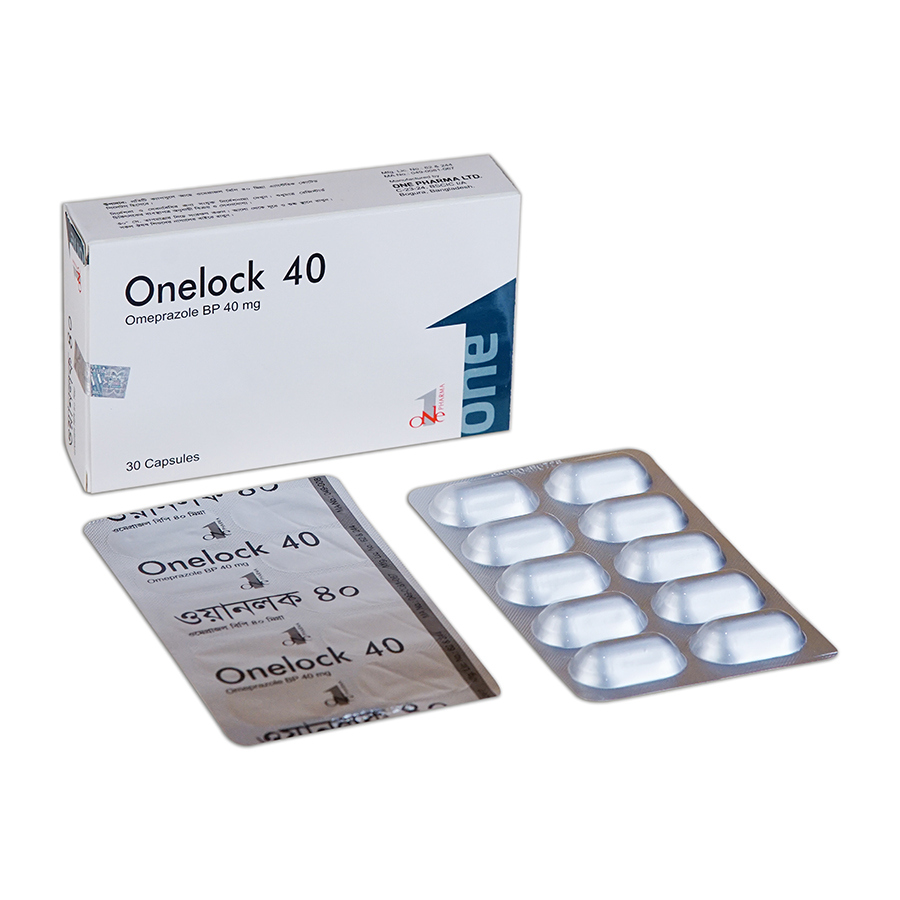
Introduction
Seclotil Capsule (Enteric Coated) 40 mg is a proton-pump inhibitor, used to treat gastric acid-related disorders. These disorders may include gastroesophageal reflux disease (GERD), peptic ulcer disease, and other diseases characterized by the oversecretion of gastric acid. This drug was the first clinical useful drug in its class, and its approval was followed by the formulation of many other proton pump inhibitor drugs . Seclotil Capsule (Enteric Coated) 40 mg is generally effective and well-tolerated, promoting its popular use in children and adults .
Uses
Seclotil Capsule (Enteric Coated) 40 mg is a proton pump inhibitor used to treat GERD associated conditions such as heartburn and gastric acid hypersecretion, and to promote healing of tissue damage and ulcers caused by gastric acid and H. pylori infection.
Seclotil Capsule (Enteric Coated) 40 mg, according to the FDA label is a proton pump inhibitor (PPI) used for the following purposes:
• Treatment of active duodenal ulcer in adults
• Eradication of Helicobacter pylori to reduce the risk of duodenal ulcer recurrence in adults
• Treatment of active benign gastric ulcer in adults
• Treatment of symptomatic gastroesophageal reflux disease (GERD) in patients 1 year of age and older
• Treatment of erosive esophagitis (EE) due to acid-mediated GERD in patients 1 month of age and older
• Maintenance of healing of EE due to acid-mediated GERD in patients 1 year of age and older
• Pathologic hypersecretory conditions in adults
Associated Conditions
Pharmacodynamics
Effects on gastric acid secretion
This drug decreases gastric acid secretion . After oral administration, the onset of the antisecretory effect of omeprazole is usually achieved within one hour, with the maximum effect occurring by 2 hours after administration. The inhibitory effect of omeprazole on acid secretion increases with repeated once-daily dosing, reaching a plateau after four days .
Effects on serum gastrin
In studies of 200 or more patients, serum gastrin levels increased during the first 1-2 weeks of daily administration of therapeutic doses of omeprazole. This occurred in a parallel fashion with the inhibition of acid secretion. No further increase in serum gastrin occurred with continued omeprazole administration. Increased gastrin causes enterochromaffin-like cell hyperplasia and increased serum Chromogranin A (CgA) levels. The increased CgA levels may lead to false positive results in diagnostic studies for neuroendocrine tumors .
Enterochromaffin-like (ECL) cell effects
Human gastric biopsy samples have been obtained from more than 3000 pediatric and adult patients treated with omeprazole in long-term clinical studies. The incidence of enterochromaffin-like cell hyperplasia in these studies increased with time; however, no case of ECL cell carcinoids, dysplasia, or neoplasia have been identified in these patients. These studies, however, are of insufficient in power and duration to draw conclusions on the possible influence of long-term administration of omeprazole in the development of any premalignant or malignant conditions .
Other effects
Systemic effects of omeprazole in the central nervous system, cardiovascular and respiratory systems have not been found to date. Seclotil Capsule (Enteric Coated) 40 mg, given in oral doses of 30 or 40 mg for 2-4 weeks, showed no effect on thyroid function, carbohydrate metabolism, or circulating levels of parathyroid hormone, cortisol, estradiol, testosterone, prolactin, cholecystokinin or secretin .
Mechanism of Action
Hydrochloric acid (HCl) secretion into the gastric lumen is a process regulated mainly by the H(+)/K(+)-ATPase of the proton pump , expressed in high quantities by the parietal cells of the stomach. ATPase is an enzyme on the parietal cell membrane that facilitates hydrogen and potassium exchange through the cell, which normally results in the extrusion of potassium and formation of HCl (gastric acid) .
Seclotil Capsule (Enteric Coated) 40 mg is a member of a class of antisecretory compounds, the substituted benzimidazoles, that stop gastric acid secretion by selective inhibition of the H+/K+ ATPase enzyme system. Proton-pump inhibitors such as omeprazole bind covalently to cysteine residues via disulfide bridges on the alpha subunit of the H+/K+ ATPase pump, inhibiting gastric acid secretion for up to 36 hours . This antisecretory effect is dose-related and leads to the inhibition of both basal and stimulated acid secretion, regardless of the stimulus .
Mechanism of H. pylori eradication
Peptic ulcer disease (PUD) is frequently associated with Helicobacter pylori bacterial infection (NSAIDs) . The treatment of H. pylori infection may include the addition of omeprazole or other proton pump inhibitors as part of the treatment regimen , . H. pylori replicates most effectively at a neutral pH . Acid inhibition in H. pylori eradication therapy, including proton-pump inhibitors such as omeprazole, raises gastric pH, discouraging the growth of H.pylori . It is generally believed that proton pump inhibitors inhibit the urease enzyme, which increases the pathogenesis of H. pylori in gastric-acid related conditions .
Absorption
Seclotil Capsule (Enteric Coated) 40 mg delayed-release capsules contain an enteric-coated granule formulation of omeprazole (because omeprazole is acid-labile), so that absorption of omeprazole begins only after the granules exit the stomach .
Absorption of omeprazole occurs rapidly, with peak plasma concentrations of omeprazole achieved within 0.5-3.5 hours .
Absolute bioavailability (compared with intravenous administration) is approximately 30-40% at doses of 20-40 mg, largely due to pre-systemic metabolism. The bioavailability of omeprazole increases slightly upon repeated administration of omeprazole delayed-release capsules .
Volume of Distribution
Approximately 0.3 L/kg, corresponding to the volume of extracellular water .
Protein Binding
Approximately 95% bound to human plasma proteins .
Route of Elimination
After a single dose oral dose of a buffered solution of omeprazole, negligible (if any) amounts of unchanged drug were excreted in urine. Most of the dose (about 77%) was eliminated in urine as at least six different metabolites. Two metabolites were identified as hydroxyomeprazole and the corresponding carboxylic acid. The remainder of the dose was found in the feces. This suggests significant biliary excretion of omeprazole metabolites. Three metabolites have been identified in the plasma, the sulfide and sulfone derivatives of omeprazole, and hydroxyomeprazole. These metabolites possess minimal or no antisecretory activity .
Half Life
0.5-1 hour (healthy subjects, delayed-release capsule)
Approximately 3 hours (hepatic impairment)
Clearance
Healthy subject (delayed release capsule), total body clearance 500 - 600 mL/min
Geriatric plasma clearance: 250 mL/min
Hepatic impairment plasma clearance: 70 mL/min
Toxicity
Oral acute (LD50): 4000 mg/kg (mouse), 2210 mg/kg (rat) .
Overdose
Symptoms of overdose include confusion, drowsiness, blurred vision, tachycardia, nausea, diaphoresis, flushing, headache, and dry mouth.
Carcinogenesis and mutagenesis
In 24-month studies in rats, a dose-related significant increase in gastric carcinoid tumors and ECL cell hyperplasia was seen in male and female animals. Carcinoid tumors have also been found in rats treated with a fundectomy or long-term treatment with other proton pump inhibitors, or high doses of H2-receptor antagonists .
Seclotil Capsule (Enteric Coated) 40 mg showed positive clastogenic effects in an in vitro human lymphocyte chromosomal aberration study, in one of two in vivo mouse micronucleus tests, and in an in vivo bone marrow cell chromosomal aberration test. Seclotil Capsule (Enteric Coated) 40 mg tested negative in the in vitro Ames test, an in vitro mouse lymphoma cell forward mutation assay, and an in vivo rat liver DNA damage assay .
The use in breastfeeding
Limited data indicate that omeprazole may be present in human milk. There is currently no information on the effects of omeprazole on the breastfed infant or production of milk. The benefits of breastfeeding should be considered along with the level of need for omeprazole and any potential adverse effects on the breastfed infant from omeprazole .
Effects on fertility
Effects of omeprazole at oral doses up to 138 mg/kg/day in rats (about 34 times an oral human dose) was found to have no impact on fertility and reproductive performance .
Food Interactions
- Take before a meal. Allow 30-60 minutes before a meal.
Dosage
- Benign gastric and duodenal ulcer: 20 mg once daily for 4 weeks in duodenal ulceration, 8 weeks in gastric ulceration; in severe or recurrent cases, dose to be increased to 40 mg daily; maintenance dose for recurrent duodenal ulcer, 20 mg once daily; in prevention of relapse in duodenal ulcer, 10-20 mg daily.
- NSAID-associated duodenal or gastric ulcer: 20 mg once daily for 4 weeks, continued for further 4 weeks, if not fully healed. 20 mg once daily is used as prophylaxis in patients with a history of NSAID-associated duodenal or gastric ulcers.
- Gastro-esophageal reflux disease: 20 mg once daily for 4 weeks, continued for further 4-8 weeks, if not fully healed; 40 mg once daily has been given for 8 weeks in gastro-esophageal reflux disease, refractory to other treatment; maintenance dose is 20 mg once daily.
- Long-term management of acid reflux disease: 10-20 mg daily.
- Acid-related dyspepsia: 10-20 mg once daily for 2-4 weeks.
- Prophylaxis of acid aspiration: 40 mg on the preceding evening, then 40 mg 2-6 hours before surgery.
- Zollinger-Ellison syndrome: Initially 60 mg once daily; usual range 20-120 mg daily (If daily dose is more than 80 mg, 2 divided dose should be used).
- Helicobacter pylori eradication regimen in peptic ulcer disease: Seclotil Capsule (Enteric Coated) 40 mg is recommended at a dose of 20 mg twice daily in association with antimicrobial agents as detailed below: Amoxicillin 500 mg and Metronidazole 400 mg both three times a day for one week, or Clarithromycin 250 mg and Metronidazole 400 mg both twice a day for one week, or Amoxicillin 1 g and Clarithromycin 500 mg both twice a day for one week.
- Paeditaric use in severe ulcerating reflux esophagitis (Child>1 year): If body-weight 10-20 kg, 10-20 -mg once daily for 4-12 weeks; if body-weight over 20 kg, 20-40 mg once daily for 4-12 weeks.
IV Injection-
- Prophylaxis of acid aspiration: Seclotil Capsule (Enteric Coated) 40 mg 40 mg to be given slowly (over a period of 5 minutes) as an intravenous injection, one hour before surgery.
- Duodenal ulcer, gastric ulcer or reflux oesophagitis: In patients with duodenal ulcer, gastric ulcer or reflux oesophagitis where oral medication is inappropriate, Seclotil Capsule (Enteric Coated) 40 mg IV 40 mg once daily is recommended.
- Zollinger- Ellison syndrome (ZES): In patients with Zollinger-Ellison Syndrome the recommended initial dose of Seclotil Capsule (Enteric Coated) 40 mg given intravenously is 60 mg daily. Higher daily doses may be required and the dose should be adjusted individually. When doses exceed 60 mg daily, the dose should be divided & given twice daily.