Introduction
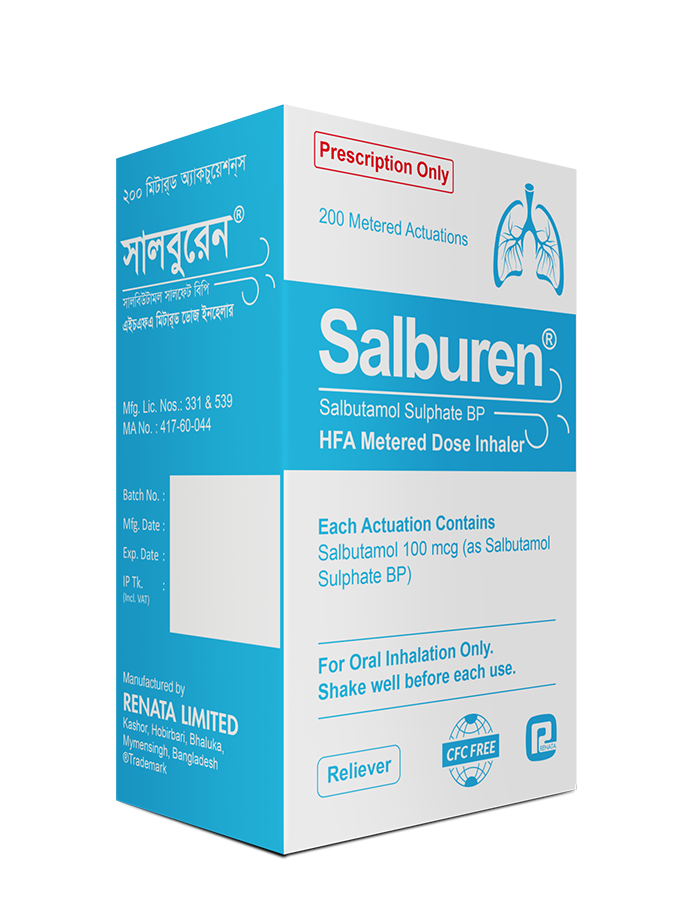
Salburen Inhaler 100 mcg/puff is a bronchodilator used to open up the airways in the lungs to make breathing easier. It is used to treat conditions such as bronchitis, asthma, and chronic obstructive pulmonary disease (COPD). It works by relaxing the muscles in the airways, allowing air to flow more easily. Salbutamol may also be used to prevent breathing problems before exercise.
Uses for Salburen Inhaler 100 mcg/puff
Salburen Inhaler 100 mcg/puff is used to treat or prevent a variety of conditions such as bronchial asthma, chronic obstructive pulmonary disease (COPD), bronchitis, and other breathing problems.
| Brand Name | Salburen |
|---|---|
| Type | Inhaler |
| Weight | 100 mcg/puff |
| Generic | Salbutamol (Inhaler) |
| Manufacturer | Renata Limited |
| Available in | English বাংলা |
Mechanism of Action
Salburen Inhaler 100 mcg/puff works by causing the muscles of the airways to relax, allowing air to flow more easily. This helps to reduce tightness in the chest and make breathing easier.
How Long Does It Take to Work?
Salburen Inhaler 100 mcg/puff begins to work immediately after it is inhaled. Most patients feel relief in 15-30 minutes though some may need to wait for up to an hour for full symptom relief.
Absorption
Salburen Inhaler 100 mcg/puff is rapidly absorbed after inhalation, with peak plasma concentrations achieved within 15-30 minutes.
Route of Elimination
Salburen Inhaler 100 mcg/puff is metabolized in the liver and excreted by the kidneys.
Dosage
Administer Salbutamol Inhaler by oral inhalation only. Shake Salbutamol Inhaler well before each spray.For relief of acute episodes of bronchospasm:
- Adults: 1 or 2 puffs as necessary. The maximum dose is up to 8 puffs in 24 hours.
- Children: Half the adult dose.
- Adults: 2 puffs 15 minutes prior to exercise or exposure to the allergen. The maximum dose is 2 puffs, up to 4 times a day.
- Children: Half the adult dose.
- Adults: Up to 200 mcg (2 puffs) four times daily.
- Children: Up to 200 mcg (2 puffs) four times daily.
The dose of salbutamol (Inhaler) for adults and children aged 4 years and above is two to four puffs as needed, up to a maximum of four times daily. The dose for children under 4 years should be determined by a doctor. It is important to rinse out your mouth and throat with water after each use.
Administration
Salburen Inhaler 100 mcg/puff is administered via inhalation. The inhaler should be shaken prior to use, then two to four puffs of the medication should be inhaled as necessary.
Side Effects
Common side effects of Salburen Inhaler 100 mcg/puff include throat irritation, cough, headache, dizziness, nausea, and palpitations. More serious side effects are rare, but may include chest tightness, muscle spasms, and low potassium levels.
Toxicity
Prolonged or excessive use of Salburen Inhaler 100 mcg/puff can lead to toxicity. Symptoms of toxicity include palpitations, tremor, and headache. Treatment for toxicity may involve reducing or stopping use of the medication and, in severe cases, hospitalization may be required.
Precautions
It is important to consult a doctor before using Salburen Inhaler 100 mcg/puff. It may interact with other medications and should not be used by pregnant or nursing women. People with diabetes may need to closely monitor their blood sugar levels while taking the medication.
Interactions
Salburen Inhaler 100 mcg/puff may interact with other medications, including beta-blockers, digitalis, diuretics, epinephrine, and MAO inhibitors. It is important to tell your doctor or pharmacist about all of the medications you are taking.
Disease Interactions
Salburen Inhaler 100 mcg/puff may not be appropriate for people with certain medical conditions such as severe heart disease, diabetes, thyrotoxicosis, or pheochromocytoma. Patients with a history of an allergic reaction to similar medications should also avoid using Salburen Inhaler 100 mcg/puff.
Drug Interactions
Salburen Inhaler 100 mcg/puff may interact with certain drugs. Certain medications such as beta-blockers, digitalis, diuretics, epinephrine, and MAO inhibitors may affect the way Salburen Inhaler 100 mcg/puff works. It is important to tell your doctor or pharmacist about all the medications you are taking.
Food Interactions
Food does not appear to interact with Salburen Inhaler 100 mcg/puff.
Pregnancy Use
It is not recommended for pregnant women to use Salburen Inhaler 100 mcg/puff due to the risk of potential harm to the fetus.
Lactation Use
It is not recommended for nursing mothers to use Salburen Inhaler 100 mcg/puff. If the medication must be used, nursing mothers should monitor their infant for any potential side effects.
Acute Overdose
Symptoms of an acute overdose of Salburen Inhaler 100 mcg/puff may include tachycardia, arrhythmia, hypertension, tremor, headache, nausea, and vomiting. Treatment may involve supportive care and monitoring, as well as administering medication for reversing any of the above symptoms.
Contraindications
Salburen Inhaler 100 mcg/puff should not be used by people with certain medical conditions including severe heart disease, diabetes, thyrotoxicosis, or pheochromocytoma. Those with a history of an allergic reaction to similar medications should also avoid using Salburen Inhaler 100 mcg/puff.
Use Direction
Salburen Inhaler 100 mcg/puff should be used exactly as prescribed by your doctor. Shake the inhaler prior to each use and inhal as instructed. Do not take more than the recommended dose, as this can increase the risk of side effects.
Storage Conditions
Salburen Inhaler 100 mcg/puff should be kept at room temperature, away from moisture and heat. It should be kept out of the reach of children.
Volume of Distribution
The volume of distribution of Salburen Inhaler 100 mcg/puff is not known.
Half Life
The half-life of Salburen Inhaler 100 mcg/puff is approximately 4 hours.
Clearance
The clearance rate of Salburen Inhaler 100 mcg/puff is unknown.
See in details version Salburen Inhaler 100 mcg/puff also Salburen Inhaler 100 mcg/puff in bangla
Social card