Introduction
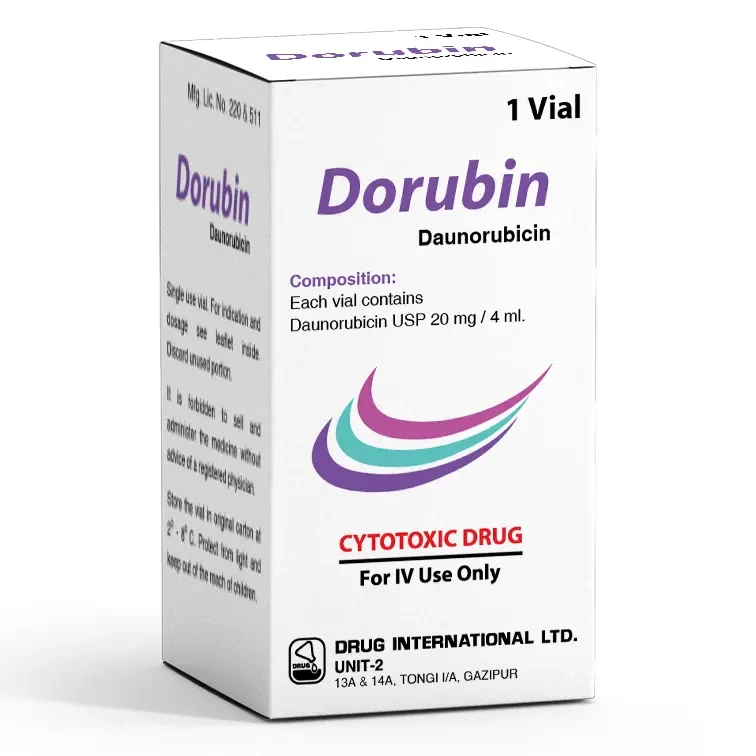
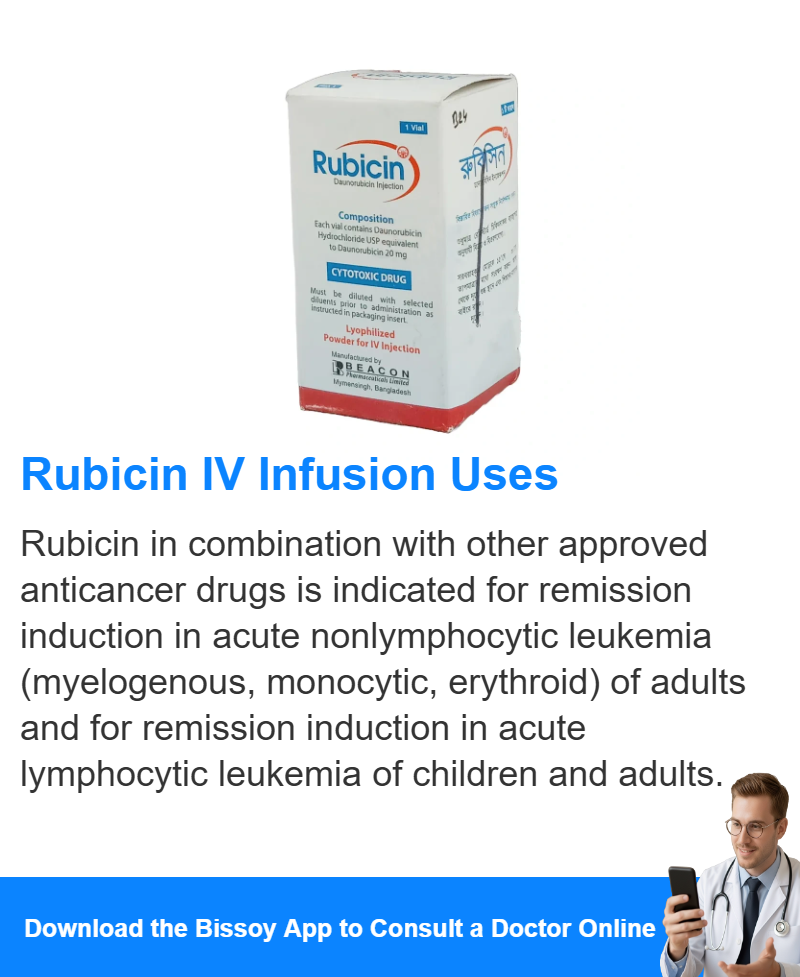
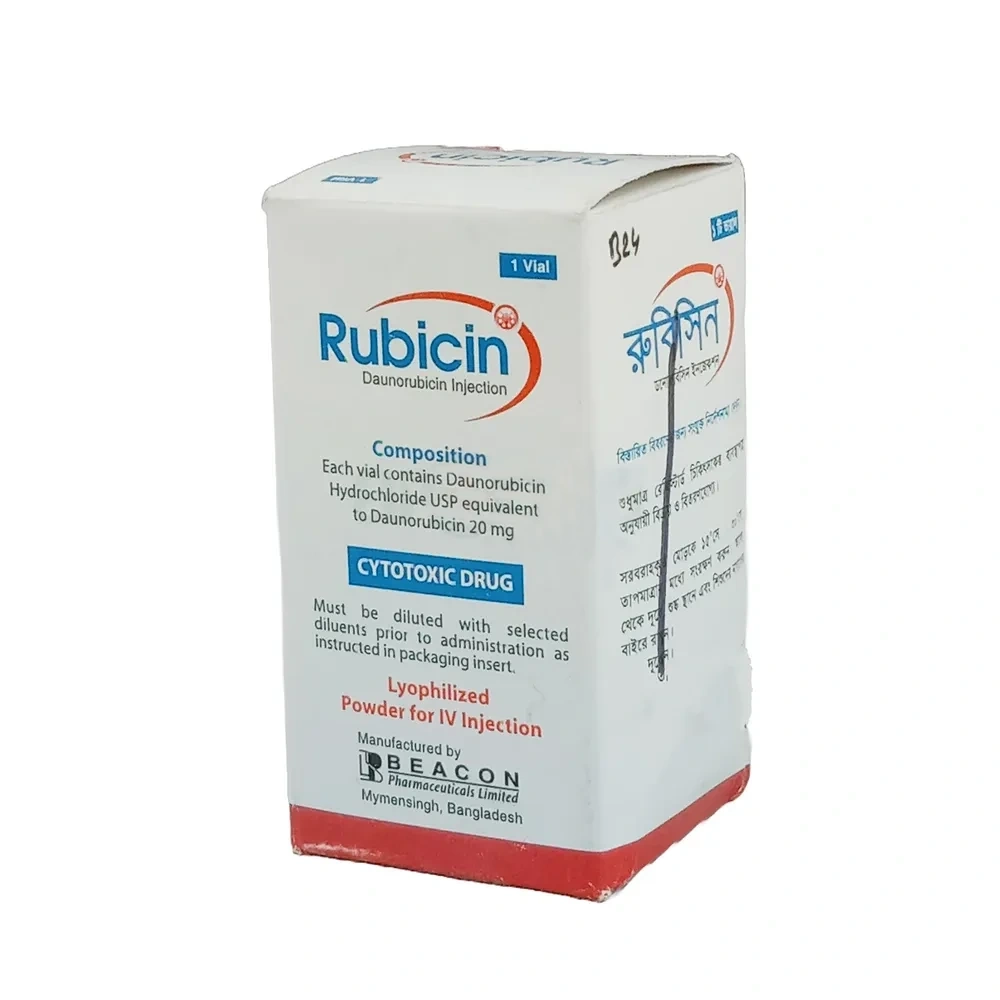
Rubicin IV Infusion 20 mg/4 ml is an anthracycline chemotherapy drug used to treat various types of cancer. It is primarily used in the treatment of acute myeloid leukemia (AML) and acute lymphoblastic leukemia (ALL), as well as other hematologic malignancies. Rubicin IV Infusion 20 mg/4 ml is known for its effectiveness in killing cancer cells and its role in combination chemotherapy regimens.
Uses
Rubicin IV Infusion 20 mg/4 ml is used for:
- Treatment of acute myeloid leukemia (AML).
- Treatment of acute lymphoblastic leukemia (ALL).
- Certain types of lymphomas, such as lymphoblastic lymphoma.
- It may be used in combination with other chemotherapy drugs to enhance effectiveness and reduce the risk of resistance.
| Brand Name | Rubicin |
|---|---|
| Type | IV Infusion |
| Weight | 20 mg/4 ml |
| Generic | Daunorubicin |
| Manufacturer | Beacon Pharmaceuticals PLC |
| Available in | English বাংলা |
Mechanism of Action
Rubicin IV Infusion 20 mg/4 ml exerts its antitumor effects primarily through intercalation into DNA. It binds between the base pairs of DNA, preventing the replication and transcription of genetic material. Additionally, daunorubicin generates free radicals that cause DNA damage and cell death. Its effects are enhanced by inhibiting topoisomerase II, an enzyme necessary for DNA repair and replication.
How Long Does It Take to Work?
The therapeutic effects of daunorubicin can be observed within a few weeks of starting treatment. The drug works by reducing the number of cancer cells, but the full effects may take several cycles of chemotherapy. The response varies depending on the type of cancer and the individual patient's response to the drug.
Absorption
Rubicin IV Infusion 20 mg/4 ml is administered intravenously and does not have oral bioavailability. The drug is directly delivered into the bloodstream, where it is distributed throughout the body.
Route of Elimination
Rubicin IV Infusion 20 mg/4 ml is primarily metabolized in the liver. Its metabolites, which are less active, are excreted through the bile into the feces. A small amount is also excreted in the urine.
Dosage
Parenteral drug products should be inspected visually for particulate matter prior to administration.Representative Dose Schedules and Combination for the Approved Indication of Remission Induction in Adult Acute Nonlymphocytic Leukemia: In Combination: For patients under age 60, Daunorubicin 45 mg/m2/day IV on days 1, 2, and 3 of the first course and on days 1, 2 of subsequent courses AND cytosine arabinoside 100 mg/m2/day IV infusion daily for 7 days for the first course and for 5 days for subsequent courses. For patients 60 years of age and above, Daunorubicin 30 mg/m2/day IV on days 1, 2, and 3 of the first course and on days 1, 2 of subsequent courses AND cytosine arabinoside 100 mg/m2/day IV infusion daily for 7 days for the first course and for 5 days for subsequent courses. This Daunorubicin dose-reduction is based on a single study and may not be appropriate if optimal supportive care is available.
Representative Dose Schedule and Combination for the Approved Indication of Remission Induction in Pediatric Acute Lymphocytic Leukemia: In Combination: Daunorubicin 25 mg/m2 IV on day 1 every week, Vincristine 1.5 mg/m2 IV on day 1 every week, prednisone 40 mg/m2 PO daily. Generally, a complete remission will be obtained within four such courses of therapy; however, if after four courses the patient is in partial remission, an additional one or, if necessary, two courses may be given in an effort to obtain a complete remission. In children less than 2 years of age or below 0.5 m2 body surface area, it has been recommended that the Daunorubicin dosage calculation should be based on weight (1 mg/kg) instead of body surface area.
Representative Dose Schedules and Combination for the Approved Indication of Remission Induction in Adult Acute Lymphocytic Leukemia: In Combination: Daunorubicin 45 mg/m2/day IV on days 1, 2, and 3 and Vincristine 2 mg IV on days 1, 8, and 15; prednisone 40 mg/m2/day PO on days 1 through 22, then tapered between days 22 to 29; L-asparaginase 500 IU/kg/day x 10 days IV on days 22 through 32. Or, as directed by the registered physicians.
The dosage of daunorubicin depends on the specific cancer being treated, the patient’s overall health, and their response to therapy. Common dosing regimens include:
- For AML: Typically, 45 to 60 mg/m² administered intravenously once every 21 days.
- For ALL: Usually 30 to 60 mg/m² administered intravenously once every 3 to 4 weeks.
Administration
Rubicin IV Infusion 20 mg/4 ml is administered intravenously, usually as a slow infusion over a period of 30 to 60 minutes. It is crucial to avoid extravasation, as the drug can cause severe local tissue damage. Patients are monitored for adverse reactions during and after infusion.
Side Effects
Common side effects of daunorubicin include:
- Nausea and vomiting
- Myelosuppression (decreased blood cell production leading to anemia, leukopenia, or thrombocytopenia)
- Hair loss
- Fatigue
- Mouth sores or mucositis
- Cardiotoxicity (heart damage), which can lead to heart failure
- Severe allergic reactions
- Infections due to neutropenia
Toxicity
Rubicin IV Infusion 20 mg/4 ml toxicity can manifest as dose-dependent cardiotoxicity, which may lead to congestive heart failure. Other toxic effects include severe myelosuppression and mucositis. Long-term use may increase the risk of secondary malignancies. Monitoring of cardiac function and blood counts is essential during treatment.
Precautions
Precautions include:
- Regular cardiac monitoring to assess for signs of heart damage.
- Monitoring of blood cell counts to manage the risk of infections and bleeding.
- Careful administration to avoid extravasation, which can cause severe tissue damage.
- Patients with pre-existing heart conditions or those at high risk for cardiac issues should be closely monitored.
Interaction
Rubicin IV Infusion 20 mg/4 ml may interact with other drugs that affect heart function or blood cell production. Caution is required when used with other cytotoxic agents or drugs that may exacerbate myelosuppression. Drug interactions that alter liver metabolism may also affect daunorubicin levels and efficacy.
Disease Interaction
Rubicin IV Infusion 20 mg/4 ml should be used with caution in patients with:
- Pre-existing heart disease or a history of cardiac issues.
- Liver dysfunction, as it affects the metabolism and clearance of the drug.
- Renal impairment, although less commonly affected, should still be monitored.
Drug Interaction
Potential drug interactions include:
- Increased risk of cardiotoxicity with other drugs that have cardiovascular effects.
- Possible interactions with drugs that affect liver enzymes, which can alter daunorubicin metabolism.
- Caution with other chemotherapeutic agents to avoid additive myelosuppressive effects.
Food Interactions
There are no significant food interactions with daunorubicin. The drug's administration and effectiveness are not impacted by dietary intake.
Pregnancy Use
Rubicin IV Infusion 20 mg/4 ml is classified as Pregnancy Category D. It may cause fetal harm when administered to pregnant women, and its use during pregnancy is generally contraindicated unless the potential benefits outweigh the risks. Effective contraception should be used during treatment.
Lactation Use
It is not known whether daunorubicin is excreted in breast milk. Due to potential risks to the nursing infant, breastfeeding is generally not recommended during treatment with daunorubicin. Patients should consult their healthcare provider for alternative feeding options.
Acute Overdose
Acute overdose of daunorubicin may lead to severe myelosuppression, mucositis, and cardiac toxicity. Treatment includes discontinuation of the drug and supportive care. Monitoring for and managing symptoms of toxicity is essential.
Contraindication
Rubicin IV Infusion 20 mg/4 ml is contraindicated in patients with:
- Severe heart disease or pre-existing heart failure.
- Severe hepatic impairment.
- Hypersensitivity to daunorubicin or other anthracyclines.
Use Direction
Rubicin IV Infusion 20 mg/4 ml should be administered by a healthcare professional via intravenous infusion. The dosage and schedule are determined based on the specific cancer being treated and the patient’s response to therapy. It is important to follow the prescribed regimen and monitor for adverse effects.
Storage Conditions
Store daunorubicin at room temperature, away from light and moisture. It should be kept in its original packaging and out of reach of children. The drug should not be frozen or exposed to high temperatures.
Volume of Distribution
The volume of distribution for daunorubicin is approximately 1.5 to 2.5 L/kg, indicating its distribution throughout body tissues, including the heart, liver, and bone marrow.
Half Life
The terminal half-life of daunorubicin is approximately 20 to 48 hours, depending on the dose and individual patient factors. Its effects can persist beyond this period due to cumulative drug effects and metabolism.
Clearance
Rubicin IV Infusion 20 mg/4 ml is primarily cleared by the liver. Its clearance rate is approximately 1.5 to 3.0 L/h/m². The drug and its metabolites are excreted mainly through the bile into the feces, with minimal renal excretion.
See in details version Rubicin IV Infusion 20 mg/4 ml also Rubicin IV Infusion 20 mg/4 ml in bangla
Social card
Some Frequently Asked Questions About Rubicin IV Infusion 20 mg/4 ml


Dr. Jhumur Ghosh
Liver, Gastroenterology, Medicine Specialist & Interventional Endoscopist