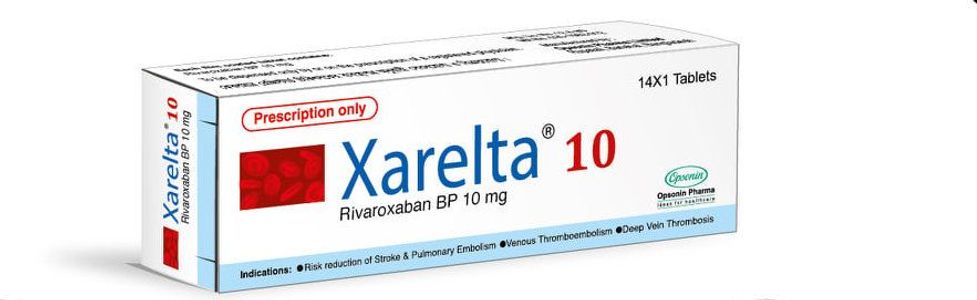
Introduction
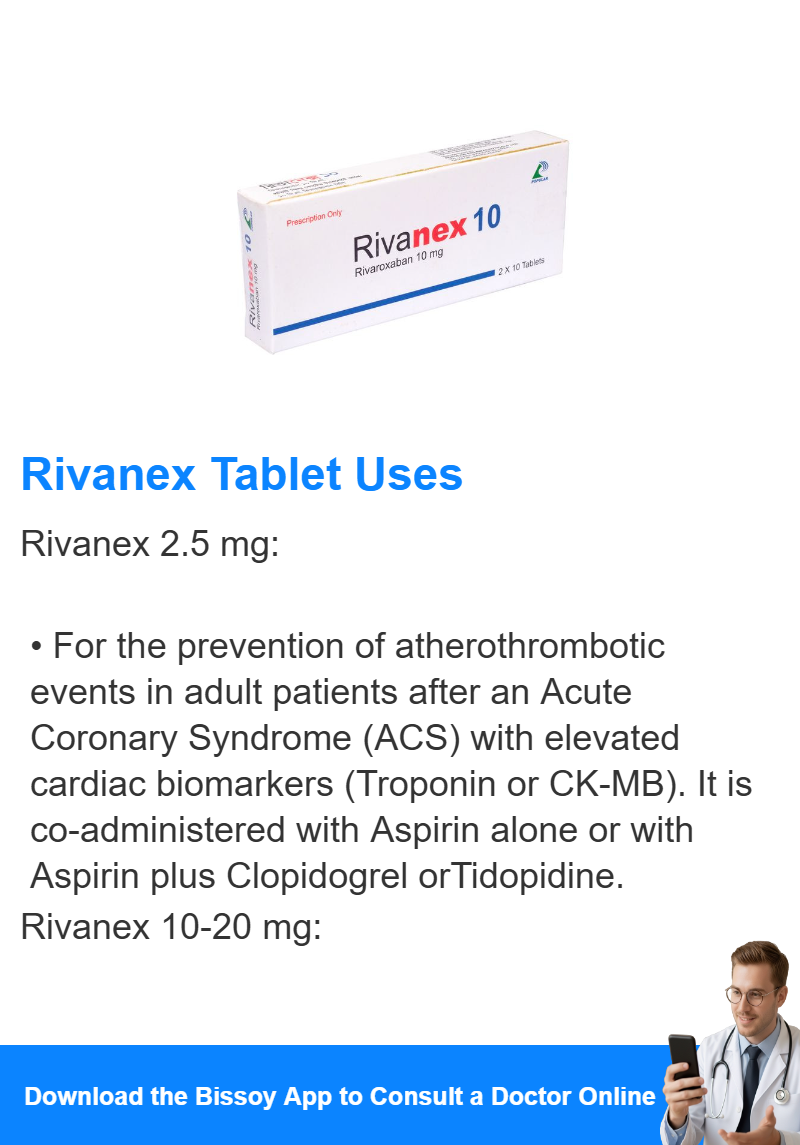
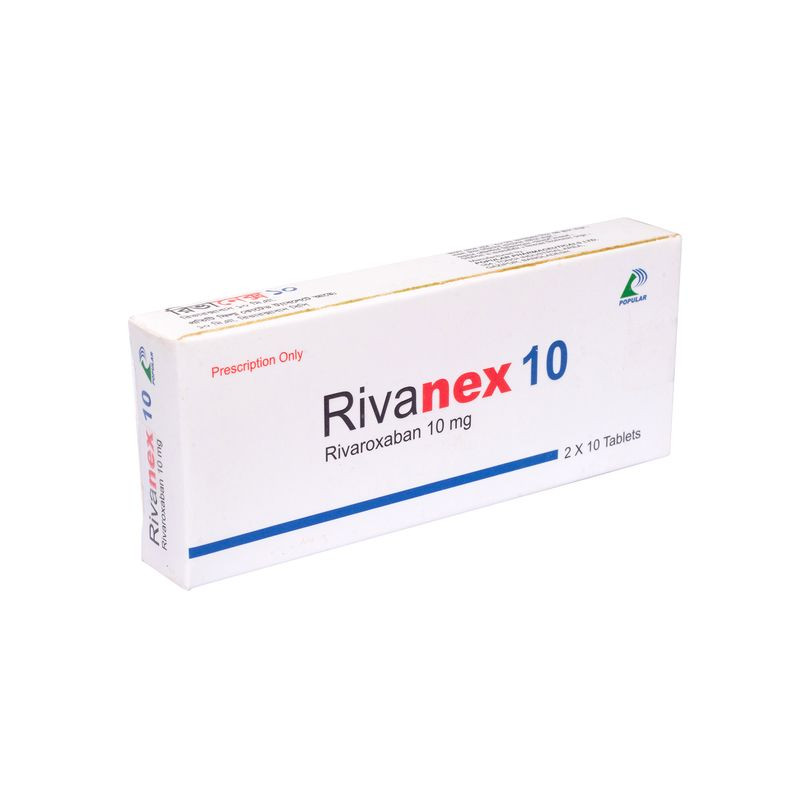
Rivanex Tablet 10 mg is an anticoagulant and the first orally active direct factor Xa inhibitor. Unlike warfarin, routine lab monitoring of INR is not necessary. However there is no antidote available in the event of a major bleed. Only the 10 mg tablet can be taken without regard to food. The 15 mg and 20 mg tablet should be taken with food.
Uses
Rivanex Tablet 10 mg is a factor Xa inhibitor used to treat deep vein thrombosis (DVT) and pulmonary embolism (PE). May also be used as thrombosis prophylaxis in specific situations.
Rivanex Tablet 10 mg is indicated for the prevention of venous thromboembolic events (VTE) in patients who have undergone total hips replacements and total knee replacement surgery; prevention of stroke and systemic embolism in patients with nonvalvular atrial fibrillation; treatment of deep vein thrombosis (DVT) and pulmonary embolism (PE); to reduce risk of recurrent DVT and/or PE. Rivanex Tablet 10 mg is also indicated, in combination with aspirin, for reducing the risk of major cardiovascular events in patients with chronic coronary artery disease or peripheral artery disease. Due to a lack of safety studies, it is not recommended for use in those under 18 years old. Its use is also not recommended in those with severe renal impairment (<30mL/min).
Associated Conditions
Pharmacodynamics
Rivanex Tablet 10 mg is an anticoagulant which binds directly to factor Xa. Thereafter, it effectively blocks the amplification of the coagulation cascade, preventing the formation of thrombus. Rivanex Tablet 10 mg is a unqiue anticoagulant for two reasons. First of all, it is does not involve antithrombin III (ATIII) to exert its anticoagulant effects. Secondly, it is an oral agent whereas the widely used unfractionated heparin and low molecular weight heparins are for parenteral use only. Although the activated partial thromboplastin time (aPTT) and HepTest (a test developed to assay low molecular weight heparins) are prolonged in a dose-dependant manner, neither test is recommended for the assessment of the pharmacodynamic effects of rivaroxaban. Anti-Xa activity and inhibition of anti-Xa activity monitoring is also not recommended despite being influenced by rivaroxaban.
Mechanism of Action
Rivanex Tablet 10 mg competitively inhibits free and clot bound factor Xa. Factor Xa is needed to activate prothrombin (factor II) to thrombin (factor IIa). Thrombin is a serine protease that is required to activate fibrinogen to fibrin, which is the loose meshwork that completes the clotting process. Since one molecule of factor Xa can generate more than 1000 molecules of thrombin, selective inhibitors of factor Xa are profoundly useful in terminating the amplification of thrombin generation. The action of rivaroxaban is irreversible.
Absorption
Following oral administration, rivaroxaban is rapidly absorbed and reaches peak plasma concentration in 2-4 hours. Bioavailability of the 10 mg dose is >80%. However, the 15-20 mg dose have a lower bioavailability if taken in the fasted state and consequently should be taken with food.
Volume of Distribution
The steady state Vd is 50 L
Protein Binding
Plasma protein binding is about 92% to 95%
Route of Elimination
Approximately two-thirds of rivaroxaban is excreted into urine (via active tubular secretion in which approximately 36% as unchanged drug and 30% as inactive metabolism). The remaining third of the administered dose is excreted via feces in which 7% is in the form of unchanged drug and 21% as inactive metabolites.
Half Life
The terminal half life is 5-9 hours in adults and 11-13 hours in the elderly.
Clearance
Systemic clearance is approximately 10 L/h, so rivaroxaban is considered a drug with low clearance. Renal clearance is ~3-4 L/h.
Toxicity
Excessive bleeding. Overdosages should be treated using activated charcoal and supportive measures such as mechanical compression and hemodynamic support. If bleeding is not controlled, the following procoagulants can be administered: activated prothrombin complex concentrate, prothrombin complex concentrate and recombinant factor VIIa. There is also a higher chance of post procedural hemorrhage compared to enoxaparin (1.55% vs. 1.39% respectively).
Food Interactions
- Avoid herbs and supplements with anticoagulant/antiplatelet activity. Examples include garlic, ginger, bilberry, danshen, piracetam, and ginkgo biloba.
- Avoid St. John's Wort. Co-administration will decrease levels of this medication.
- Take with food. Rivanex Tablet 10 mg 15-20mg dose should be taken with food as food significantly impacts the bioavailability at that dose.
- Take with or without food. Rivanex Tablet 10 mg 10mg dose can be taken with or without food as it does not significantly impact the bioavailability at that dose.
Dosage
- The recommended dose: 2.5 mg twice daily. Patients should also take a daily dose of 75-100 mg Aspirin or a daily dose of 75-100 mg Aspirin in addition to either a daily dose of 75 mg clopidogrel or a standard daily dose of ticlopidine.
- Nonvalvular Atrial Fibrillation: For patients with Creatinin Clearance >50 mL/min: 20 mg orally, once daily with the evening meal. For patients with Creatinin Clearance 15-50 ml/min: 15 mg orally, once daily with the evening meal.
- Treatment of DVT & PE: 15 mg orally twice daily with food for the first 21 days for the initial treatment of acute DVT or PE. After the initial treatment period, 20 mg orally once daily with food for the remaining treatment.
- Prevention in the risk of recurrence of DVT and of PE: 20 mg once daily with food.
- Prophylaxis of DVT following Hip replacement surgery: 10 mg once daily for 35 days.
- Prophylaxis of DVT following knee replacement surgery: 10 mg once daily for 12 days.