Introduction
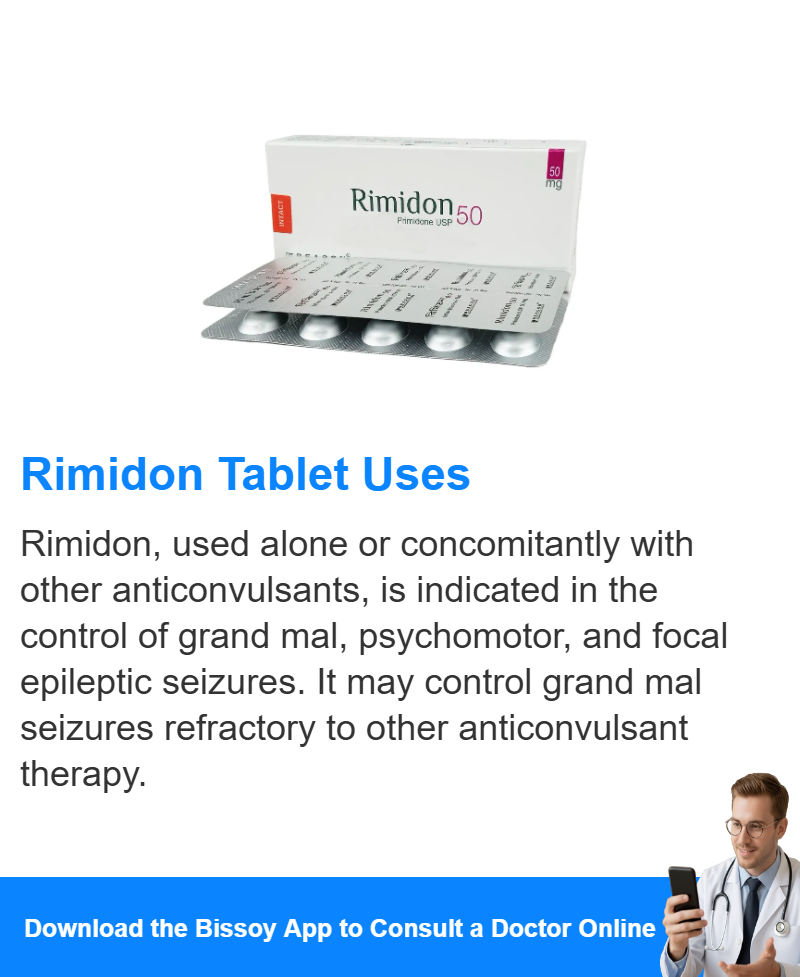
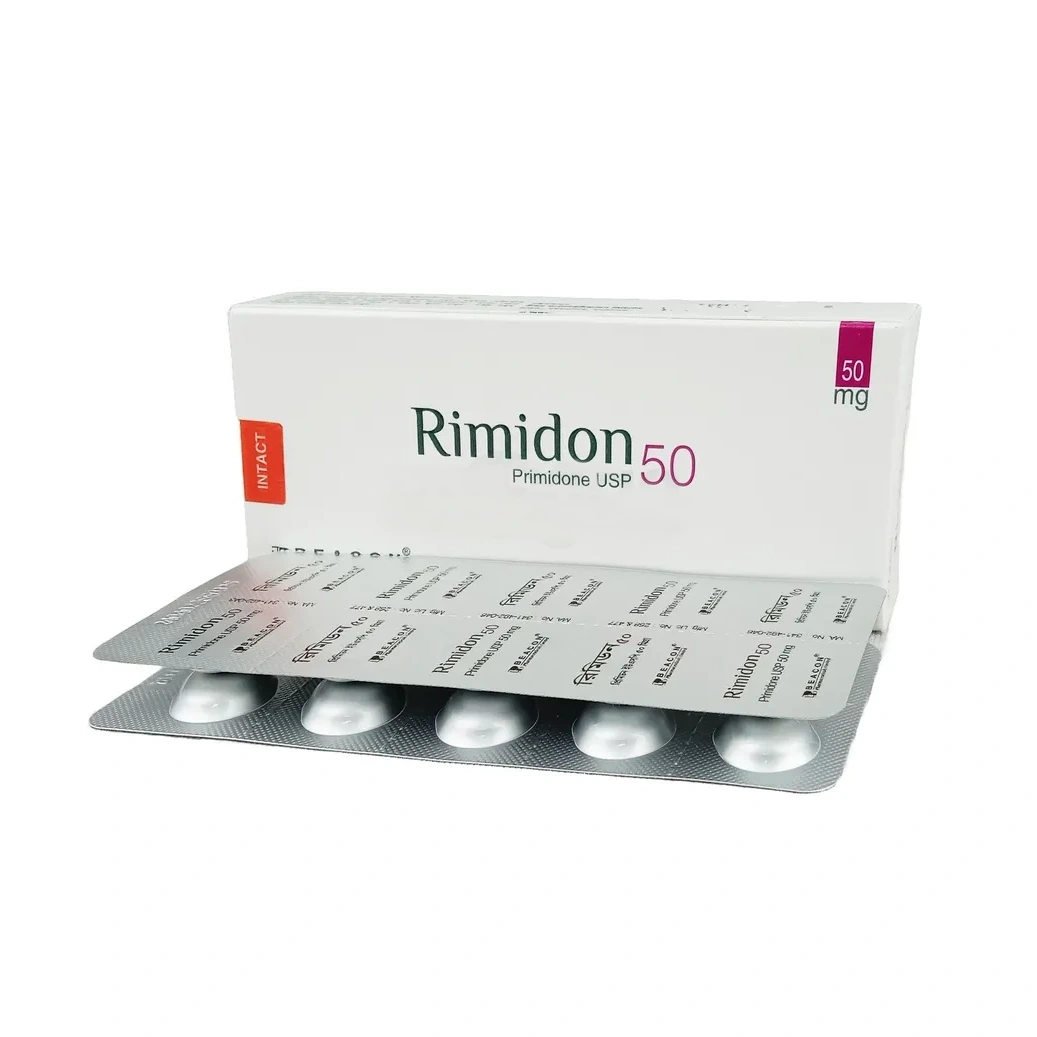
Rimidon Tablet 50 mg is an anticonvulsant used to treat essential tremor as well as grand mal, psychomotor, and focal epileptic seizures. Rimidon Tablet 50 mg was developed by J Yule Bogue and H C Carrington in 1949.
Rimidon Tablet 50 mg was granted FDA Approval on 8 March 1954.
Uses
Rimidon Tablet 50 mg is an antiepileptic used to treat grand mal, psychomotor, and focal epileptic seizures.
Rimidon Tablet 50 mg is commonly indicated for the management of grand mal, psychomotor, and focal epileptic seizures. In addition, it has also been studied and utilized as an effective management of essential tremor.
Associated Conditions
Pharmacodynamics
Rimidon Tablet 50 mg alters sodium and calcium channel transport, reducing the frequency of nerve firing, which may be responsible for its effect on convulsions and essential tremor. Rimidon Tablet 50 mg has a wide therapeutic window as doses of 50-1000mg/day were effective. Patients should be counselled regarding the risk of status epilepticus with abrupt cessation of primidone.
Mechanism of Action
Rimidon Tablet 50 mg and its metabolites, phenobarbital and phenylethylmalonamide (PEMA), are active anticonvulsants. Rimidon Tablet 50 mg does not directly interact with GABA-A receptors or chloride channels but phenobarbital does. Rimidon Tablet 50 mg alters transmembrane sodium and calcium channel transport, reducing the frequency of nerve firing, which may be responsible for the primidone’s effect on convulsions and essential tremor.
Absorption
Oral primidone is up to 80% bioavailable with a Tmax if 2-4h. A 500mg oral dose of primidone Reaches a Cmax of 2.7±0.4µg/mL with a Tmax of 0.5-7h. Data regarding the AUC of primidone is not readily available.
Volume of Distribution
The volume of distribution of primidone is 0.5-0.8L/kg.
Protein Binding
Rimidon Tablet 50 mg is 10.78-13.70% protein bound in serum.
Route of Elimination
Rimidon Tablet 50 mg is 72.9-80.6% recovered in urine.
Half Life
The half life of primidone is 7-22h in adults, 5-11h in children, and 8-80h in newborns.
Clearance
Rimidon Tablet 50 mg is cleared at a rate of 30mL/min.
Toxicity
The oral LD50 in rats is 1500mg/kg and in mice is 280mg/kg. The intraperitoneal LD50 in rats was 240mg/kg and in mice was 332mg/kg.
Patients experiencing a primidone overdose may present with CNS depression, coma, respiratory depression, suppressed reflexes, suppressed response to pain, hypotension, and decreased urine output. Overdose should be treated with symptomatic and supportive treatment, including the removal of unabsorbed drug.
Food Interactions
- Avoid alcohol.
- Avoid St. John's Wort.
Dosage
- Days 1 to 3: 100 to 125 mg at bedtime.
- Days 4 to 6: 100 to 125 mg. twice a day.
- Days 7 to 9: 100 to 125 mg three times a day.
- Day 10 to maintenance: 250 mg three times a day.
Dosage should be individualized to provide maximum benefit. In some cases, serum blood level determinations of primidone may be necessary for optimal dosage adjustment. The clinically effective serum level for primidone is between 5 to 12 mcg/mL.