Introduction
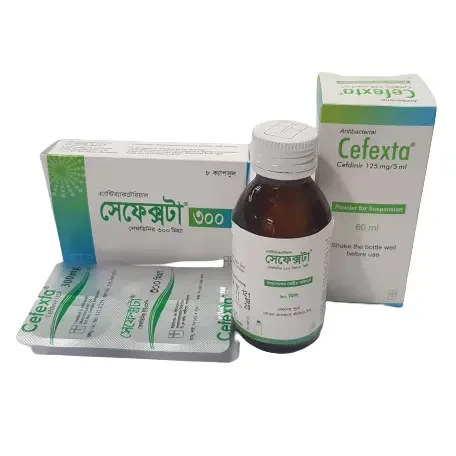
Ridicef Capsule 300 mg, also known as Omnicef, is a semi-synthetic, broad-spectrum antibiotic belonging to the third generation of the cephalosporin class. It has been proven to be effective for the treatment of common bacterial infections in the ear, sinus, throat, lungs, and skin. Because of its chemical structure, it is effective against organisms that are resistant to first-line cephalosporin therapy due to the production of beta-lactamase enzymes.
Uses
Ridicef Capsule 300 mg is a third generation cephalosporin used to treat susceptible Gram negative and Gram positive bacterial infections.
Ridicef Capsule 300 mg is indicated to treat acute bacterial otitis media, acute maxillary sinusitis, community-acquired (CA) pneumonia, acute bacterial exacerbations of chronic bronchitis, pharyngitis/tonsillitis, and uncomplicated skin and skin structure infections in children and adults.
The organisms susceptible to cefdinir have been listed below in addition to their associated clinical condition that may be treated with cefdinir. Various beta-lactamase producing organisms may be treated, as indicated in certain sections below.
Respiratory Acute bacterial exacerbations of chronic bronchitis caused by Haemophilus influenzae, Haemophilus parainfluenzae, Streptococcus pneumoniae (penicillin-susceptible only), and Moraxella catarrhalis
Community-acquired pneumonia caused by Haemophilus influenzae, Haemophilus parainfluenzae, Streptococcus pneumoniae (penicillin-susceptible only), and Moraxella catarrhalis
Ear, nose, and throat Acute bacterial otitis media caused by Haemophilus influenzae, Moraxella catarrhalis, and Streptococcus pneumoniae (penicillin-susceptible only)
Tonsillitis caused by Streptococcus pyogenes
Pharyngitis caused by Streptococcus pyogenes
Acute maxillary sinusitis caused by Haemophilus pneumoniae and Streptococcus pneumoniae (penicillin-susceptible only), and Moraxella catarrhalis
Skin and skin structure infections
Uncomplicated skin and skin structure infections caused by Staphylococcus aureus and Streptococcus pyogenes
Associated Conditions
Pharmacodynamics
Ridicef Capsule 300 mg is a bactericidal agent that treats bacterial infections by interfering with cell wall synthesis. Ridicef Capsule 300 mg exerts broad-spectrum activity against a variety of gram-positive and gram-negative bacterial infections. It is effective against several beta-lactamase enzyme producing bacteria. As a result, many organisms that are resistant to other cephalosporins may be susceptible to cefdinir.
Mechanism of Action
Five-member thiazolidine rings that make up penicillins are replaced in cephalosporins by a six-member dihydrothiazine ring, conferring greater bactericidal activity. This This 6-member ring enables cefdinir and other cephalosporins to resist inactivation by certain bacterial enzymes.
With a mechanism similar to other beta-lactam antibiotics, the bactericidal activity of cefdinir is caused by the inhibition of cell wall synthesis via binding to penicillin-binding proteins (PBPs). Ridicef Capsule 300 mg, like other cephalosporins, penetrates the bacterial cell wall, combats inactivation by beta-lactamase enzymes, and inactivates penicillin-binding proteins. This interferes with the final step of transpeptidation in cell walls, eventually leading to cell lysis, which eventually leads to the death of bacteria that are susceptible to this drug. Ridicef Capsule 300 mg has shown affinity to penicillin protein binding proteins 2 and 3. It has also been shown to inhibit transpeptidase enzymes of various bacteria, which may play a role in its bactericidal action. One in vitro study suggests that cefdinir inhibits myeloperoxidase release extracellularly. The impact of this potential drug target in relation to its mechanism of action is unknown.
Absorption
Maximal plasma cefdinir concentration can be attained between 2-4 hours after an ingested dose. The bioavailability of cefdinir depends on the formulation used. The estimated bioavailability of cefdinir in the capsule form is approximately 16%-21%, depending on the dose. Absolute bioavailability after the administration of a suspension of cefdinir is 25%.. The Cmax of cefdinir is 1.60 μg/mL after a 300 mg dose with an AUC of 7.05. Cmax is 2.87 μg/mL after a 600 mg dose with an AUC of 11. A meal high in fat can reduce the absorption of cefdinir by up to 15%, however, this is not a cause for clinically significant changes, therefore cefdinir may be taken with or without food. When given with aluminum or magnesium-containing antacids or iron, cefdinir absorption may decrease. It is recommended to allow 2 hours between cefdinir administration and the administration of these agents.
Volume of Distribution
The average volume of distribution of cefdinir in adults is about 0.35 L/kg and 0.67 L/kg in children. Another resource estimates the volume of distribution in adults at 1.56–2.09 L/kg. Ridicef Capsule 300 mg is found to be distributed in various tissues at clinically effective concentrations. It may be found in the epithelial lining fluid, bronchial mucosa, tonsils, sinuses, skin blister fluid, as well as the middle ear fluid. Third-generation cephalosporins such as cefdinir cross the blood-brain barrier and are found in high concentrations in the cerebrospinal fluid, unlike their first and second generation counterparts. The wide tissue distribution of cefdinir allows it to treat a variety of infections throughout the body.
Protein Binding
The plasma protein binding of cefdinir ranges from 60% to approximately 70%.
Route of Elimination
This drug is mainly excreted by the kidneys. Dose adjustments may be required for patients with renal impairment or patients on dialysis. Approximately 18.4% of a 300 mg dose of cefdinir was found unchanged in the urine after a 300 mg dose was administered during a pharmacokinetic study of 21 individuals. A large proportion of the administered dose is excreted in the feces, although the majority is found in the urine.
Half Life
The average plasma elimination half-life is about 1.7 hours in adults. In children and healthy infants, plasma elimination half-life ranges from 1.2–1.5 hours.
Clearance
The renal clearance in healthy adults in a pharmacokinetic study was 2.0 (± 1.0) mL/min/kg and the clearance in patients with renal failure was lower, decreasing in proportion to the degree of renal impairment. Dose adjustment is required in patients with renal impairment.
Toxicity
LD50 information Oral LD50 of cefdinir in the rat is >2000 mg/kg.
There are limited data regarding cefdinir overdose in the literature. In studies of rodents, one 5600-mg/kg dose administered orally did not lead to adverse effects. Signs of toxicity and overdose caused by other beta-lactam antibiotics included nausea, vomiting, diarrhea, abdominal pain, and seizures.
Food Interactions
- Avoid multivalent ions. Do not take aluminum, magnesium, or iron containing products up to 2 hours before or after this medication.
- Take with or without food. The absorption is unaffected by food.
Dosage
| Type of infection | Dosage | Duration |
| Acute Exacerbations of Chronic Bronchitis | 300 mg two times daily or 600 mg once daily | 5 to 10 days |
| Pharyngitis/Tonsillitis | ||
| Acute Bacterial Otitis Media | ||
| Acute Maxillary Sinusitis | 300 mg two times daily or 600 mg once daily | 10 days |
| Community Acquired Pneumonia | 300mg two times daily | 10 days |
| Uncomplicated Skin and Skin Structure Infections |
Powder for Oral Suspension: The total daily dose for all infections is 14 mg/kg body weight up to a maximum dose of 600 mg per day. The dosage schedule of oral suspension for pediatric patients as follows:
| Type of infection | Dosage | Duration |
| Acute Bacterial Otitis Media | 7mg/kg two times or 14 mg/kg once daily | 5 to 10 days |
| Phayngitis/Tonsilitis | ||
| Acute Maxillary Sinusitis | 7mg/kg two times or14 mg/kg once daily | 10 days |
| Uncomplicated Skin and Skin Structure Infections | 7mg/kg two times daily | 10 days |
Direction for Reconstitution of Powder for Suspension: Shake the bottle well so that powder does not clog. Add 40 ml (8 x 5 ml spoonful) boiled and cooled water with the provided 5ml spoon to the bottle. Shake well until all powder is dispersed. Reconstituted suspension should be used within 10 days of preparation if kept at room temperature or within 14 days if kept in a refrigerator. Shake the bottle well before use.