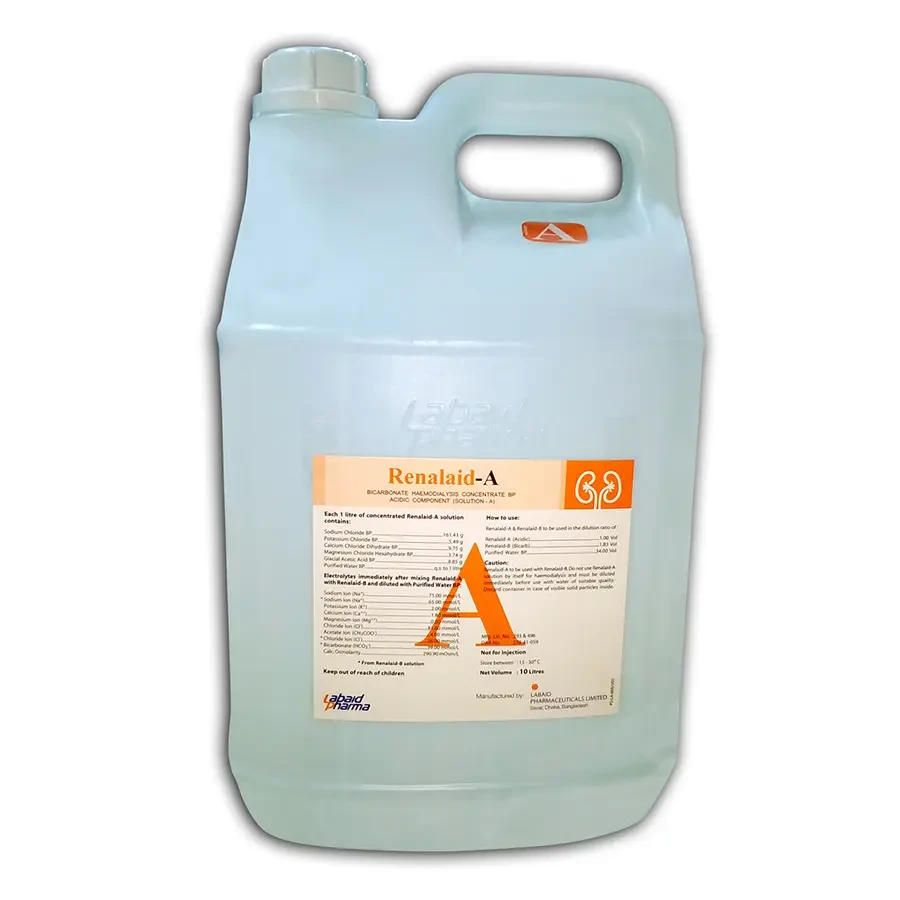
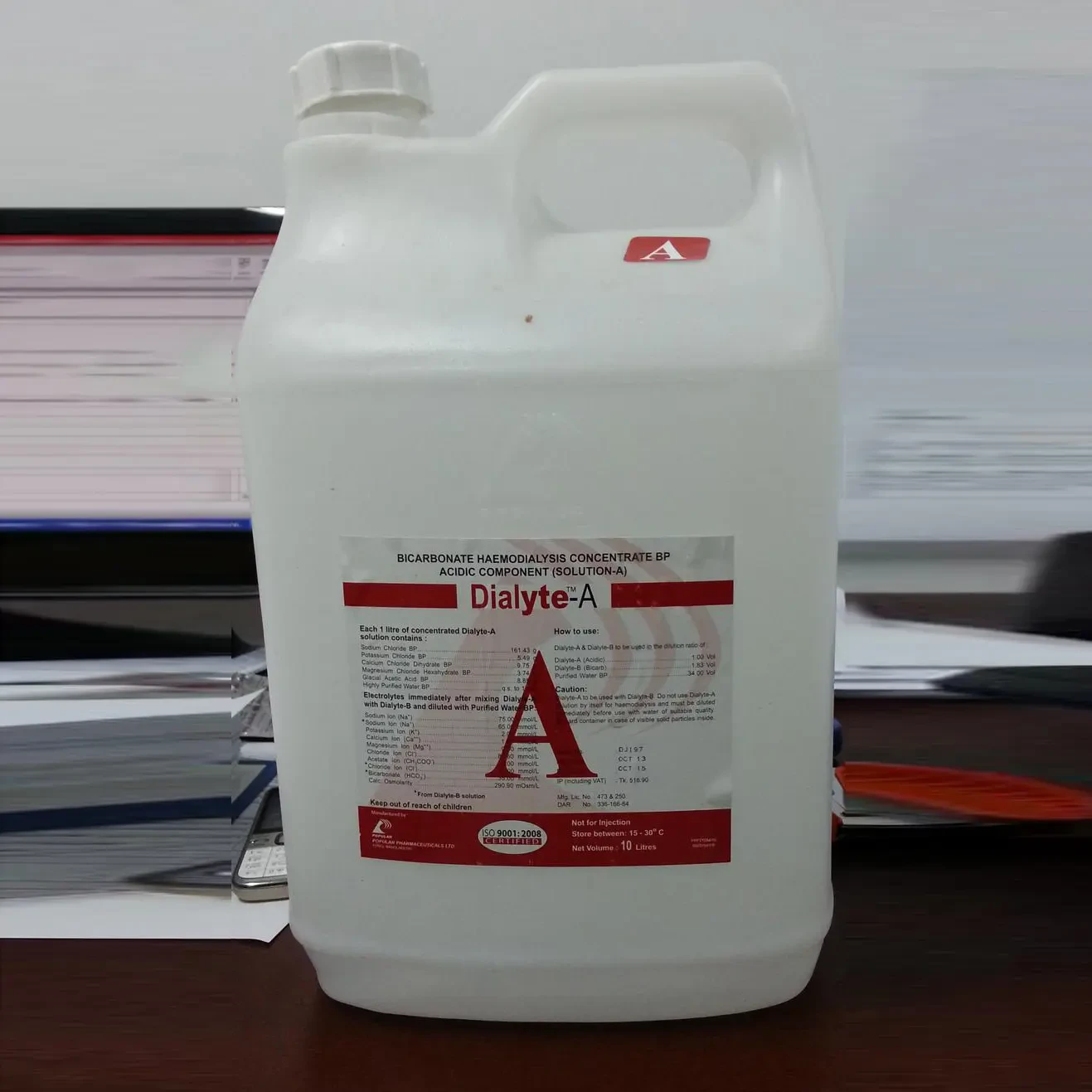
Introduction
The acidic component of HCO3 (bicarbonate) hemodialysis solution is used in dialysis to help maintain the body's acid-base balance. This solution is crucial in the process of hemodialysis, where it helps to counteract metabolic acidosis by providing bicarbonate ions that neutralize excess acids in the blood.
Uses
The primary use of the acidic component in HCO3 hemodialysis solution is to regulate and stabilize the pH of the blood during hemodialysis. It is used in patients with chronic kidney disease (CKD) or acute renal failure who require dialysis to manage fluid and electrolyte balance and remove waste products from the blood.
Mechanism of Action
The bicarbonate component in the hemodialysis solution acts as a buffer to neutralize excess hydrogen ions in the blood, thereby correcting metabolic acidosis. During dialysis, the bicarbonate in the solution diffuses into the patient's blood, reacting with excess hydrogen ions to form carbonic acid, which is then converted to carbon dioxide and water, and subsequently exhaled through the lungs.
How Long Does It Take to Work?
The bicarbonate solution begins to act immediately upon entering the blood during the dialysis process. The effects on blood pH and acid-base balance are typically observed within the duration of the dialysis session, which generally lasts between 3 to 5 hours.
Absorption
Since bicarbonate solution is administered directly into the bloodstream during dialysis, absorption is not a typical concern. The solution directly interacts with the blood through the dialysis machine.
Route of Elimination
The bicarbonate component in the solution helps neutralize excess acids in the blood, which are then excreted through the lungs as carbon dioxide and through the kidneys if they are functioning. The solution itself is continuously replaced during the dialysis process, so there is no direct elimination of the solution from the body.
Dosage
Recommended dose: 5 liters concentrate per dialysis or as required.The dosage of the bicarbonate solution is tailored to the patient's needs based on their specific acid-base balance and the parameters of their dialysis treatment. The concentration of bicarbonate in the solution typically ranges from 25 to 35 mEq/L. The exact dosage and concentration are adjusted by the healthcare provider based on the patient's blood chemistry and clinical condition.
Administration
The bicarbonate solution is administered through a dialysis machine during the hemodialysis procedure. It is infused into the dialyzer, where it comes into contact with the patient's blood, allowing for the exchange of bicarbonate ions and removal of waste products.
Side Effects
Possible side effects of using bicarbonate hemodialysis solution include:
- Electrolyte imbalances (e.g., high levels of bicarbonate or potassium).
- Blood pressure changes.
- Dialysis-related symptoms such as headache, nausea, or muscle cramps.
Toxicity
While bicarbonate solutions are generally safe when used appropriately, excessive administration can lead to metabolic alkalosis or other electrolyte imbalances. Proper monitoring during dialysis helps prevent such toxic effects.
Precautions
Precautions include:
- Monitoring blood electrolytes and pH levels to adjust bicarbonate levels accordingly.
- Adjusting the solution concentration based on the patient’s clinical condition and response.
- Ensuring the proper functioning of the dialysis machine to prevent complications.
Interaction
The bicarbonate solution can interact with medications and other treatments. For example, it may affect the absorption or efficacy of certain drugs, particularly those that influence acid-base balance or electrolytes.
Disease Interaction
Patients with conditions such as heart failure or severe electrolyte imbalances may require special adjustments in bicarbonate dosing. Careful management is necessary to avoid exacerbating these conditions.
Drug Interaction
Bicarbonate solutions can interact with medications that alter acid-base balance, such as certain diuretics or medications used to treat hypertension. It is important to monitor and adjust dosages as needed.
Food Interactions
Dietary intake of foods high in potassium or sodium may require adjustments in bicarbonate solution concentrations to maintain proper electrolyte balance during dialysis.
Pregnancy Use
During pregnancy, the use of bicarbonate hemodialysis solution should be managed carefully. Dialysis in pregnant patients requires specialized monitoring to ensure both maternal and fetal health.
Lactation Use
There is no direct impact on lactation from bicarbonate hemodialysis solution. However, overall maternal health and electrolyte balance should be monitored to support breastfeeding.
Acute Overdose
Acute overdose of bicarbonate can lead to metabolic alkalosis and associated symptoms such as muscle twitching, hand tremors, and nausea. Proper monitoring and adjustment during dialysis help prevent overdose effects.
Contraindication
Bicarbonate hemodialysis solution may be contraindicated in patients with severe metabolic alkalosis or certain electrolyte imbalances where bicarbonate administration could worsen their condition.
Use Direction
Use the bicarbonate solution as directed by the healthcare provider, following the prescribed concentration and dosage adjustments based on patient needs and dialysis parameters.
Storage Conditions
Store bicarbonate hemodialysis solution according to manufacturer guidelines, typically in a cool, dry place away from direct sunlight and extreme temperatures to maintain its efficacy.
Volume of Distribution
The volume of distribution for bicarbonate is related to its immediate effect on the blood and body fluids during dialysis. It does not have a conventional volume of distribution as it is administered directly into the bloodstream.
Half Life
The concept of half-life is not directly applicable to bicarbonate hemodialysis solution as it is used in a continuous process during dialysis. The bicarbonate concentration is continuously regulated by the dialysis machine.
Clearance
Clearance of bicarbonate occurs through its interaction with the blood, where it neutralizes acids, and the resultant products (e.g., carbon dioxide) are removed through respiration and the kidneys.