Introduction
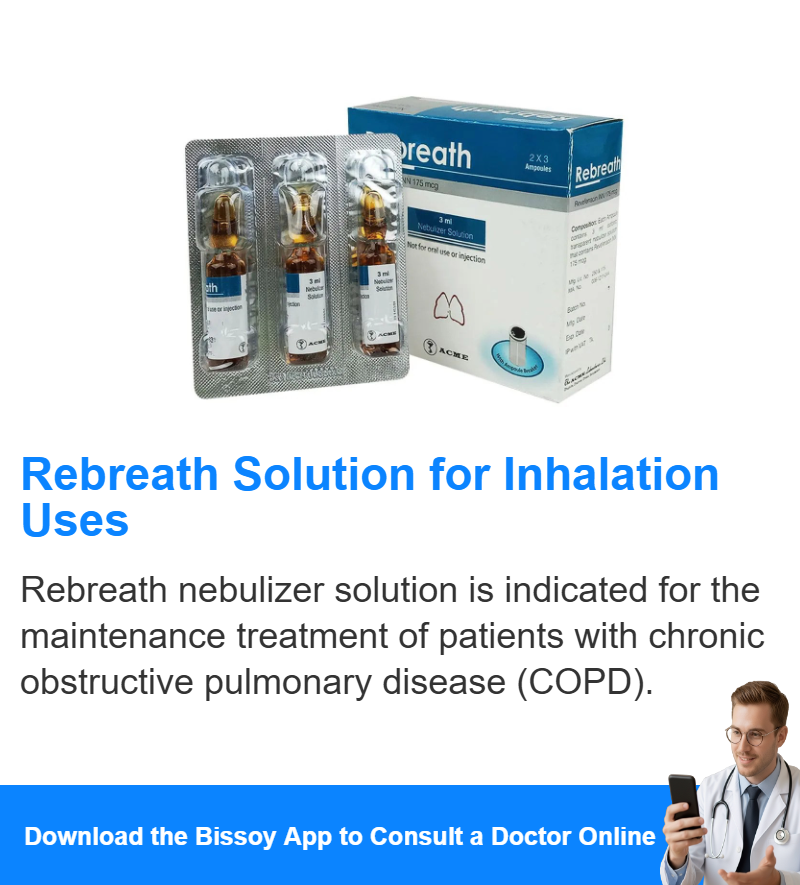
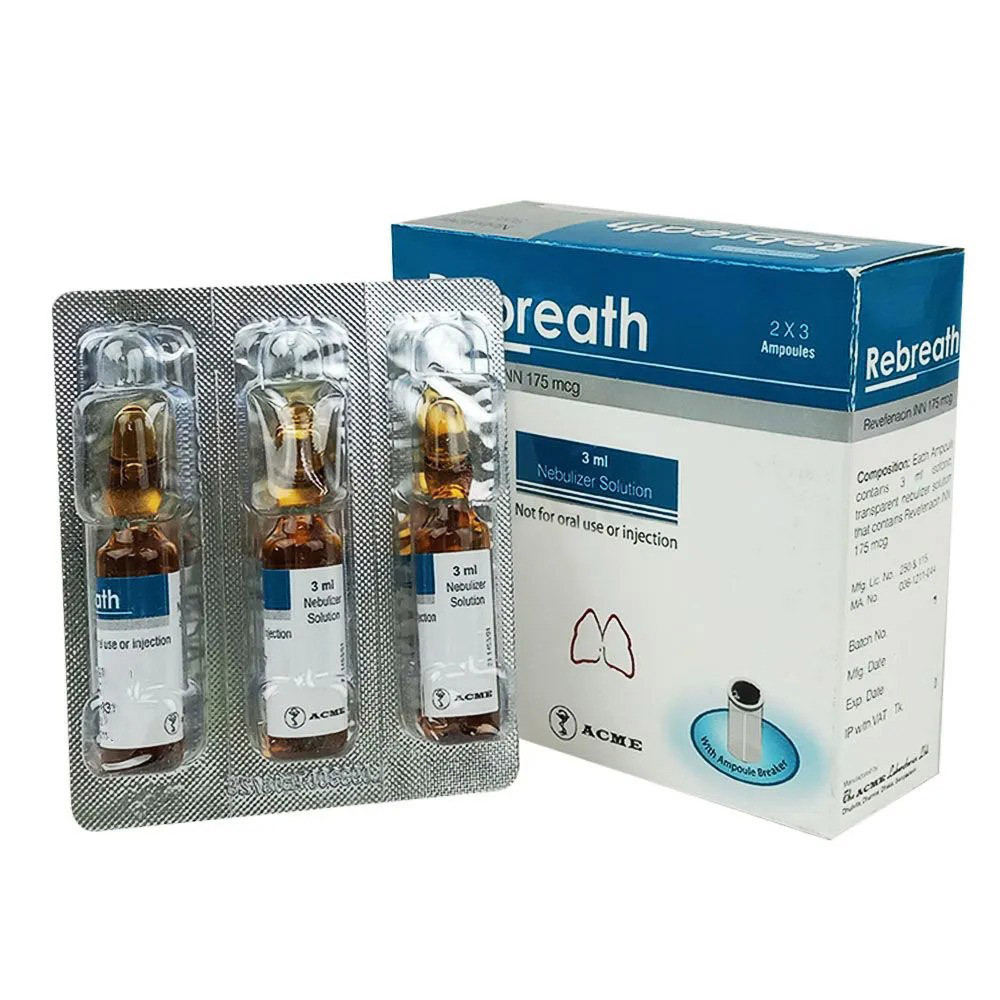
Rebreath Solution for Inhalation 175 mg/3 ml is a novel biphenyl carbamate tertiary amine agent that belongs to the family of the long-acting muscarinic antagonists (LABA). The labile primary amide in the structure produces a "soft-drug" site that allows rapid systemic clearance and minimizing of the systemically mediated adverse reactions. The LABA group falls into a parent category known as long-acting inhaled bronchodilators and this type of agents are recommended as a maintenance therapy for chronic obstructive pulmonary disease (COPD). From the LABA group, revefenacin is the first once-daily nebulized LAMA treatment. It was developed by Theravance Biopharma and FDA approved on November 9, 2018.
Uses
Rebreath Solution for Inhalation 175 mg/3 ml is an anticholinergic agent used to treat COPD.
Rebreath Solution for Inhalation 175 mg/3 ml is indicated as an inhalation solution for the maintenance treatment of patients with chronic obstructive pulmonary disease (COPD).
COPD is a growing disease being the third leading cause of death in the US. This disease is characterized by not fully reversible airflow limitation.
Associated Conditions
Pharmacodynamics
Rebreath Solution for Inhalation 175 mg/3 ml has been reported to produce a sustained, long-acting bronchodilation with lower anti-muscarinic-related side effects. In clinical trials, revefenacin demonstrated to be of a long duration of action and low systemic exposure in patients with COPD. Also, it was reported that a dose of 88 mcg can produce a clinically effective bronchodilation measured by through forced expiratory volume in 1s and serial spirometric assessments.
In placebo-controlled trials, revefenacin showed a decrease in the use of albuterol rescue inhalers and sustained increases in the peak expiratory flow rate that reached a steady state at a maximum in day 7. As well, there was a reported superior lung selectivity index when compared with other LABAs such as glycopyrronium and tiotropium which produced a decreased sialagogue effect.
Mechanism of Action
Rebreath Solution for Inhalation 175 mg/3 ml is an inhaled bronchodilator muscarinic antagonist with a long-acting bronchodilation activity. It has been shown to present a high affinity and behaved as a competitive antagonist of the five muscarinic cholinergic receptors. Studies have indicated that revefenacin dissociates significantly slower from the muscarinic receptor M3 (hM3) when compared to the receptor M2 (hM2) which indicates a kinetic selectivity for this subtype. This competitive antagonism produces a suppressive action of the acetylcholine-evoked calcium mobilization and contractile responses in the airway tissue. Lastly, due to the duration of the bronchodilation, revefenacin is considered a long-acting muscarinic antagonist which allows it to be dosed once daily.
This response is very important for the therapy of COPD as the main goal is the reduce the frequency and severity of exacerbations which are normally driven by the presence of elevated cholinergic bronchoconstrictor tone mediated by muscarinic receptors on parasympathetic ganglia and airway smooth muscle. Hence, the activity of revefenacin produces a potent and long-lasting protection against the bronchoconstrictor response to acetylcholine or methacholine.
Absorption
In pharmacokinetic studies, revefenacin was absorbed very rapidly and presented a linear increase in plasma exposure with Cmax, tmax and AUC that ranged between 0.02-0.15 ng/ml, 0.48-0.51 hours and 0.03-0.36 ng.h/ml, respectively. The bioaccumulation of revefenacin was very limited and the steady-state was achieved by day 7.
Volume of Distribution
After intravenous administration of revefenacin, the reported volume of distribution is 218 L which suggests an extensive distribution to the tissues.
Protein Binding
The protein binding of revefenacin and its active metabolite is of 71% and 42% respectively.
Route of Elimination
After reaching maximum concentration, revefenacin concentrations decline in a biphasic manner. This elimination kinetics is observed by a rapid declining plasma concentration followed by a slow apparent bi-exponential elimination. Renal elimination of revefenacin is limited and it presents a mean cumulative amount excreted in urine as the unchanged drug of < 0.2% of the administered dose.
Following intravenous revefenacin administration, 54% of the dose is recovered in feces and 27% was recovered in urine which confirms a high hepatobiliary processing.
Half Life
The apparent terminal half-life of a dose of 350 mcg of revefenacin was 22.3-70 hours.
Clearance
The renal clearance of revefenacin is negligible and thus, the clearance rate is not a major parameter for this drug.
Toxicity
Rebreath Solution for Inhalation 175 mg/3 ml does not produce the typical systemic effects associated with anticholinergic therapies. In carcinogenic studies in animals, there was no evidence of tumorigenicity. As well, there was no evidence of mutagenicity in the Ames test nor genotoxicity in in vitro mouse lymphoma assays and in vivo rat bone marrow micronucleus assays. There is no effect in the fertility.
In overdose situations, the common signs and symptoms are nausea, vomiting, dizziness, lightheadedness, blurred vision, increased intraocular pressure, obstipation and difficulties in voiding.
Food Interactions
No interactions found.
Dosage
No dosage adjustment is required for geriatric patients, or patients with renal impairment.
The drug compatibility (physical and chemical), efficacy, and safety of Rebreath Solution for Inhalation 175 mg/3 ml when mixed with other drugs in a nebulizer have not been established.