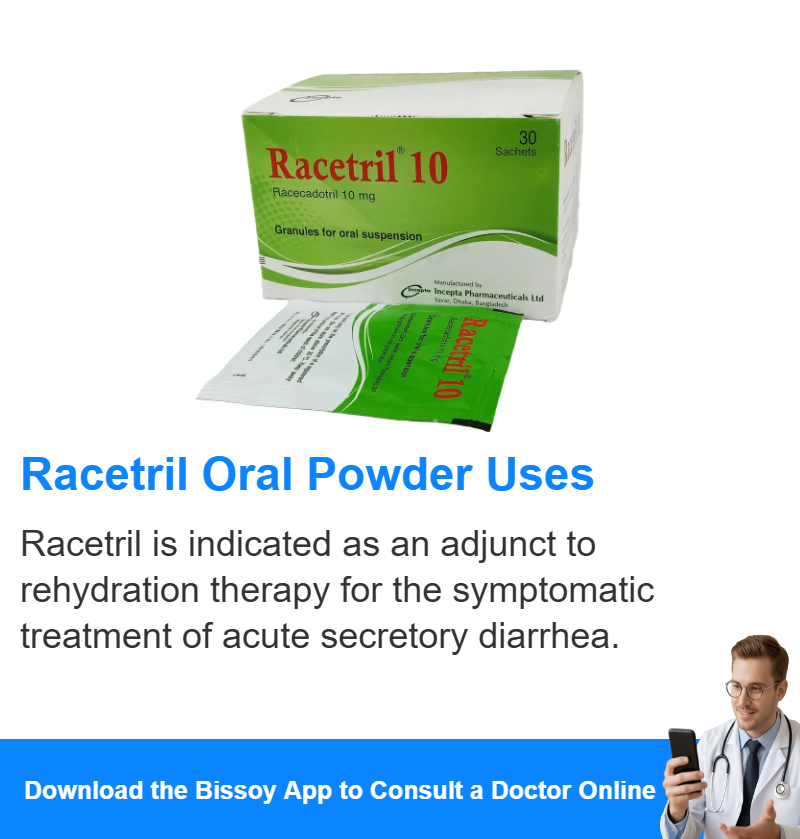
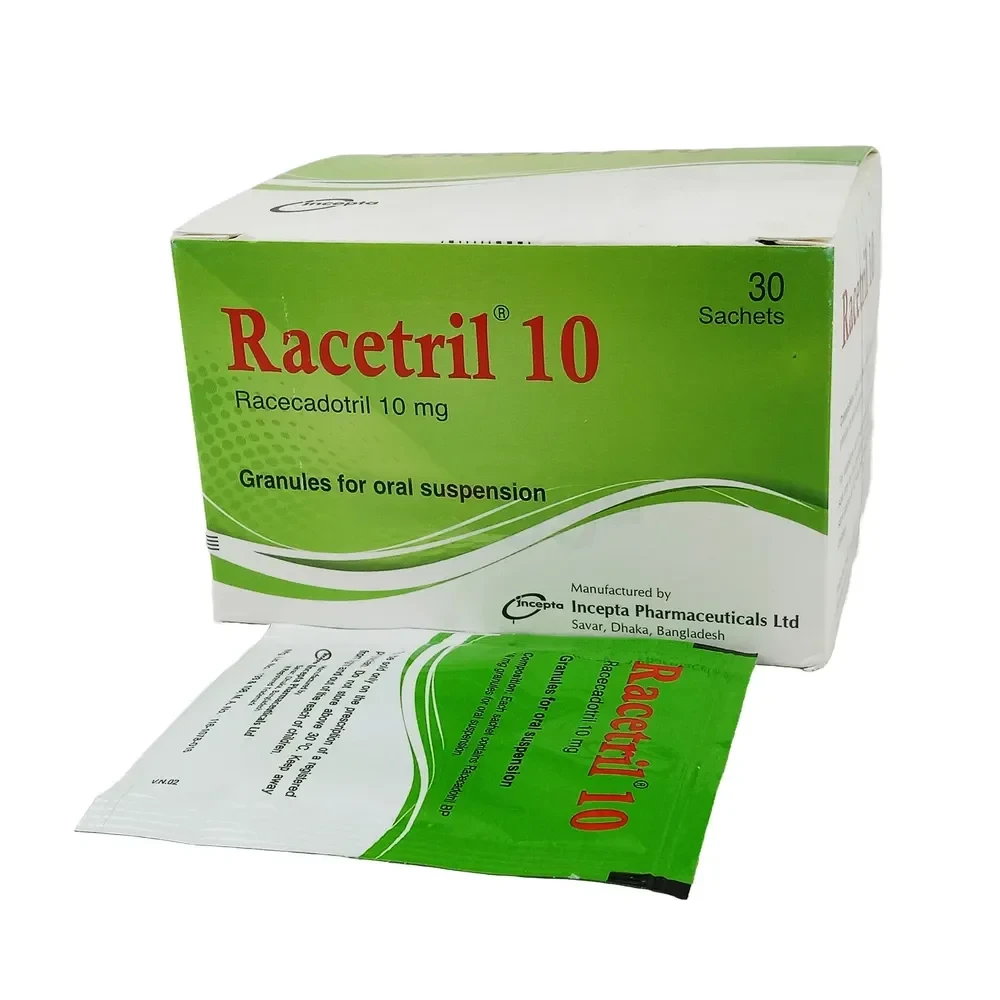
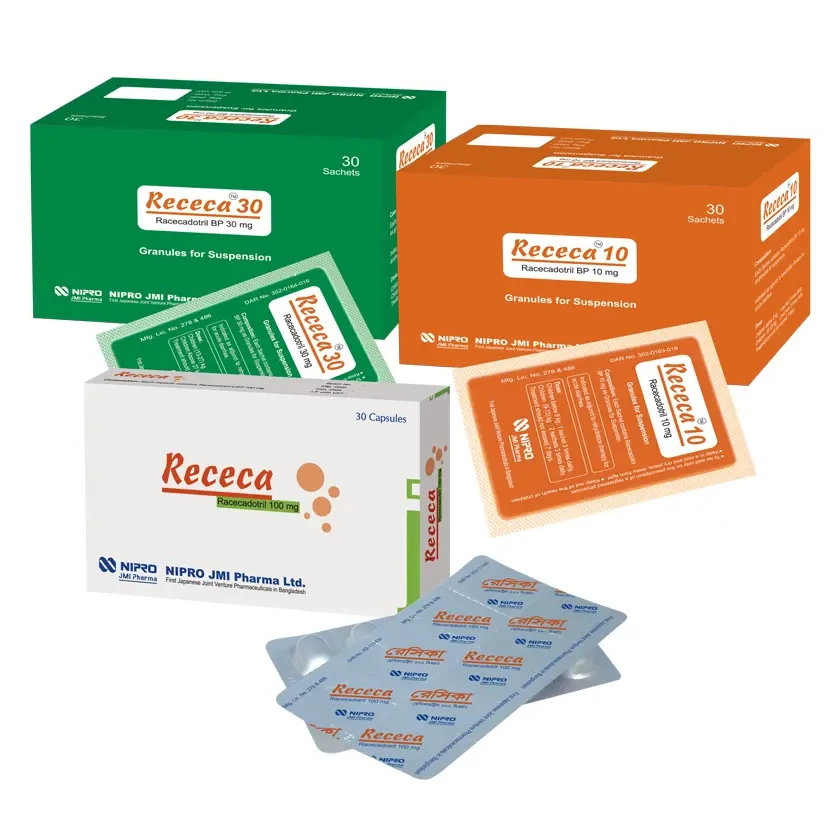
Racetril Oral Powder 10 mg/sachet is an antidiarrheal drug that works by reducing the secretion of water and electrolytes in the intestines. It is often used as an adjunct treatment for acute diarrhea in children and adults. Unlike traditional antidiarrheal drugs that slow intestinal motility, racecadotril helps manage diarrhea without affecting bowel movement speed.
Racetril Oral Powder 10 mg/sachet is primarily used for the symptomatic treatment of acute diarrhea. It is effective in both children and adults and can be used in conjunction with rehydration therapy. It is especially useful in cases where diarrhea is caused by infections or other acute conditions but is not indicated for chronic diarrhea.
| Brand Name | Racetril |
|---|---|
| Type | Oral Powder |
| Weight | 10 mg/sachet |
| Generic | Racecadotril |
| Manufacturer | Incepta Pharmaceuticals Ltd. |
| Available in | English বাংলা |
Racetril Oral Powder 10 mg/sachet is a prodrug that is converted into its active form, thiorphan, in the body. Thiorphan inhibits enkephalinase, an enzyme responsible for breaking down endogenous enkephalins. By preventing the degradation of enkephalins, racecadotril enhances their activity, leading to a reduction in water and electrolyte secretion in the intestines. This helps reduce the volume and frequency of stools without altering normal gut motility.
Racetril Oral Powder 10 mg/sachet generally starts working within 30 minutes to 2 hours after oral administration. A reduction in stool output is typically seen within the first 24 hours of treatment, and the drug is most effective when used early in the course of acute diarrhea.
Racetril Oral Powder 10 mg/sachet is rapidly absorbed after oral administration. It undergoes first-pass metabolism in the liver and is quickly converted to its active metabolite, thiorphan. Peak plasma concentrations are reached within one hour of administration.
Racetril Oral Powder 10 mg/sachet and its metabolites are primarily eliminated through the urine, with smaller amounts excreted in feces. The drug is extensively metabolized before excretion, and only a small fraction of the parent compound is eliminated unchanged.
For adults, the typical dosage of racecadotril is 100 mg three times a day, taken before the main meals. In children, the dosage is weight-based, with 1.5 mg/kg given three times a day. Racetril Oral Powder 10 mg/sachet should be continued until diarrhea has been controlled, but it should not be used for more than seven days without medical supervision.
Racetril Oral Powder 10 mg/sachet is administered orally, either as capsules or as a granulated powder for suspension, which can be mixed with water. It is typically taken before meals for optimal effect. In pediatric formulations, the powder is commonly mixed with food or liquids for ease of administration.
Common side effects of racecadotril include headache, rash, and nausea. Less commonly, hypersensitivity reactions such as angioedema or urticaria may occur. In rare cases, serious allergic reactions have been reported. It generally has fewer gastrointestinal side effects compared to other antidiarrheals.
Racetril Oral Powder 10 mg/sachet has a favorable safety profile, with minimal systemic absorption. However, overdose may lead to symptoms such as excessive sedation, headache, or nausea. Supportive care is typically recommended in cases of overdose.
Racetril Oral Powder 10 mg/sachet should be used with caution in patients with kidney or liver impairment, as its metabolism and elimination may be affected. It should not be used as a substitute for oral rehydration therapy, which is essential in the management of diarrhea, especially in children. Patients with persistent or chronic diarrhea should seek medical advice.
Racetril Oral Powder 10 mg/sachet has minimal interactions with other drugs, as it does not significantly affect intestinal motility or systemic absorption. However, it should be used cautiously with other medications that impact the gastrointestinal tract.
Racetril Oral Powder 10 mg/sachet should be used cautiously in patients with chronic diarrhea or conditions that affect water and electrolyte balance, such as kidney disease. It is not recommended for use in patients with diarrhea caused by antibiotic-associated colitis or those with bloody or inflammatory diarrhea.
Racetril Oral Powder 10 mg/sachet does not significantly interact with other medications, as it has a localized effect in the intestines. However, it should not be used alongside drugs that reduce gut motility, such as opioids, unless specifically prescribed by a healthcare provider.
There are no significant food interactions with racecadotril. It can be taken with or without food, but for consistency, it is recommended to take the medication before meals.
Racetril Oral Powder 10 mg/sachet is classified as a Category B drug in pregnancy. Animal studies have not shown any harmful effects on the fetus, but there is limited data in pregnant women. It should be used during pregnancy only if the potential benefits outweigh the risks, and always under medical supervision.
There is limited data on the excretion of racecadotril in human breast milk. However, due to its localized action and minimal systemic absorption, the risk to a breastfeeding infant is considered low. It should be used with caution during breastfeeding, and healthcare providers should weigh the potential risks and benefits.
In the event of an acute overdose of racecadotril, symptoms may include sedation, nausea, and headache. Treatment is generally supportive, with a focus on maintaining hydration and monitoring electrolyte levels. There is no specific antidote for racecadotril overdose.
Racetril Oral Powder 10 mg/sachet is contraindicated in patients with known hypersensitivity to the drug or any of its components. It should also be avoided in patients with hereditary fructose intolerance due to the presence of sucrose in some formulations.
Racetril Oral Powder 10 mg/sachet should be taken orally, preferably before meals. The dosage should be adjusted according to body weight in children. The medication should be continued until diarrhea is controlled, but it should not be used for more than seven days without consulting a healthcare provider.
Racetril Oral Powder 10 mg/sachet should be stored at room temperature, between 15°C and 25°C (59°F and 77°F), away from moisture and heat. It should be kept out of reach of children and not used after the expiration date on the packaging.
Racetril Oral Powder 10 mg/sachet has a low volume of distribution due to its localized action in the gastrointestinal tract and minimal systemic absorption.
The half-life of the active metabolite, thiorphan, is approximately 3 hours. However, the duration of action can extend beyond this due to its effects on intestinal enkephalins and water-electrolyte balance.
Racetril Oral Powder 10 mg/sachet is metabolized in the liver and cleared primarily through renal excretion. The active metabolites are excreted mainly in the urine, with a smaller portion eliminated via feces.
See in details version Racetril Oral Powder 10 mg/sachet also Racetril Oral Powder 10 mg/sachet in bangla