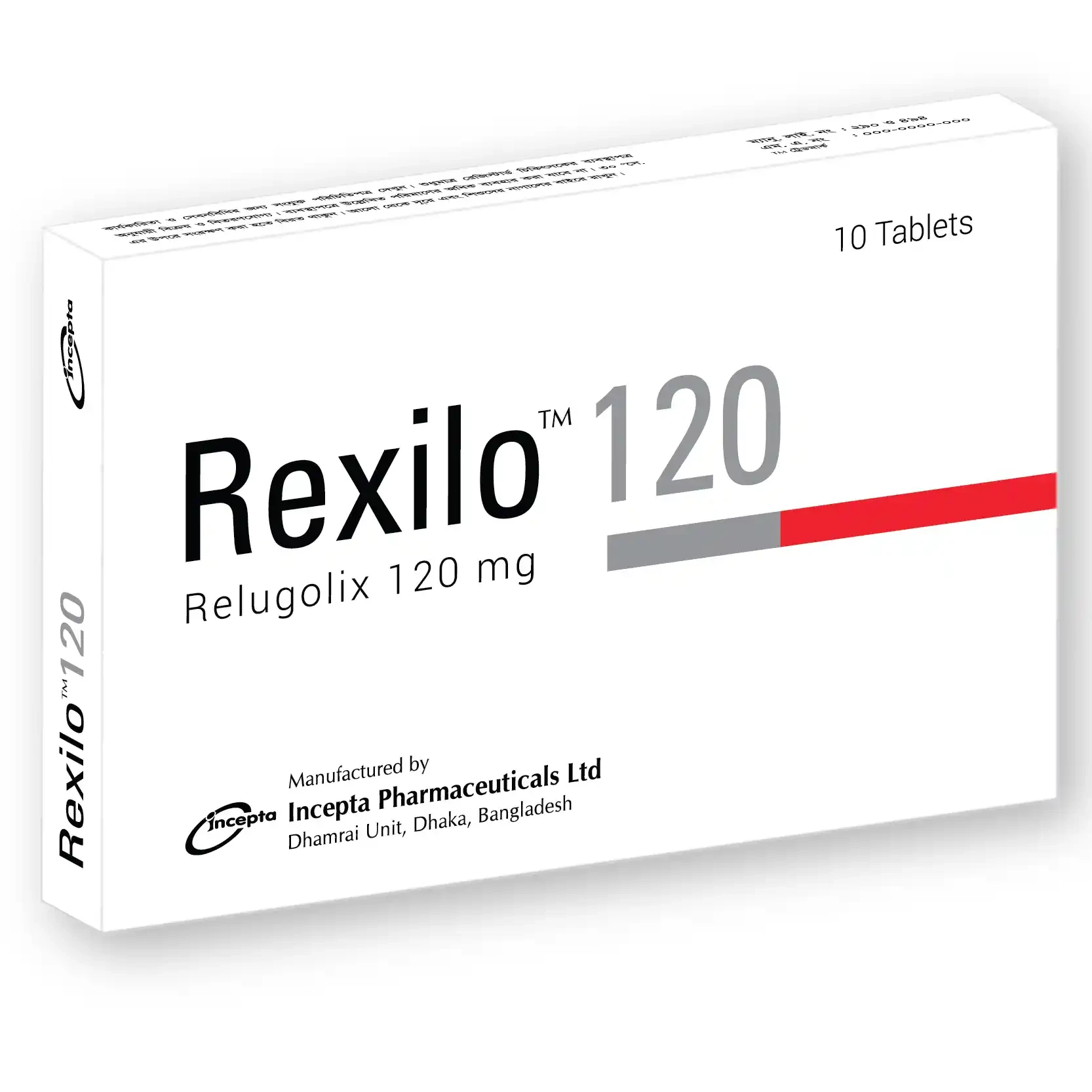
Introduction
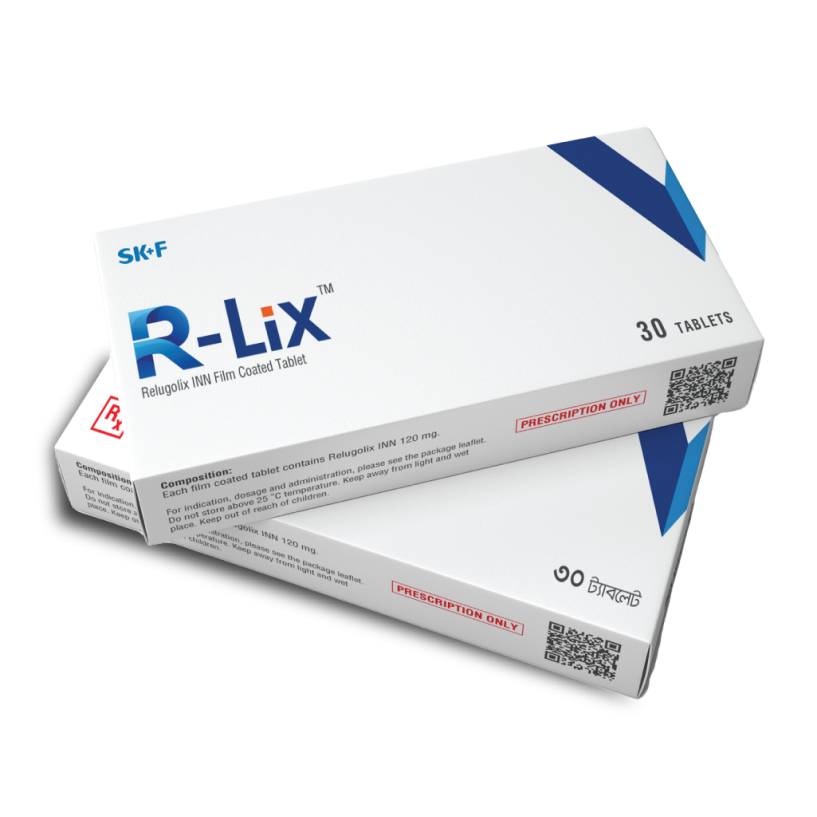
R-Lix Tablet 120 mg is an orally active gonadotropin-releasing hormone (GnRH) receptor antagonist used to treat hormone-dependent conditions. By blocking GnRH receptors, it suppresses the release of luteinizing hormone (LH) and follicle-stimulating hormone (FSH), leading to reduced production of sex hormones such as testosterone and estrogen.
R-Lix Tablet 120 mg is indicated for the treatment of advanced prostate cancer and, in combination with estradiol and norethindrone, for the management of heavy menstrual bleeding associated with uterine fibroids. It has also been studied for the treatment of endometriosis.
Uses
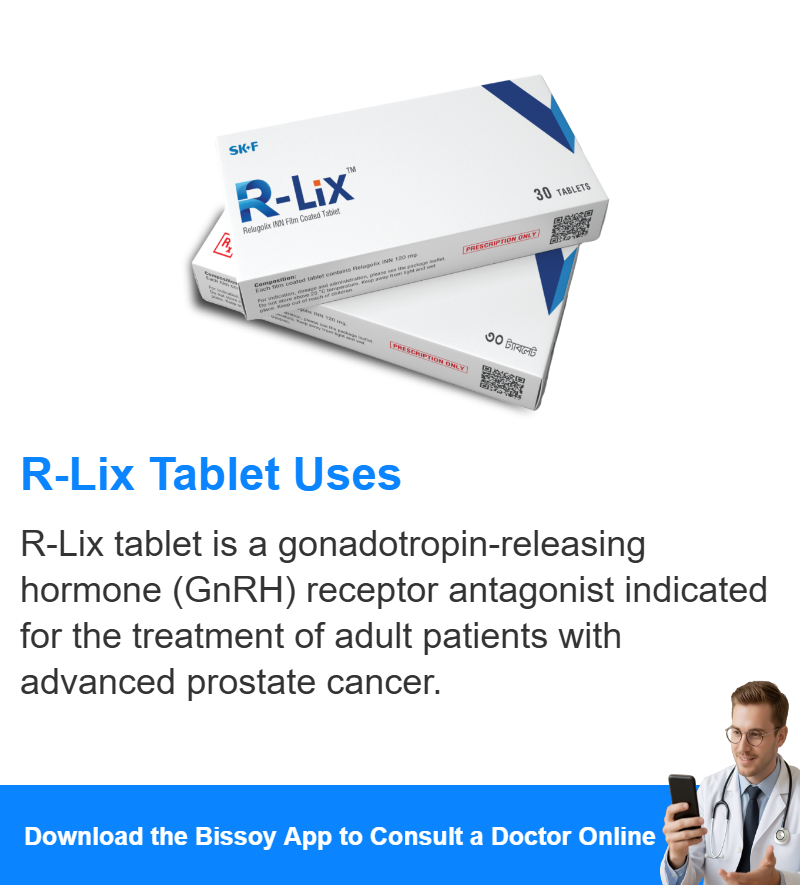
R-Lix Tablet 120 mg is an oral GnRH receptor antagonist for androgen deprivation therapy in the treatment of advanced prostate cancer.
R-Lix Tablet 120 mg is indicated for the treatment of adult patients with advanced prostate cancer. In a combination product with estradiol and norethindrone, relugolix is indicated for the once-daily treatment for the management of heavy menstrual bleeding associated with uterine fibroids in premenopausal women.
Associated Conditions
Pharmacodynamics
Approximately 56% of patients achieved castrate-level testosterone concentrations (9 R-Lix Tablet 120 mg requires once-daily oral administration to maintain the desired testosterone concentrations.
Androgen deprivation therapies may prolong the QTc interval and should therefore be used with caution in patients having a high baseline risk of QTc prolongation, such as those with electrolyte abnormalities, congestive heart failure, or using other medications known to prolong the QTc interval. Based on its mechanism of action and data from animal studies, relugolix may result in fetal harm if administered to pregnant females - male patients with female partners should be advised to use effective contraception throughout therapy and for 2 weeks following cessation of therapy to prevent inadvertent fetal exposure.
Mechanism of Action
The pathogenesis and progression of prostate cancer appear driven, at least in part, by the effects of testosterone. Androgen deprivation has been demonstrated to result in cell death and tumor regression in many well-differentiated prostate cancer cell lines - for this reason, androgen deprivation therapy (ADT) has become a standard in the treatment of prostate cancer, particularly in advanced disease.
Testosterone production in males is carried out in the Leydig cells of testes and is stimulated by luteinizing hormone (LH), which itself is produced in the pituitary gland following the binding of gonadotropin-releasing hormone (GnRH) to corresponding GnRH receptors. R-Lix Tablet 120 mg is a competitive antagonist of these GnRH receptors, thereby decreasing the release of LH and, ultimately, testosterone.
Absorption
The Cmax and AUC of orally-administered relugolix increase proportionally following single doses - in contrast, with repeat dosing the AUC remains proportional to the dose while the Cmax increases greater than proportionally to the dose. Following the administration of 120mg once daily, the steady-state AUC and Cmax of relugolix were 407 (± 168) ng.hr/mL and 70 (± 65) ng/mL, respectively.
The absolute oral bioavailability of relugolix is approximately 12% and the median Tmax following oral administration is 2.25 hours.
Protein Binding
R-Lix Tablet 120 mg is 68-71% protein-bound in plasma, primarily to albumin and, to a lesser extent, α1-acid glycoprotein.
Route of Elimination
Approximately 81% of an orally administered dose was recovered in the feces, of which 4.2% was unchanged parent drug, while 4.1% of the dose was recovered in the urine, of which 2.2% remained unchanged.
Half Life
The average effective half-life of relugolix is 25 hours, while the average terminal elimination half-life is 60.8 hours.
Clearance
The average renal clearance of relugolix is 8 L/h with a total clearance of 26.4 L/h.
Toxicity
Data regarding overdose of relugolix are unavailable.
Food Interactions
- Take with or without food. Administration with food does not result in any clinically meaningful differences in pharmacokinetics.
Dosage
Pediatric Use: The safety and efficacy of R-Lix Tablet 120 mg in pediatric patients have not been established.
Geriatric Use: No overall differences in safety or effectiveness were observed between older and younger subjects.