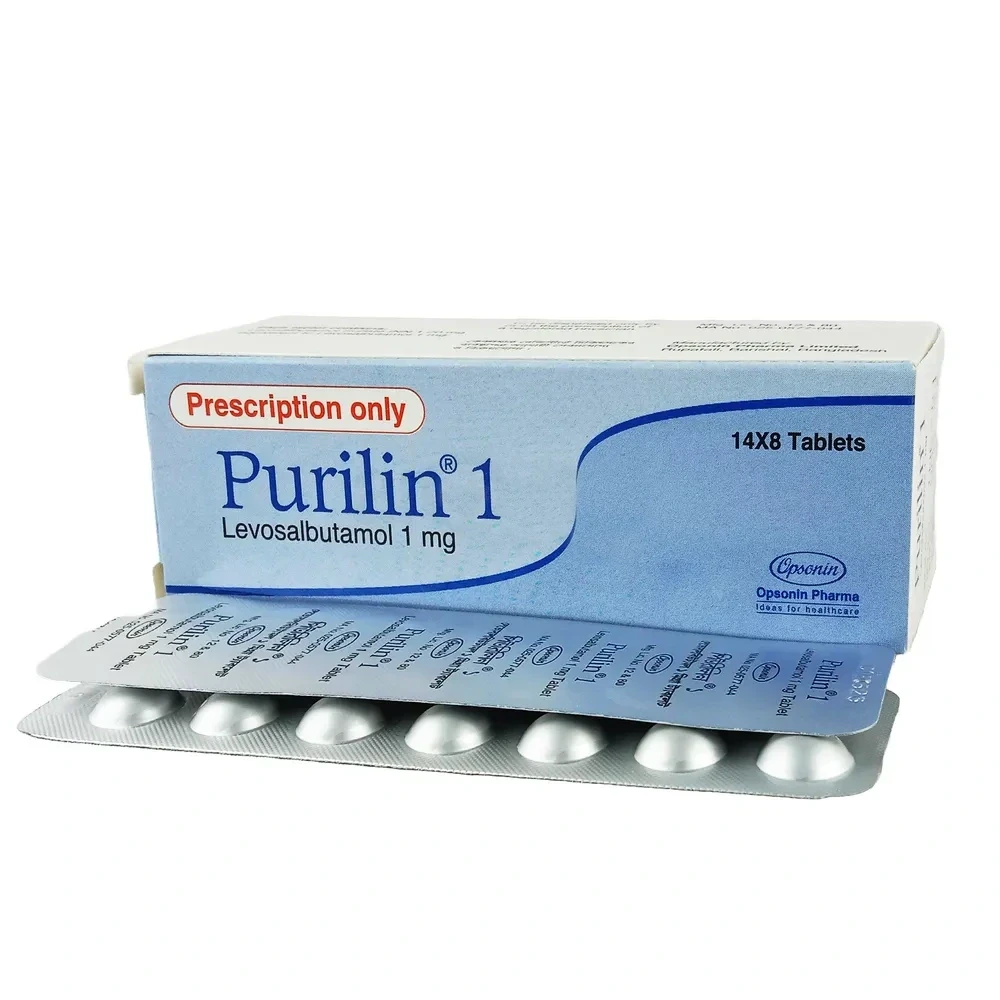
1. What is Purilin Tablet 1 mg?
Purilin Tablet 1 mg (also called Levalbuterol) is a bronchodilator used to treat respiratory conditions like asthma and chronic obstructive pulmonary disease (COPD). It helps relax airway muscles and improve breathing.
2. How does Purilin Tablet 1 mg work?
Purilin Tablet 1 mg selectively stimulates beta-2 adrenergic receptors in the lungs, leading to smooth muscle relaxation and bronchodilation, which helps open up the airways.
3. What conditions is Purilin Tablet 1 mg used to treat?
- Asthma
- Chronic obstructive pulmonary disease (COPD)
- Bronchospasm
- Exercise-induced bronchoconstriction
4. What forms does Purilin Tablet 1 mg come in?
- Inhaler
- Nebulizer solution
- Tablet
- Syrup
5. How should Purilin Tablet 1 mg be used?
Purilin Tablet 1 mg is usually taken via inhalation using a nebulizer or inhaler. The dosage and frequency depend on the severity of the condition.
6. What is the usual dosage for adults?
- Inhaler: 90 mcg per puff, 1-2 puffs every 4-6 hours
- Nebulizer: 0.63 mg or 1.25 mg every 6-8 hours
7. Can Purilin Tablet 1 mg be used in children?
Yes, it is prescribed for children, but the dosage is adjusted based on age and weight.
8. What is the difference between Purilin Tablet 1 mg and Salbutamol?
Purilin Tablet 1 mg is the active "R-enantiomer" of Salbutamol, which is believed to cause fewer side effects like tremors and palpitations while maintaining the same bronchodilation effect.
9. How quickly does Purilin Tablet 1 mg work?
It starts working within 5-15 minutes, and its effects last for 4-6 hours.
10. Can Purilin Tablet 1 mg be used for an acute asthma attack?
Yes, it is a fast-acting bronchodilator and is used for quick relief during asthma attacks.
11. Can Purilin Tablet 1 mg be used for long-term asthma management?
It is mainly a rescue medication. Long-term management usually involves corticosteroids or other controller medications.
12. What are the common side effects of Purilin Tablet 1 mg?
- Tremors
- Palpitations
- Nervousness
- Headache
- Dizziness
13. Can Purilin Tablet 1 mg cause allergic reactions?
Yes, though rare, allergic reactions such as rashes, swelling, and difficulty breathing can occur.
14. Can Purilin Tablet 1 mg cause high blood pressure?
It may cause a temporary increase in heart rate and blood pressure, but this is usually mild.
15. What should I do if I miss a dose?
Take it as soon as you remember. If it’s almost time for your next dose, skip the missed dose and continue your schedule.
16. Can I overdose on Purilin Tablet 1 mg?
Yes, overdose symptoms include severe tremors, fast heartbeat, chest pain, and seizures. Seek immediate medical help in case of overdose.
17. Can Purilin Tablet 1 mg be used for COPD?
Yes, it is often used to relieve symptoms of COPD, such as shortness of breath.
18. Can I use Purilin Tablet 1 mg daily?
Yes, but frequent use may indicate poor asthma control, and your doctor may adjust your medication.
19. Can Purilin Tablet 1 mg be used with steroids?
Yes, it is often combined with corticosteroids for better asthma and COPD management.
20. Can pregnant women take Purilin Tablet 1 mg?
It is used if the benefits outweigh the risks. Consult your doctor before using it during pregnancy.
21. Can Purilin Tablet 1 mg be used during breastfeeding?
It can pass into breast milk in small amounts, so consult your doctor before use.
22. Can Purilin Tablet 1 mg cause insomnia?
Yes, since it stimulates the nervous system, it may cause trouble sleeping.
23. Is Purilin Tablet 1 mg addictive?
No, but overuse can lead to reduced effectiveness over time.
24. Can I drink alcohol while using Purilin Tablet 1 mg?
Alcohol may increase side effects like dizziness, so it is best to avoid it.
25. Can Purilin Tablet 1 mg be taken with other asthma medications?
Yes, it is often used with inhaled steroids or other long-acting bronchodilators.
26. Can Purilin Tablet 1 mg be used for exercise-induced asthma?
Yes, using an inhaler 15-30 minutes before exercise can help prevent asthma symptoms.
27. What should I do if Purilin Tablet 1 mg doesn’t work?
Seek medical attention if symptoms persist despite using the prescribed dose.
28. Can Purilin Tablet 1 mg be used in nebulizers?
Yes, it is available as a nebulizing solution for inhalation therapy.
29. Does Purilin Tablet 1 mg cause weight gain?
No, it does not cause weight gain.
30. Can Purilin Tablet 1 mg affect blood sugar levels?
Yes, it may cause temporary increases in blood sugar, especially in diabetics.
31. How should Purilin Tablet 1 mg be stored?
Keep it at room temperature, away from moisture and heat.
32. Does Purilin Tablet 1 mg interact with beta-blockers?
Yes, beta-blockers like propranolol may reduce its effectiveness.
33. Can children use Purilin Tablet 1 mg syrup?
Yes, syrup form is prescribed for young children under a doctor's supervision.
34. How often can I use a Purilin Tablet 1 mg inhaler?
Usually every 4-6 hours as needed, but do not exceed the prescribed dose.
35. Can Purilin Tablet 1 mg cause chest pain?
Rarely, but if chest pain occurs, seek medical attention immediately.
36. Is Purilin Tablet 1 mg a steroid?
No, it is a bronchodilator, not a steroid.
37. Can I use Purilin Tablet 1 mg with antibiotics?
Yes, but inform your doctor about all medications you are taking.
38. Can Purilin Tablet 1 mg be used for cough?
It is used if the cough is due to bronchospasm.
39. Can Purilin Tablet 1 mg be used in heart patients?
Caution is needed as it can increase heart rate.
40. What happens if I stop using Purilin Tablet 1 mg suddenly?
Stopping suddenly does not cause withdrawal, but symptoms may return.
41. Can I drive after using Purilin Tablet 1 mg?
Yes, unless you experience dizziness or tremors.
42. Can Purilin Tablet 1 mg be used for pneumonia?
It may help in pneumonia with bronchospasm but does not treat the infection.
43. Can I take Purilin Tablet 1 mg with antihistamines?
Yes, but consult your doctor.
44. Can Purilin Tablet 1 mg cause dehydration?
No, but drink plenty of fluids to avoid dry mouth.
45. Is Purilin Tablet 1 mg available over-the-counter?
No, it requires a prescription.
46. Can it be used in smokers?
Yes, but smoking worsens lung conditions.
47. Can it cause dizziness?
Yes, dizziness is a common side effect.
48. Can Purilin Tablet 1 mg be used in emergencies?
Yes, for acute bronchospasm.
49. Can Purilin Tablet 1 mg be used long-term?
It is mainly for short-term relief.
50. Can it be used for allergies?
Only if allergies cause bronchospasm.