Introduction
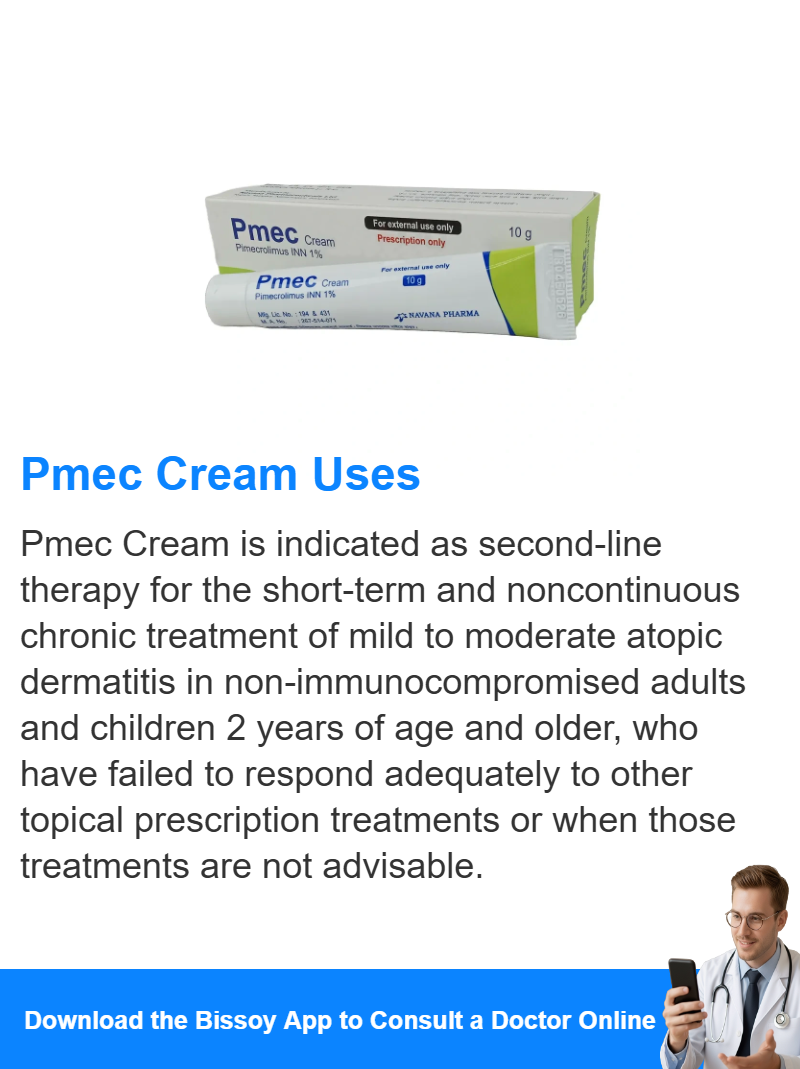
Pmec Cream 1% is a topical immunosuppressant used in the treatment of inflammatory skin conditions. It is a calcineurin inhibitor that helps to reduce inflammation and the immune response in the skin. It is commonly prescribed for atopic dermatitis (eczema) and other chronic inflammatory skin disorders.
Uses
Pmec Cream 1% is primarily used for:
- Topical treatment of mild to moderate atopic dermatitis in patients aged 2 years and older.
- Management of other inflammatory skin conditions where topical corticosteroids are not suitable or have not been effective.
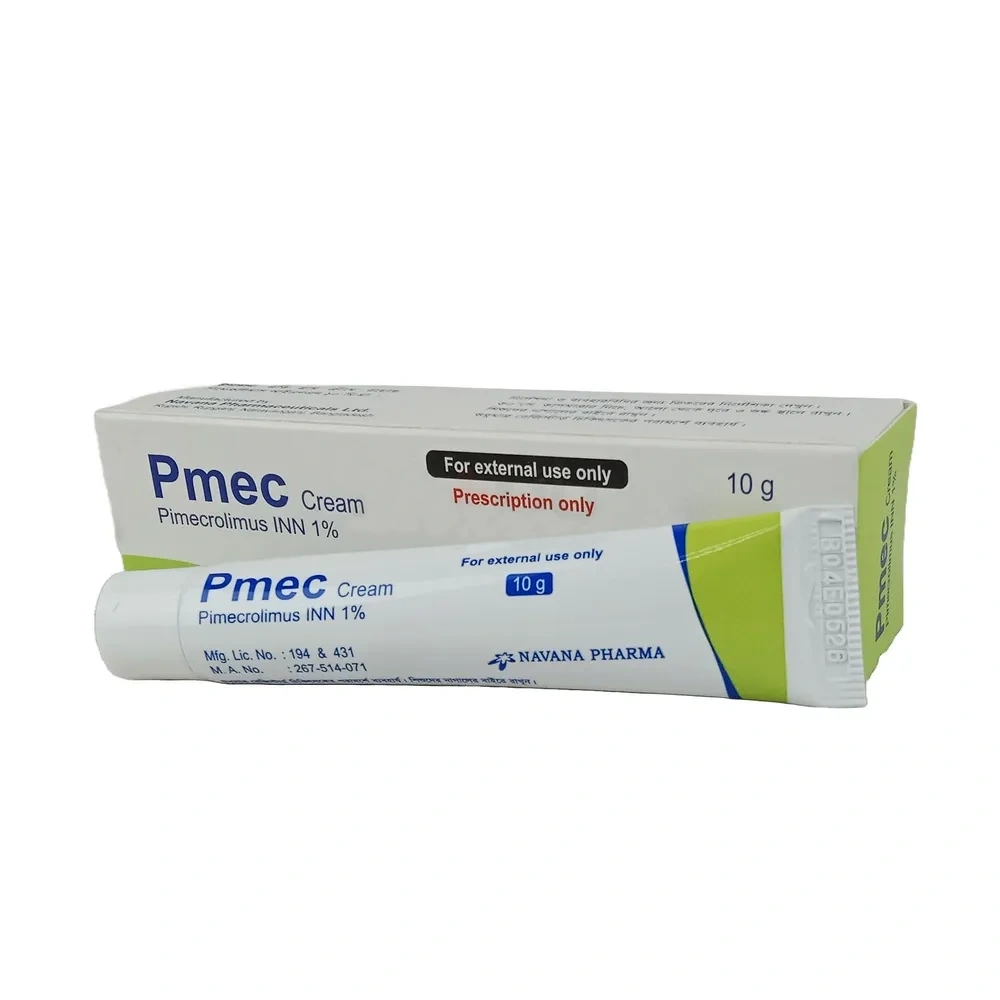
| Brand Name | Pmec |
|---|---|
| Type | Cream |
| Weight | 1% |
| Generic | Pimecrolimus |
| Manufacturer | Navana Pharmaceuticals Ltd. |
| Available in | English বাংলা |
Mechanism of Action
Pmec Cream 1% works by inhibiting calcineurin, a protein phosphatase that is involved in the activation of T-lymphocytes and other immune cells. By blocking calcineurin, pimecrolimus prevents the activation of T-cells and the subsequent release of inflammatory cytokines, reducing inflammation and immune responses in the skin.
How Long Does It Take to Work?
Clinical improvement with pimecrolimus may be observed within 1 to 2 weeks of treatment, although it may take longer to achieve full resolution of symptoms. The effectiveness of the medication can vary depending on the severity of the condition and the individual's response to treatment.
Absorption
Pmec Cream 1% is minimally absorbed through the skin. When applied topically, only a small amount of the drug is systemically absorbed, which minimizes the risk of systemic side effects.
Route of Elimination
Pmec Cream 1% is primarily metabolized by the liver and excreted via bile. The systemic exposure is minimal, and thus the elimination of pimecrolimus from the body is predominantly through biliary excretion.
Dosage
Apply a thin layer of Pimecrolimus Cream, 1% to the affected skin twice daily. The patient should stop using Pimecrolimus Cream, 1% when signs and symptoms (e.g., itch, rash and redness) resolve and should be instructed on what actions to take if symptoms recur.If signs and symptoms persist beyond 6 weeks, patients should be re-examined by their health care provider to confirm the diagnosis of atopic dermatitis.
Continuous long-term use of Pimecrolimus Cream, 1% should be avoided, and application should be limited to areas of involvement with atopic dermatitis
The safety of Pimecrolimus Cream, 1% under occlusion, which may promote systemic exposure, has not been evaluated. Avoid use of Pimecrolimus Cream, 1% with occlusive dressings.
The typical dosage for pimecrolimus is:
- Apply a thin layer of pimecrolimus cream 1% to the affected area twice daily.
Dosage and treatment duration may vary based on the severity of the condition and the patient's response. Follow the specific instructions provided by a healthcare provider.
Administration
Pmec Cream 1% is administered topically. It should be applied to the affected areas of the skin as a thin layer. The cream should be gently rubbed in until it is absorbed. Avoid using it on broken or infected skin, and avoid contact with the eyes.
Side Effects
Common side effects of pimecrolimus include:
- Skin burning or stinging
- Redness or irritation at the application site
- Dry skin
Rare side effects may include:
- Hypopigmentation
- Allergic reactions
Toxicity
Topical pimecrolimus is generally well tolerated, with minimal systemic absorption reducing the risk of toxicity. Overuse or application to large areas of the body may increase the risk of systemic side effects. In case of excessive exposure, remove the product and seek medical advice.
Precautions
Precautions for using pimecrolimus include:
- Avoid use on infected skin or open wounds.
- Do not use in conjunction with other topical immunosuppressants unless advised by a healthcare provider.
- Monitor for signs of skin irritation or infection during treatment.
Interaction
Drug Interactions
There are no significant drug interactions with topical pimecrolimus. However, it should not be used concurrently with other topical immunosuppressants or potent corticosteroids without medical advice.
Food Interactions
There are no known food interactions with pimecrolimus.
Disease Interaction
Pmec Cream 1% should be used with caution in patients with:
- Active skin infections
- Immunocompromised states
Pregnancy Use
Pmec Cream 1% is categorized as Pregnancy Category C, indicating that risk to the fetus cannot be ruled out. It should be used during pregnancy only if clearly needed and after assessing the potential benefits versus risks.
Lactation Use
Pmec Cream 1% is excreted in breast milk in very small amounts. It is generally considered safe for use during lactation, but it is advised to consult a healthcare provider before use.
Acute Overdose
Acute overdose of topical pimecrolimus is unlikely due to minimal systemic absorption. If excessive amounts are applied, remove the product and consult a healthcare provider for further advice.
Contraindication
Pmec Cream 1% is contraindicated in individuals with:
- Known hypersensitivity to pimecrolimus or any component of the formulation
Use Direction
Apply a thin layer of pimecrolimus cream to the affected areas twice daily. Gently rub the cream in until absorbed. Avoid application to areas where the skin is broken or infected. Avoid contact with the eyes and mucous membranes.
Storage Conditions
Store pimecrolimus cream at room temperature, away from moisture and heat. Keep the product in its original container and out of reach of children.
Volume of Distribution
The volume of distribution for topical pimecrolimus is not well characterized, as systemic absorption is minimal when used as directed.
Half Life
The half-life of pimecrolimus in systemic circulation is not well defined due to its minimal systemic absorption when used topically.
Clearance
Pmec Cream 1% is primarily cleared via biliary excretion. Systemic clearance is minimal, and the drug does not significantly accumulate in the body.
See in details version Pmec Cream 1% also Pmec Cream 1% in bangla
Social card
Some Frequently Asked Questions About Pmec Cream 1%