Introduction
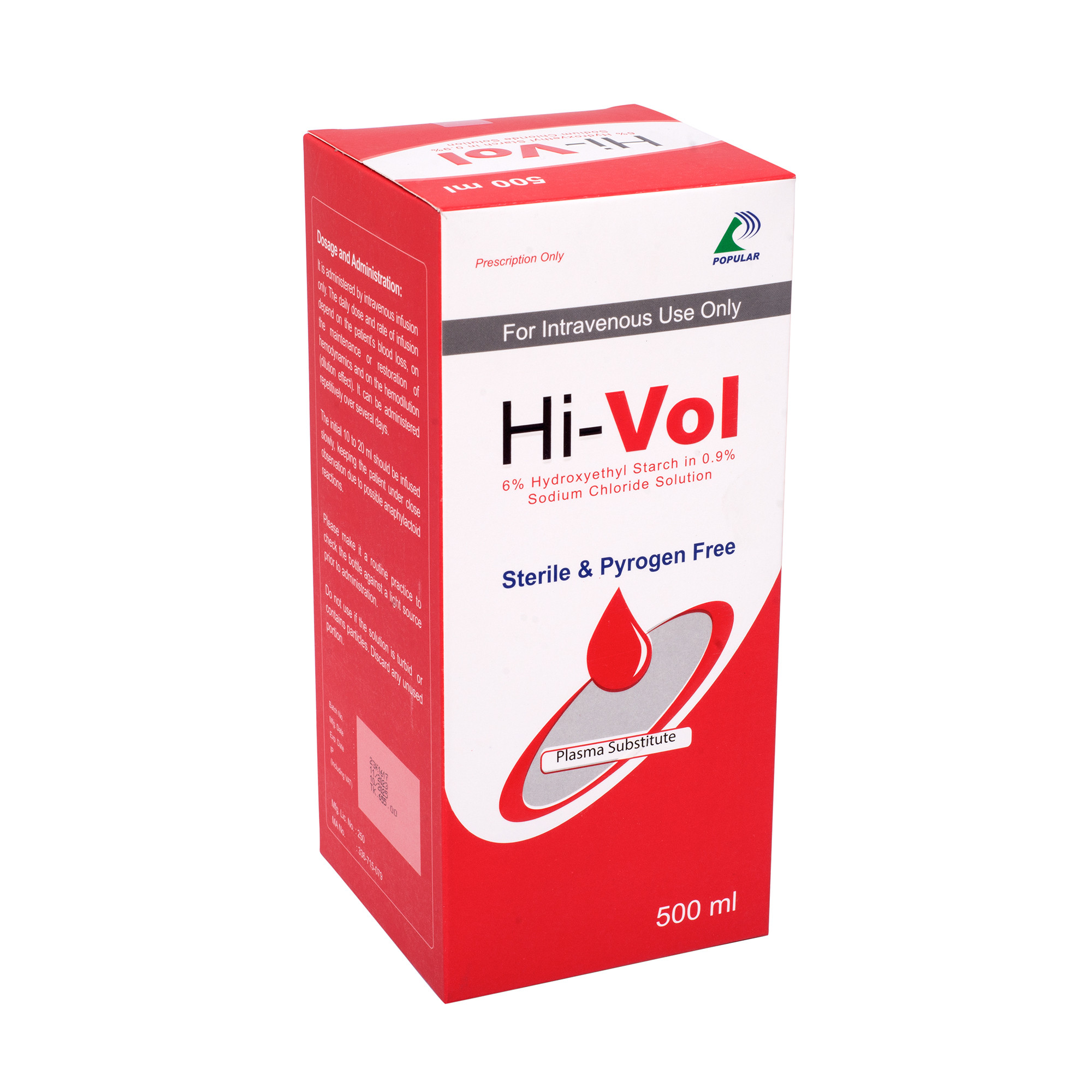
Hydroxyethyl Starch (HES) combined with Sodium Chloride is a colloid solution used in the treatment of hypotension and hypovolemia in intensive care patients. This solution, which contains both starch and electrolytes, helps to rapidly increase the body's intravascular volume of fluids, resulting in enhanced tissue perfusion.
Uses
Hydroxyethyl Starch combined with Sodium Chloride is used in the treatment of patients with hypovolemia or hypotension. It is commonly used in the management of patients in fluid resuscitation of severe trauma patients as well as surgery, sepsis, burns and other medical and surgical conditions requiring fluid replacement.
Mechanism of Action
Hydroxyethyl Starch combined with Sodium Chloride works by increasing intravascular volume, and therefore increases the availability of oxygen in circulation. It is able to rapidly and effectively restore hemodynamics in critically ill patients, by quickly restoring the hydration status and improving the microcirculation. This results in a higher oxygen delivery to metabolically active tissues and organs.
How Long Does it Take to Work?
The effects of Hydroxyethyl Starch combined with Sodium Chloride can be seen almost immediately. This solution is intended to work quickly, typically within 15 minutes of administration. Patients usually experience an increase in hemodynamic parameters within that time frame.
Absorption
Hydroxyethyl Starch is not absorbed in the gastrointestinal tract, and thus bypasses absorption and enters directly into the vascular system. Sodium Chloride is rapidly absorbed from the gastrointestinal tract upon administration, and is effective in restoring fluids and electrolyte balance in the body.
Route of Elimination
Hydroxyethyl Starch and Sodium Chloride are eliminated from the body via the kidneys. The starch molecules are filtered out of the circulation by the kidney and eliminated through the urinary tract. The sodium and chloride ions, on the other hand, are reabsorbed in the proximal renal tubule.
Dosage
This solution will be given to you by, or under the direct supervision of, your physician, who will closely control the amount of this solution given to you.Mode of administration: You will receive this medicine by infusion into a vein (intravenous drip). The speed of infusion, along with the amount of solution infused, will depend on your specific requirements, the disease for which the product is being used, and by reference to the maximum daily dose.
Dosage: Your doctor will decide on the correct dose for you to receive. The recommended maximum daily dose is up to 50 ml of this solution per kg of body weight.
Use in children and adolescents: Your doctor may give the product to children after careful evaluation of advantages and disadvantages.
If you have received more of this solution than you should: Your doctor will ensure that you receive the right amount of this solution. However, different people need different doses, and if the dose does prove too much for you, your doctor may stop this solution immediately and, if necessary, administer medicine that removes water from the body (diuretic). If you have any further questions on the use of this product, please ask your doctor or pharmacist
The recommended dose of Hydroxyethyl Starch combined with Sodium Chloride for an adult is 4-6 ml/kg/hr, up to 15-30 ml/kg/day. Children may require a dose of 8 ml/kg/hr. The dose may vary according to the patient’s condition, and should be adjusted as needed. It is important to carefully monitor the patient’s response to the treatment, and adjust the dosage accordingly.
Administration
Hydroxyethyl Starch combined with Sodium Chloride is usually administered intravenously. It should be delivered through a central or peripheral line, using a calibrated infusion pump and a filter. The solution should be infused over at least 15 minutes to reduce the risk of adverse reactions.
Side Effects
The common side effects associated with Hydroxyethyl Starch combined with Sodium Chloride include: nausea, vomiting, diarrhea, abdominal cramping, fever, headache, dizziness, and flushing. Severe side effects which may require medical attention include: chest pain, difficulty breathing, rapid heart rate, rash, hives, and joint pain.
Toxicity
Hydroxyethyl Starch in high doses may cause renal damage, particularly in patients with impaired renal function or chronic kidney disease. Overdosing can also result in severe fluid overload, leading to cardiac and pulmonary dysfunction. Sodium Chloride toxicity can result when the solution is administered too quickly as it can cause sodium and water overload.
Precaution
Before administering Hydroxyethyl Starch combined with Sodium Chloride, it is important to consider the patient’s age, weight, kidney function, and whether they are at risk of diabetes or liver disease. Patients with preexisting conditions such as hypertension, seizures, or cardiac arrhythmias should be closely monitored after administration. Additionally, the infusion rate must not be too rapid to reduce the risk of adverse events.
Interaction
Hydroxyethyl Starch combined with Sodium Chloride may interact with other medications such as diuretics, warfarin, antipsychotics, and anticonvulsants. Additionally, other colloids and hypertonic solutions may affect the body’s response to Hydroxyethyl Starch in Sodium Chloride, so it is important to inform the prescribing doctor about all medications being taken.
Disease Interaction
Hydroxyethyl Starch combined with Sodium Chloride should only be used with caution in patients with pre-existing renal or hepatic disease, congestive heart failure, or hypertension. Additionally, care should be taken in patients with diabetes, as this solution can increase the risk of hyperglycemia.
Drug Interaction
Hydroxyethyl Starch combined with Sodium Chloride may interact with other medications such as diuretics, warfarin, anticonvulsants, and antipsychotics. It is important to inform the prescribing doctor about all medications being taken, as drug-drug interactions may affect the body’s response to Hydroxyethyl Starch in Sodium Chloride.
Food Interaction
There are no known food interactions associated with Hydroxyethyl Starch combined with Sodium Chloride. This solution should be administered with a meal or snack, if possible.
Pregnancy Use
Hydroxyethyl Starch combined with Sodium Chloride should only be used in pregnant women when clearly needed. Its safety and effectiveness has not been established, and risks should be weighed carefully against the benefit of using this solution.
Lactation Use
Hydroxyethyl Starch combined with Sodium Chloride should only be used in breastfeeding women when clearly needed. Its safety and effectiveness has not been established, and risks should be weighed carefully against the benefit of using this solution.
Acute Overdose
An acute overdose of Hydroxyethyl Starch combined with Sodium Chloride can result in severe fluid and electrolyte overload. Symptoms of overdose include nausea, vomiting, confusion, dizziness, headache, and hypotension. Immediate medical attention should be sought in case of an overdose.
Contraindication
Hydroxyethyl Starch in Sodium Chloride should not be used in patients with a known hypersensitivity to the active ingredients or excipients. In addition, patients with conditions that may be complicated by fluid overload, such as cardiac or renal failure, cirrhosis, hypertension or hypervolemia, should not use this solution.
Use Direction
Hydroxyethyl Starch combined with Sodium Chloride should be administered via intravenous infusion over a period of 15 to 30 minutes. It should be administered through a central or peripheral line with a calibrated infusion pump and a filter. Care should be taken to ensure that the infusion rate is not too rapid, to reduce the risk of adverse events.
Storage Condition
Hydroxyethyl Starch combined with Sodium Chloride should be kept at a temperature of 15-30°C (59-86°F). The solution should be used immediately after opening and any unused portion should be discarded.
Volume of Distribution
The volume of distribution of Hydroxyethyl Starch combined with Sodium Chloride is not known.
Half Life
The half life of Hydroxyethyl Starch combined with Sodium Chloride is not known.
Clearance
The clearance of Hydroxyethyl Starch combined with Sodium Chloride is not known.