Introduction
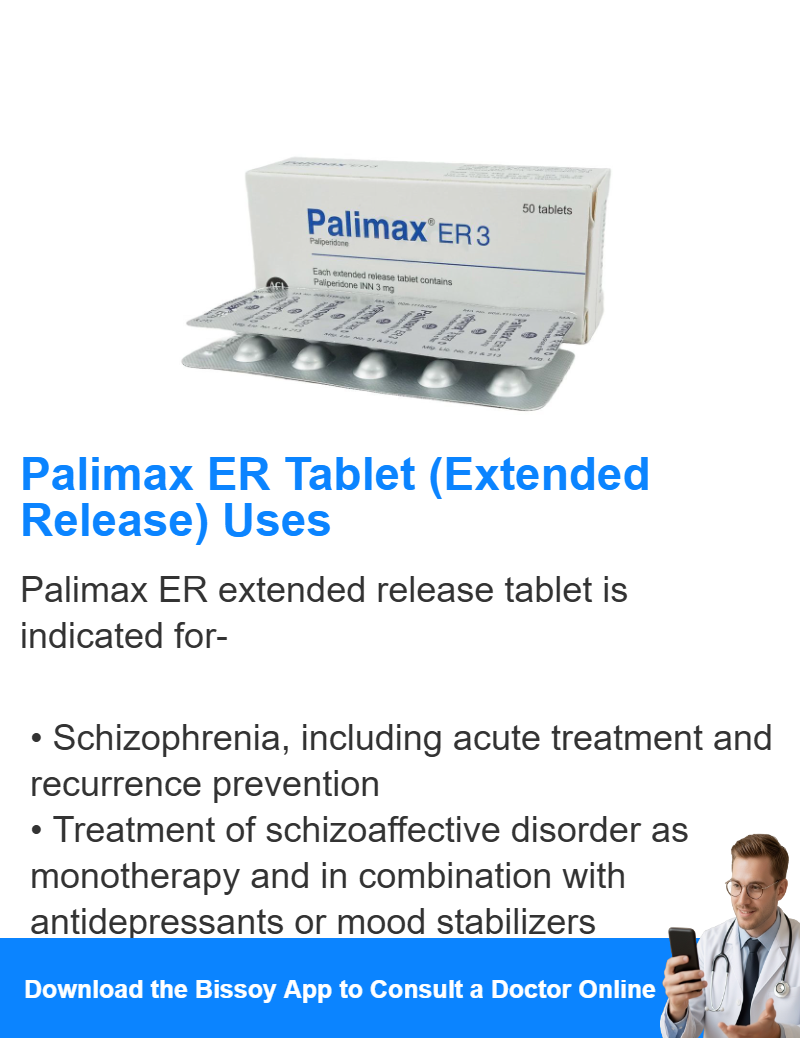
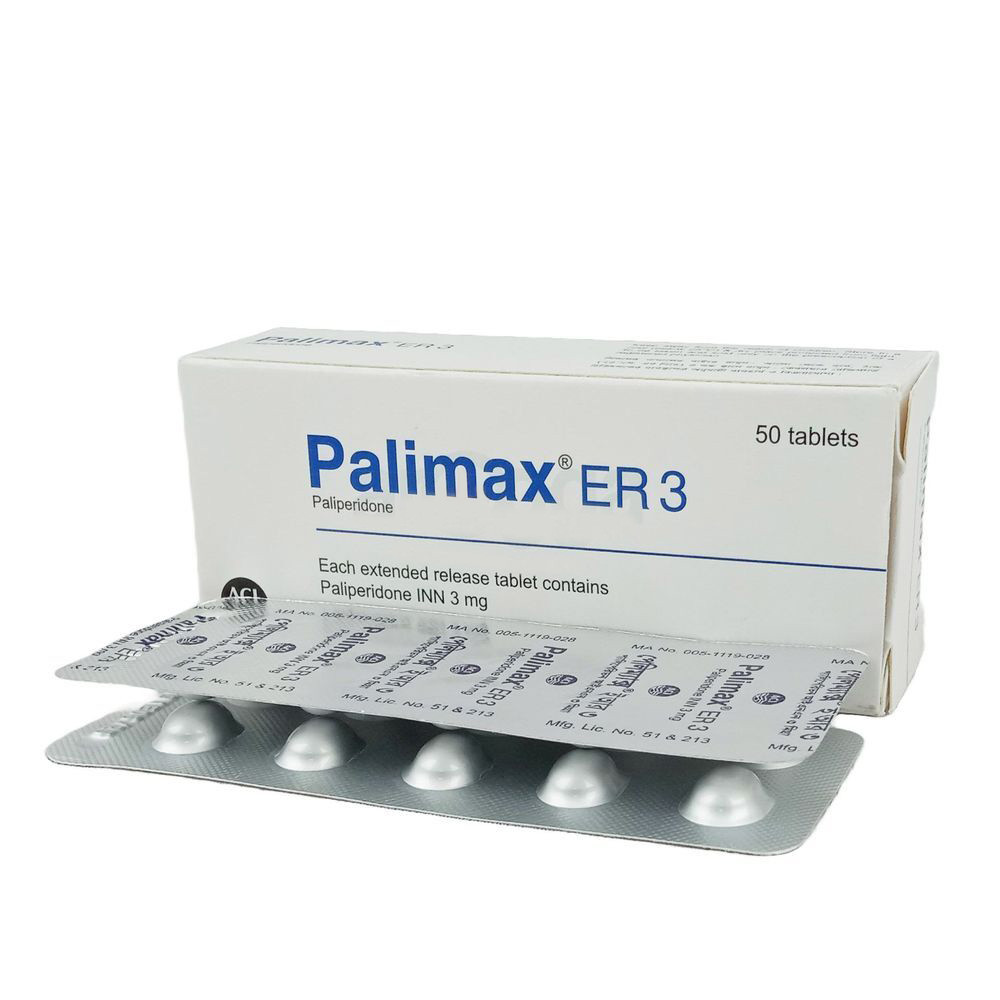
Palimax ER Tablet (Extended Release) 3 mg is the primary active metabolite of risperidone. The mechanism of action is unknown but it is likely to act via a similar pathway to risperidone. It has been proposed that the drug's therapeutic activity in schizophrenia is mediated through a combination of central dopamine Type 2 (D2) and serotonin Type 2 (5HT2A) receptor antagonism. Palimax ER Tablet (Extended Release) 3 mg is also active as an antagonist at alpha 1 and alpha 2 adrenergic receptors and H1 histaminergic receptors, which may explain some of the other effects of the drug. Palimax ER Tablet (Extended Release) 3 mg was approved by the FDA for treatment of schizophrenia on December 20, 2006.
Uses
Palimax ER Tablet (Extended Release) 3 mg is an atypical antipsychotic used in the treatment of schizophrenia and other schizoaffective or delusional disorders.
For the treatment of schizophrenia.
Associated Conditions
Pharmacodynamics
Palimax ER Tablet (Extended Release) 3 mg is an atypical antipsychotic developed by Janssen Pharmaceutica. Chemically, paliperidone is primary active metabolite of the older antipsychotic risperidone (paliperidone is 9-hydroxyrisperidone). The mechanism of action is unknown but it is likely to act via a similar pathway to risperidone.
Mechanism of Action
Palimax ER Tablet (Extended Release) 3 mg is the major active metabolite of risperidone. The mechanism of action of paliperidone, as with other drugs having efficacy in schizophrenia, is unknown, but it has been proposed that the drug's therapeutic activity in schizophrenia is mediated through a combination of central dopamine Type 2 (D2) and serotonin Type 2 (5HT2A) receptor antagonism.
Absorption
The absolute oral bioavailability of paliperidone following paliperidone administration is 28%.
Volume of Distribution
- 487 L
Protein Binding
The plasma protein binding of racemic paliperidone is 74%.
Route of Elimination
One week following administration of a single oral dose of 1 mg immediate-release 14C-paliperidone to 5 healthy volunteers, 59% (range 51% – 67%) of the dose was excreted unchanged into urine, 32% (26% – 41%) of the dose was recovered as metabolites, and 6% – 12% of the dose was not recovered.
Half Life
The terminal elimination half-life of paliperidone is approximately 23 hours.
Toxicity
The possibility of obtundation, seizures, or dystonic reaction of the head and neck following overdose may create a risk of aspiration with induced emesis.
Food Interactions
- Avoid alcohol.
Dosage
- Adults: Initial dose is 6 mg/day. Recommended dose is 3-12 mg/day, Maximum dose is 12 mg/day
- Adolescents (Weight <51kg): Initial dose is 3 mg/day, Recommended dose is 3-6 mg/day, Maximum dose is 6 mg/day
- Adolescents (Weight ≥51kg): Initial dose is 3 mg/day, Recommended dose is 3-12 mg/day, Maximum dose is 12 mg/day