Introduction

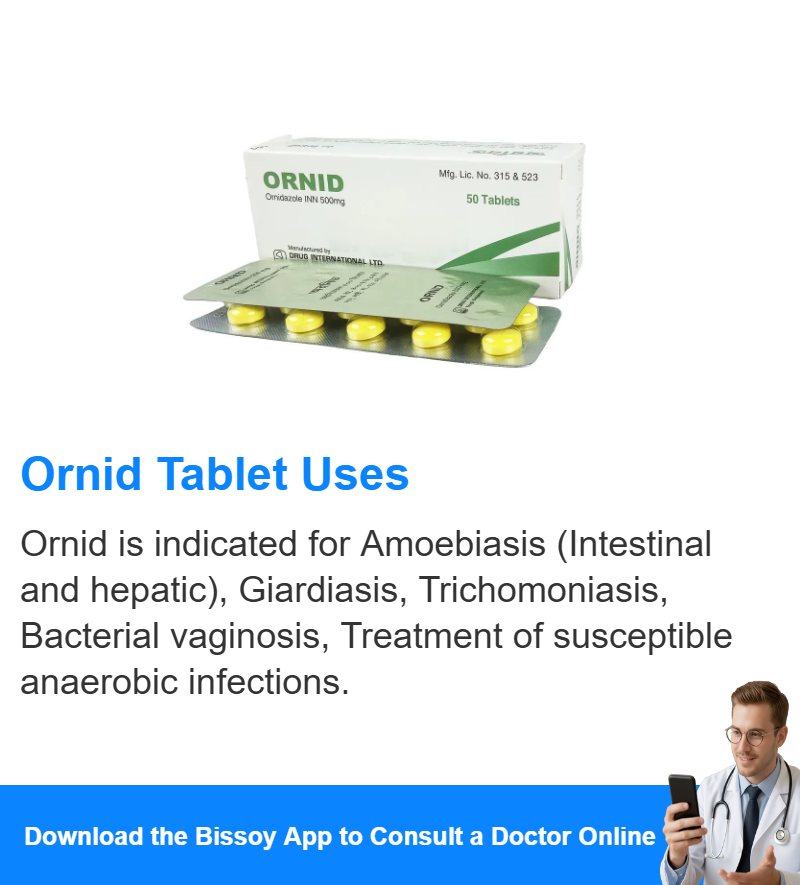
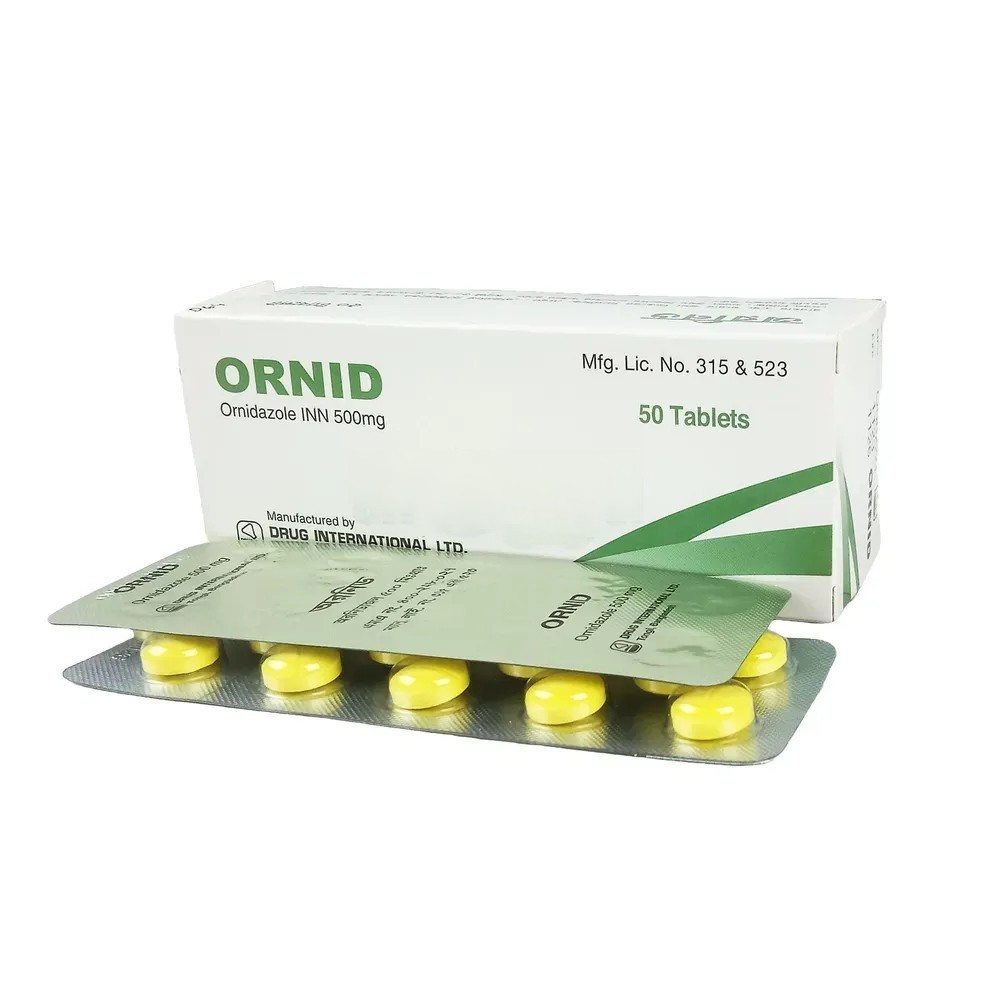
Ornid Tablet 500 mg is an antibiotic drug used to treat certain infections caused by bacteria, such as trichomonas, anaerobic bacteria, and protozoa. It is also sometimes used to treat urinary tract infections and skin and soft tissue infections. Ornid Tablet 500 mg works by interfering with the cell membranes of the bacteria and preventing them from growing and multiplying.

Uses For

Ornid Tablet 500 mg is primarily used to treat infections caused by trichomonas, anaerobic bacteria, and protozoa. It is used to treat vaginal, urinary tract, gastrointestinal, skin and soft tissue infections.

Brand Name Ornid
Type Tablet
Weight 500 mg
Generic Ornidazole
Manufacturer Drug International Ltd.
Available in English বাংলা

Mechanism of Action

Ornid Tablet 500 mg works by interfering with the cell membrane of the bacteria, preventing them from growing and multiplying. This prevents the bacteria from producing their own proteins and from replicating. As a result, the bacteria are destroyed and the infection is cleared up.

How Long Does It Take to Work?

Ornid Tablet 500 mg typically starts to take effect within a few days of treatment. However, it may take up to a few weeks for symptoms to completely clear up.

Absorption

Ornid Tablet 500 mg is absorbed from the gastrointestinal tract and rapidly metabolized in the liver. The drug is not significantly bound to plasma proteins.

Route of Elimination

Ornid Tablet 500 mg is eliminated mainly by metabolism in the liver and subsequent renal excretion of its metabolites. It is also mildly eliminated via biliary excretion.

Dosage

Amoebiasis:
  • Adults: 500 mg twice a day for 5 days.
  • Children: 10-25 mg per kg body weight in two divided doses.
Amoebic dysentery:
  • Adults: 1.5 gm once a day for 3 days.
  • Children: 40 mg per kg body weight, once a day for 3 days.
Giardiasis:
  • Adults: 1.5 gm once daily for 1-2 days.
  • Children: 40 mg per kg body weight for 2 days.
Trichomoniasis: 1.5 gm once or 500 mg twice a day for 5 days. Sexual partner should also be treated at the same time.

Bacterial vaginosis: 3 tablets of 500 mg each as a single dose or one tablet of 500 mg once daily for 5-7 days.
The usual adult dose of Ornid Tablet 500 mg is 500 mg twice daily for 7-14 days. Children should take 5 mg/kg/day (maximum 500 mg/day) divided twice daily for 10-14 days. Dosage may be adjusted for patients with renal impairment.

Administration

Ornid Tablet 500 mg should be taken with a full glass of water. It is covered and should be taken on an empty stomach, at least one hour before or two hours after meals.

Side Effects

The most common side effects of Ornid Tablet 500 mg include nausea, vomiting, abdominal pain, diarrhea, loss of appetite, and headache. Other side effects may include rash, itching, dizziness, and joint pain.

Toxicity

Ornid Tablet 500 mg can be toxic if taken in excess; high doses can cause nausea, vomiting, abdominal pain, and diarrhea. Overdose can lead to liver damage and other serious health complications.

Precaution

Ornid Tablet 500 mg should not be used by patients with renal impairment or by pregnant women. It should also not be used by patients who are hypersensitive to nitroimidazoles or pediatric patients younger than 6 years old. Before taking Ornid Tablet 500 mg, patients should inform their doctor about any other medications they may be taking.

Interaction

Ornid Tablet 500 mg can interact with other medications, including anticoagulants, cimetidine, and certain antacids. Drugs that reduce stomach acid can reduce the absorption of Ornid Tablet 500 mg. Alcohol should also not be consumed while taking Ornid Tablet 500 mg.

Disease Interaction

Ornid Tablet 500 mg may not be suitable for some people, such as those with liver or kidney disease. It can also interact with certain diseases, such as systemic lupus erythematosus or porphyria, so it is important to inform your doctor if you have any pre-existing conditions.

Drug Interaction

Ornid Tablet 500 mg can interact with other drugs, such as anticoagulants, cimetidine, and certain antacids. It may also interact with alcohol, so it is important to avoid drinking alcohol while taking Ornid Tablet 500 mg.

Food Interactions

Ornid Tablet 500 mg can interact with certain foods, so it is important to check with your doctor before consuming any food while taking this medication. Foods that can interact with Ornid Tablet 500 mg include fortified milk, certain dairy products, and certain antacids.

Pregnancy Use

Ornid Tablet 500 mg is not recommended for use in pregnant women. It should only be used if the potential benefits outweigh the potential risks, and only under the guidance of a qualified doctor.

Lactation Use

Ornid Tablet 500 mg has not been studied in nursing mothers, so its safety in this population is not known. It should be used with caution and only under the guidance of a qualified doctor.

Acute Overdose

Symptoms of an overdose include nausea, vomiting, abdominal pain, and diarrhea. It is important to seek immediate medical attention if an overdose is suspected.

Contraindication

Ornid Tablet 500 mg is contraindicated for use in patients with renal impairment, those who are hypersensitive to nitroimidazoles, and pediatric patients younger than 6 years old.

Use Direction

Ornid Tablet 500 mg should be taken as directed by your doctor. The usual adult dose is 500 mg twice daily for 7-14 days. Children should take 5 mg/kg/day (maximum 500 mg/day) divided twice daily for 10-14 days. Dosage may be adjusted for patients with renal impairment.

Storage Condition

Ornid Tablet 500 mg should be stored at room temperature, away from light and moisture. Keep out of reach of children and pets.

Volume of Distribution

The volume of distribution of Ornid Tablet 500 mg is 0.37 L/kg.

Half Life

The half-life of Ornid Tablet 500 mg is 2 to 4 hours.

Clearance

The clearance of Ornid Tablet 500 mg is 0.95 mL/min/kg.

See in details version Ornid Tablet 500 mg also Ornid Tablet 500 mg in bangla

Social card

Uses

Some Frequently Asked Questions About Ornid Tablet 500 mg

*** Taking medicines without doctor's advice can cause long-term problems.
Dr. Sahana Razzaque Ali

Dr. Sahana Razzaque Ali

Gynecology, Obstetrics Specialist & Laparoscopic Surgeon

Call Doctor
Dr. Md. Abdul Muyeed

Dr. Md. Abdul Muyeed

Eye Specialist & Phaco Surgeon

Call Doctor
Asst. Prof. Dr. Dulal Chandra Das

Asst. Prof. Dr. Dulal Chandra Das

Liver, Gallbladder, Biliary, Pancreas & Gastroenterology Specialist

Call Doctor
Related Medicines