Introduction
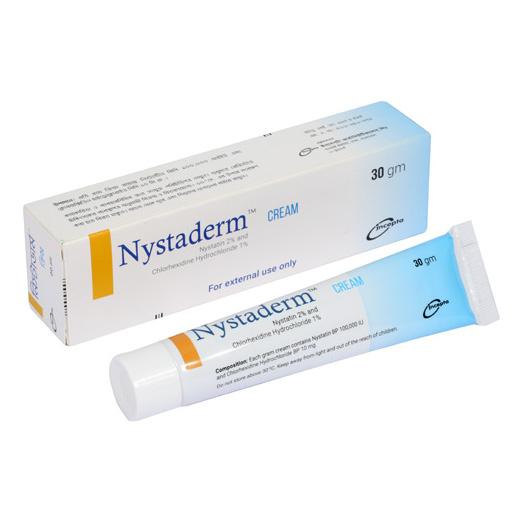
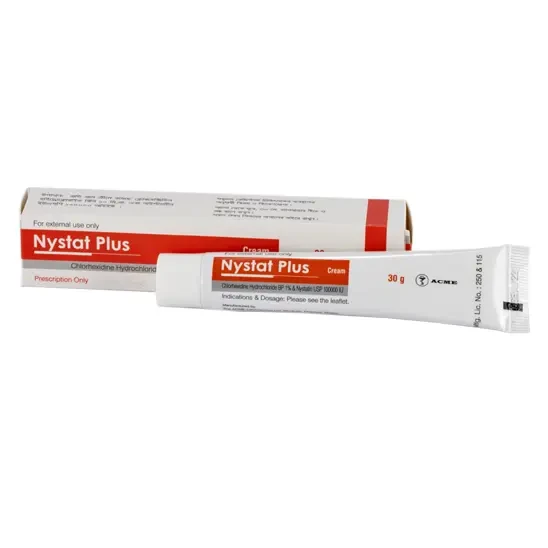
Chlorhexidine hydrochloride and nystatin are combined in a topical or oral formulation to provide both antimicrobial and antifungal effects. Chlorhexidine is a broad-spectrum antiseptic, while nystatin is an antifungal medication effective against Candida species.
Uses
This combination is used for:
- Oral Infections: Treating fungal infections in the mouth and throat, such as oral candidiasis (thrush).
- Skin Infections: Providing antimicrobial protection for minor skin infections.
- Pre-Surgical Disinfection: Used in some pre-surgical protocols to reduce microbial load.
| Brand Name | Nyclo |
|---|---|
| Type | Cream |
| Weight | 1%+2% |
| Generic | Chlorhexidine hydrochloride + Nystatin |
| Manufacturer | Navana Pharmaceuticals Ltd. |
| Available in | English বাংলা |
Mechanism of Action
The mechanism of action involves:
- Chlorhexidine Hydrochloride: A bisbiguanide with broad-spectrum antimicrobial activity. It disrupts microbial cell membranes, leading to cell death and reduced microbial load.
- Nystatin: An antifungal agent that binds to ergosterol in fungal cell membranes, creating pores and leading to cell leakage and death.
How Long Does It Take to Work?
Relief from symptoms such as oral thrush typically begins within a few days of starting the treatment. The full effect can be seen over a week of consistent use.
Absorption
Chlorhexidine is minimally absorbed when applied topically or used as a mouth rinse. Nystatin is poorly absorbed from the gastrointestinal tract, making it effective primarily at the site of application.
Route of Elimination
Chlorhexidine is excreted mainly through the feces with minimal systemic absorption. Nystatin is excreted in the feces, and its systemic absorption is minimal.
Dosage
Route of administration: TopicallyChild: Apply 2-3 times a day, continuing for 7 days after lesions have healed.
Adult: Apply 2-3 times a day, continuing for 7 days after lesions have healed. Or as directed by the physician.
The dosage varies based on the formulation and condition being treated:
- Oral Suspension: Typically 4-6 mL of the oral suspension swished and swallowed or held in the mouth 2-3 times daily.
- Topical Application: Apply a thin layer to the affected area 2-3 times daily as directed.
Administration
For oral infections, use the oral suspension as directed, swishing it around the mouth and swallowing. For topical infections, apply the medication directly to the affected area, ensuring the skin is clean and dry before application.
Side Effects
Possible side effects include:
- Oral Irritation: Burning sensation or taste changes.
- Skin Irritation: Redness, itching, or dryness at the site of application.
- Gastrointestinal Distress: Nausea or upset stomach if ingested in large quantities.
Toxicity
Toxicity is rare with appropriate use, but excessive ingestion or application to large areas may cause systemic effects. In case of overdose or severe side effects, seek medical attention.
Precautions
Precautions include:
- Avoid Contact with Eyes: Prevent contact with eyes or mucous membranes.
- Monitor for Allergic Reactions: Watch for signs of hypersensitivity or allergic reactions.
- Avoid Prolonged Use: Avoid using for extended periods without medical supervision to prevent potential adverse effects.
Interaction
Drug interactions are unlikely with topical use due to minimal systemic absorption. Inform healthcare providers of all medications being used to avoid potential interactions.
Disease Interaction
Use with caution in patients with known allergies to any of the components or in individuals with severe oral or skin infections where systemic treatment may be needed.
Drug Interaction
Interactions are unlikely due to minimal systemic absorption. However, inform healthcare providers of any concurrent medications to avoid possible interactions.
Food Interactions
There are no significant food interactions reported with this medication.
Pregnancy Use
The safety of this combination during pregnancy has not been well-established. Use only if clearly needed and consult a healthcare provider for guidance.
Lactation Use
It is not known if this combination is excreted in breast milk. Use during lactation should be considered only if the benefits outweigh the risks. Consult a healthcare provider for advice.
Acute Overdose
Acute overdose is unlikely with topical application or oral use as directed. In case of accidental ingestion or significant overdose, seek medical attention immediately.
Contraindication
Contraindications include:
- Known Allergies: Hypersensitivity to chlorhexidine, nystatin, or any other components of the formulation.
- Open Wounds: Avoid use on large open wounds unless specifically directed by a healthcare provider.
Use Direction
Apply or use the medication as directed. For oral suspensions, swish around the mouth and swallow. For topical use, apply a thin layer to the affected area. Follow specific instructions provided with the product or by a healthcare provider.
Storage Conditions
Store the product in a cool, dry place away from direct sunlight. Keep the container tightly closed and out of reach of children.
Volume of Distribution
Due to topical or oral application, systemic distribution is minimal. The active ingredients primarily act locally at the site of application.
Half Life
The half-life of chlorhexidine and nystatin in systemic circulation is not typically relevant due to minimal systemic absorption. The effects are primarily localized to the site of application.
Clearance
Chlorhexidine is cleared through the feces with minimal systemic absorption. Nystatin is also cleared via the feces and has minimal systemic absorption.
See in details version Nyclo Cream 1%+2% also Nyclo Cream 1%+2% in bangla
Some Frequently Asked Questions About Nyclo Cream 1%+2%