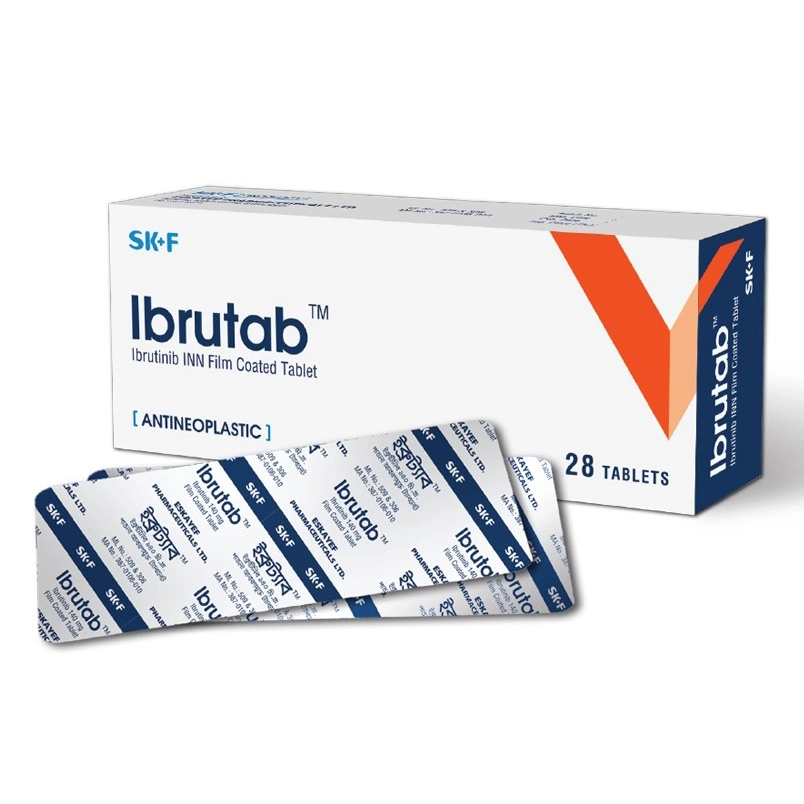
Introduction
Notafol Capsule 140 mg is an orally active, irreversible Bruton's tyrosine kinase (BTK) inhibitor used in the treatment of several B-cell malignancies. By blocking BTK signaling, it inhibits the growth, survival, and proliferation of malignant B cells.
Notafol Capsule 140 mg is indicated for the treatment of mantle cell lymphoma, chronic lymphocytic leukemia (CLL), Waldenström macroglobulinemia, and chronic graft-versus-host disease (cGVHD). It has significantly improved outcomes in patients with these hematologic disorders.
Uses
Notafol Capsule 140 mg is an antineoplastic agent used to treat chronic lymphocytic leukemia, mantle cell lymphoma, and Waldenstrom's Macroglobulinemia.
Notafol Capsule 140 mg acquired an accelerated approval for the treatment of mantle cell lymphoma who have received at least one prior therapy. Mantle cell lymphoma (MCL) is a B-cell non-Hodgkin lymphoma that develops in the outer edge of a lymph node. MCL is usually diagnosed at late stages and it is easily spread into bone marrow, spleen, liver and gastrointestinal tract.
Notafol Capsule 140 mg is indicated for the treatment of chronic lymphocytic leukemia (CLL) who have at least one prior therapy. CLL is a type of cancer caused by an overproduction of lymphocytes by the bone marrow. Some of the symptoms include swollen lymph nodes and tiredness.
Notafol Capsule 140 mg is indicated for the treatment of chronic lymphocytic leukemia (CLL) with 17p deletion. CLL with 17p is a type of leukemia in which a deletion in 17p disrupts the tumor suppressor p53 by deleting one allele of the TP53 gene. The remaining allele is mainly inactivated and thus, this type of leukemia is unresponsive to p53-dependent treatments.
Notafol Capsule 140 mg is indicated for the treatment of patients with Waldenstrom's Macroglobulinemia (WM). WM, also called lymphoplasmacytic lymphoma, is a type of non-Hodgkin lymphoma in which the cancer cells make large amounts of macroglobulin. The macroglobulin is a monoclonal protein that corresponds to the type of IgM antibodies and the unrestricted formation of this protein causes typical symptoms such as excessive bleeding and effects in vision and nervous system.
Associated Conditions
Pharmacodynamics
In vitro studies have shown an induction of CLL cell apoptosis even in presence of prosurvival factors. It has also been reported an inhibition of CLL cell survival and proliferation as well as an impaired in cell migration and a reduction in the secretion of chemokines such as CCL3 and CCL4. The latter effect has been shown to produce regression in xenograft mouse models.
Clinical studies for relapsed/refractory CLL in phase I and II showed an approximate 71% of overall response rate.. In the case of relapsed/refractory mantle cell lymphoma, approximately 70% of the tested patients presented a partial or complete response.. In clinical trials for relapsed/refractory diffuse large B-cell lymphoma, a partial response was found in between 15-20% of the patients studied; while for patients with relapsed/refractory Waldenstrom's macroglobulinemia, a partial response was observed in over 75% of the patients tested. Finally, for patients with relapsed/refractory follicular lymphoma, a partial to complete response was obtained in approximately 54% of the patients.
Mechanism of Action
Notafol Capsule 140 mg is an inhibitor of Bruton’s tyrosine kinase (BTK). It forms a covalent bond with a cysteine residue in the active site of BTK (Cys481), leading to its inhibition. The inhibition of BTK plays a role in the B-cell receptor signaling and thus, the presence of ibrutinib prevents the phosphorylation of downstream substrates such as PLC-γ.
Absorption
Notafol Capsule 140 mg is rapidly absorbed after oral administration and it presents a Cmax, tmax and AUC of approximately 35 ng/ml, 1-2 hour and 953 mg.h/ml respectively.
Volume of Distribution
The volume of distribution at steady-state of ibrutinib is in approximately 10,000 L.
Protein Binding
Irreversible plasma protein binding increases gradually over time and reaches 25% of the administered dose 8 hours after initial administration. From the plasma proteins, ibrutinib has been shown to be mainly bound to albumin and to bind to α1 AGP. The irreversible protein binding of ibrutinib to plasma proteins can account for 97.3% of the administered dose.
Route of Elimination
The cumulative excretion of ibrutinib in urine is of about 7.8% of the administered dose and most of this excretion is found during the first 24 hours after administration. In feces, the cumulative excretion accounts for 80% of the administered dose and the excretion occurs within 48 hours of the initial administration. The total excretion of ibrutinib during the first 168 hours after initial administration accounts for 88.5% of the administered dose.
Half Life
The elimination half-life of ibrutinib is of approximately 4-6 hours.
Clearance
In patients with normal renal function, the clearance rate is in the range of 112-159 ml/min.
Toxicity
Notafol Capsule 140 mg was not showed to present a mutagenic potential in bacterial assays, nor clastogenic in chromosome aberration assays in mammalian cells or in bone marrow micronucleus assays in mice. Carcinogenicity or effects on fertility have not been determined.
Food Interactions
- Avoid grapefruit products. Grapefruit inhibits CYP3A4 metabolism, which may increase the serum concentration of ibrutinib.
- Avoid St. John's Wort. This herb induces CYP3A4 and may reduce the serum concentration of ibrutinib.
- Take at the same time every day.
- Take with a full glass of water.
Dosage
Chronic Lymphocytic Leukemia/Small Lymphocytic Lymphoma and Waldenstrom Macroglobulinemia (WM): The recommended dose of Notafol Capsule 140 mg for CLL/SLL and WM is 420 mg (three 140 mg capsules) orally once daily until disease progression or unacceptable toxicity. The recommended dose of Notafol Capsule 140 mg for CLL/SLL when used in combination with bendamustine and rituximab (administered every 28 days for up to 6 cycles) is 420 mg (three 140 mg capsules) orally once daily until disease progression or unacceptable toxicity.