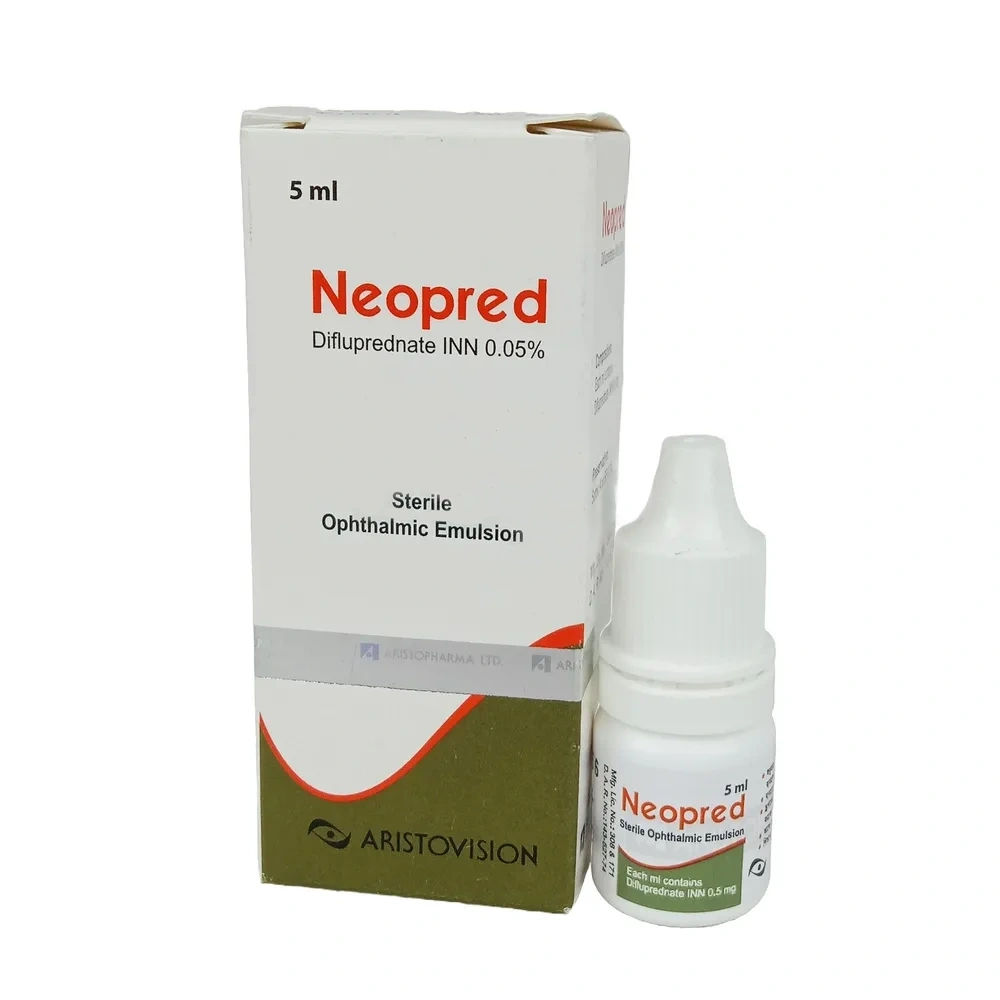
Neopred Ophthalmic Emulsion 0.05% is a synthetic glucocorticoid used as an anti-inflammatory and immunomodulatory medication. It is used to treat ocular inflammation and is used off-label to treat skin conditions, such as dermatitis. It can also be used to treat specific systemic inflammatory conditions.
Neopred Ophthalmic Emulsion 0.05% is used to treat inflammation that can result from a variety of conditions, including autoimmune diseases, injuries, allergies, and infections. It is used in the treatment of inflammation in the eyes, and is often prescribed to treat uveitis, iritis, and other conditions that lead to ocular inflammation.
| Brand Name | Neopred |
|---|---|
| Type | Ophthalmic Emulsion |
| Weight | 0.05% |
| Generic | Difluprednate |
| Manufacturer | Aristopharma Ltd. |
| Available in | English বাংলা |
Neopred Ophthalmic Emulsion 0.05% acts through the inhibition of certain pro-inflammatory mediators that are involved in the inflammatory process. It binds to glucocorticoid receptors, which then inhibit the production of pro-inflammatory cytokines. This ultimately helps to reduce inflammation that can be caused by diseases or injuries.
The effects of difluprednate typically begin to be noticed within a few days of use. The duration of effect can vary depending on the severity of the condition being treated.
Neopred Ophthalmic Emulsion 0.05% is rapidly absorbed when administered topically (as eye drops) and reaches peak concentration within 30 minutes. Systemic absorption is believed to be minimal when administered in ocular formulations.
Neopred Ophthalmic Emulsion 0.05% is eliminated primarily by hepatic metabolism and renal excretion. A small fraction is also eliminated in the bile.
The dose of difluprednate depends on the severity of the condition being treated and the individual patient’s response. The typical dose of difluprednate for adults who are treating ocular inflammation conditions is one drop of 0.05% solution in the affected eye(s), three times daily.
Neopred Ophthalmic Emulsion 0.05% is typically administered topically as eye drops. It should be used in the affected eye(s) according to the doctor’s instructions and should not be used for longer than recommended by the doctor.
Common side effects of difluprednate include burning or stinging in the eyes, blurred vision, mild itching or redness, increased pressure in the eyes, eye pain, and tearing. In rare cases, it can cause severe allergic reactions that may require medical attention.
Neopred Ophthalmic Emulsion 0.05% is generally well-tolerated when used as directed. Overdose or accumulation of the medication can lead to toxicity and should be avoided. Signs and symptoms of overdose include rapid pulse, irritability, fatigue, and dizziness. If overdose is suspected, it is important to seek medical attention immediately.
It is important to consult a doctor before starting any medication. Patients taking difluprednate should avoid contact lenses and should not wear them if they are being treated with the medication. Neopred Ophthalmic Emulsion 0.05% should not be used in patients who have a prior history of glaucoma, cataracts, or other eye disorders.
Neopred Ophthalmic Emulsion 0.05% may interact with other medications, including antifungals, antibiotics, diuretics, blood thinners, and antihistamines. It is important to check with a doctor or pharmacist before combining medications.
Neopred Ophthalmic Emulsion 0.05% should not be used in people who are allergic to any of its ingredients. It should not be used in people with active or latent infections, such as herpes or tuberculosis. Neopred Ophthalmic Emulsion 0.05% should not be used in people with severe liver or kidney disease.
Neopred Ophthalmic Emulsion 0.05% may interact with some other drugs, including certain antibiotics, antifungals, antipsychotics, calcium channel blockers, and antineoplastic agents. It is important to check with a doctor or pharmacist before combining medications.
Neopred Ophthalmic Emulsion 0.05% should be taken with food or milk to reduce stomach upset. It is recommended to avoid alcohol and grapefruit juice while taking this medication.
Neopred Ophthalmic Emulsion 0.05% is not recommended for use during pregnancy, as there is a potential risk of harm to the fetus. If a woman is pregnant or planning to become pregnant, it is important to discuss the use of this medication with her doctor.
Neopred Ophthalmic Emulsion 0.05% is not recommended for use in breastfeeding mothers, as there is a potential risk of harm to the infant. If a woman is breastfeeding or planning to become pregnant, it is important to discuss the use of this medication with her doctor.
Acute overdose of difluprednate is unlikely, but if it does occur, symptoms may include rapid pulse, irritability, fatigue, and dizziness. It is important to seek medical attention immediately if an overdose is suspected.
Neopred Ophthalmic Emulsion 0.05% should not be used in people who are allergic to any of its ingredients, people with active or latent infections, such as herpes, people with severe liver or kidney disease, and people with a history of glaucoma, cataracts, or other eye disorders.
Neopred Ophthalmic Emulsion 0.05% should be used according to the doctor’s instructions and should not be used for longer than recommended. It is best to use the medication as soon as possible after opening the container. The eye dropper should be cleaned after each use. The doctor may also recommend wearing sunglasses to protect the eyes from light sensitivity.
Neopred Ophthalmic Emulsion 0.05% should be stored at room temperature away from direct light and moisture. It is important to keep the bottle tightly capped when not in use.
The volume of distribution of difluprednate is approximately 4.6 L/kg.
The half-life of difluprednate is approximately 8 hours.
The clearance of difluprednate is approximately 0.3 L/h/kg.
See in details version Neopred Ophthalmic Emulsion 0.05% also Neopred Ophthalmic Emulsion 0.05% in bangla
Prof. Brig. Gen. Dr. Md. Abdul Latif Khan
Skin, Leprosy, Sex, Allergy Specialist & Cosmetic Surgeon