Introduction
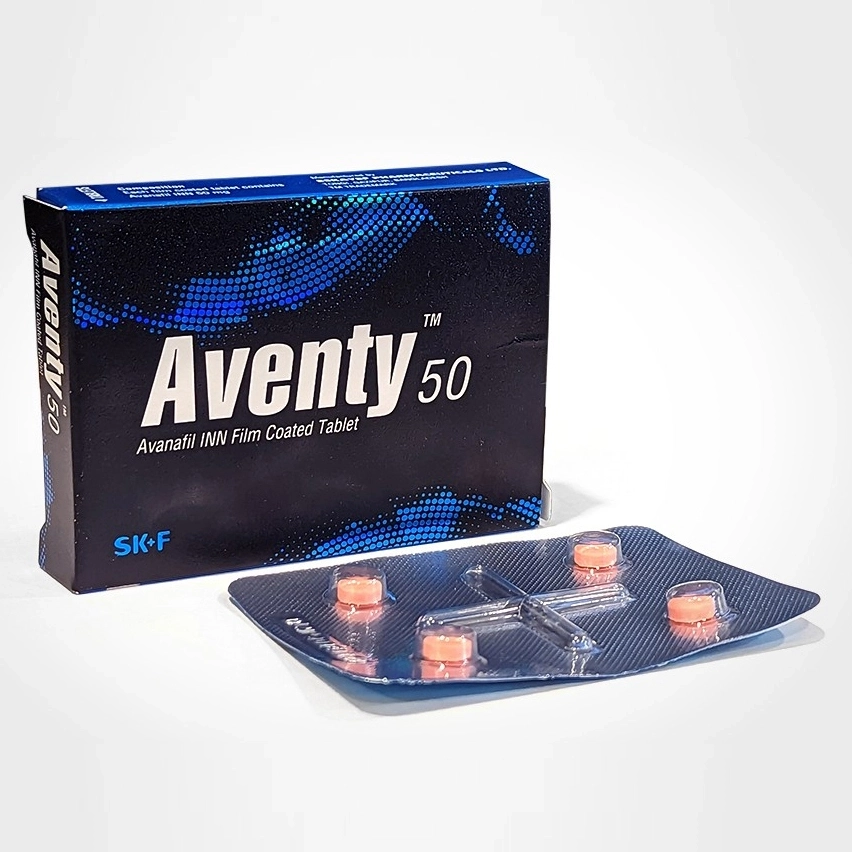
Navafil Tablet 50 mg is a phosphodiesterase-5 (PDE5) inhibitor used in the treatment of erectile dysfunction. In comparison with other drugs of the same class, it shows greater selectivity for PDE5 over PDE6 than both sildenafil and vardenafil but less selectivity than tadalafil, suggesting a relatively lower risk of visual disturbances associated with off-target PDE6 inhibition.
It first received FDA approval on April 27, 2012, with subsequent EMA approval in June 2013.
Uses
Navafil Tablet 50 mg is a phosphodiesterase-5 (PDE5) inhibitor used to treat erectile dysfunction.
Navafil Tablet 50 mg is indicated for the treatment of erectile dysfunction.
Associated Conditions
Pharmacodynamics
Navafil Tablet 50 mg is a strong competitive inhibitor of phosphodiesterase 5 (PDE5) with a demonstrated in vitro IC50 of 5.2 nM. Its inhibitory effects on PDE5 are 100-fold more potent than on PDE6 and >1000-fold more potent than on other PDE enzymes, meaning it is less likely to cause visual disturbances and cardiovascular adverse effects when compared with less selective PDE5 inhibitors such as sildenafil and vardenafil. It has a relatively quick onset of action allowing for administration as early as 15 minutes prior to sexual activity.
PDE5 inhibitors like avanafil can cause significant drug interactions when administered alongside certain antihypertensive agents (e.g. alpha blockers, substantial amounts of alcohol). PDE5 inhibitors have also been associated with the development of non-arteritic anterior ischemic optic neuropathy (NAION), a rare condition that typically presents as sudden loss of vision in one or both eyes and appears to be more common in patients with a "crowded" optic disc. Patients presenting with any degree of vision loss should immediately discontinue use of all PDE5 inhibitors and seek medical attention. In some jurisdictions, a history of NAION or other degenerative retinal disorders is considered a contraindication to avanafil therapy.
Mechanism of Action
Navafil Tablet 50 mg inhibits the cGMP-specific phosphodiesterase type 5 (PDE5) which is responsible for the degradation of cGMP in the corpus cavernosum located around the penis. Sexual arousal results in the local release of nitric oxide, which in turn stimulates the enzyme guanylate cyclase to produce cGMP. Elevated levels of cGMP result in local smooth muscle relaxation and increased blood flow to the penis (i.e. an erection).
As PDE5 inhibitors like avanafil require the endogenous release of nitric oxide in order to exert their pharmacologic effect, they have no effect on the user in the absence of sexual stimulation/arousal.
Absorption
Navafil Tablet 50 mg is rapidly absorbed following oral administration (Tmax of 30-45 minutes) and appears to have low to moderate oral bioavailability, though formal studies have not been conducted. Administration with a meal results in a mean delay in Tmax of 1.12 to 1.25 hours, a 39% mean reduction in Cmax, and a negligible effect on AUC.
Volume of Distribution
The apparent volume of distribution of avanafil is 47 to 83 L.
Protein Binding
Navafil Tablet 50 mg and its two major metabolites, M4 and M16, are highly protein-bound in plasma at approximately 99%, 97%, and 81%, respectively. Binding occurs primarily to albumin (99%), with smaller contributions from γ-globulin (43%) and α1-acid glycoprotein (66%).
Route of Elimination
Following oral administration, avanafil is extensively metabolized. Approximately 62% of a given dose is excreted as metabolites in the feces and approximately 21% as metabolites in the urine.
Half Life
Studies have demonstrated variability in the terminal elimination half-life of avanafil, with estimates ranging between 5 - 17 hours.
Toxicity
Experience with avanafil overdose is limited. Single doses of up to 800mg and repeat doses of up to 300mg have been administered - these patients experienced adverse effects similar to those seen at therapeutic doses but with increased incidence and severity. Patients experiencing an overdosage of avanafil should be treated with standard symptomatic and supportive measures. Dialysis is unlikely to be of benefit in cases of overdose as avanafil is highly protein-bound in plasma.
Food Interactions
- Avoid excessive or chronic alcohol consumption. Substantial alcohol consumption (e.g. >3 units) in combination with avanafil may increase the risk of hypotension.
- Take with or without food. High-fat meals slow absorption, but not to a clinically significant extent.