Introduction
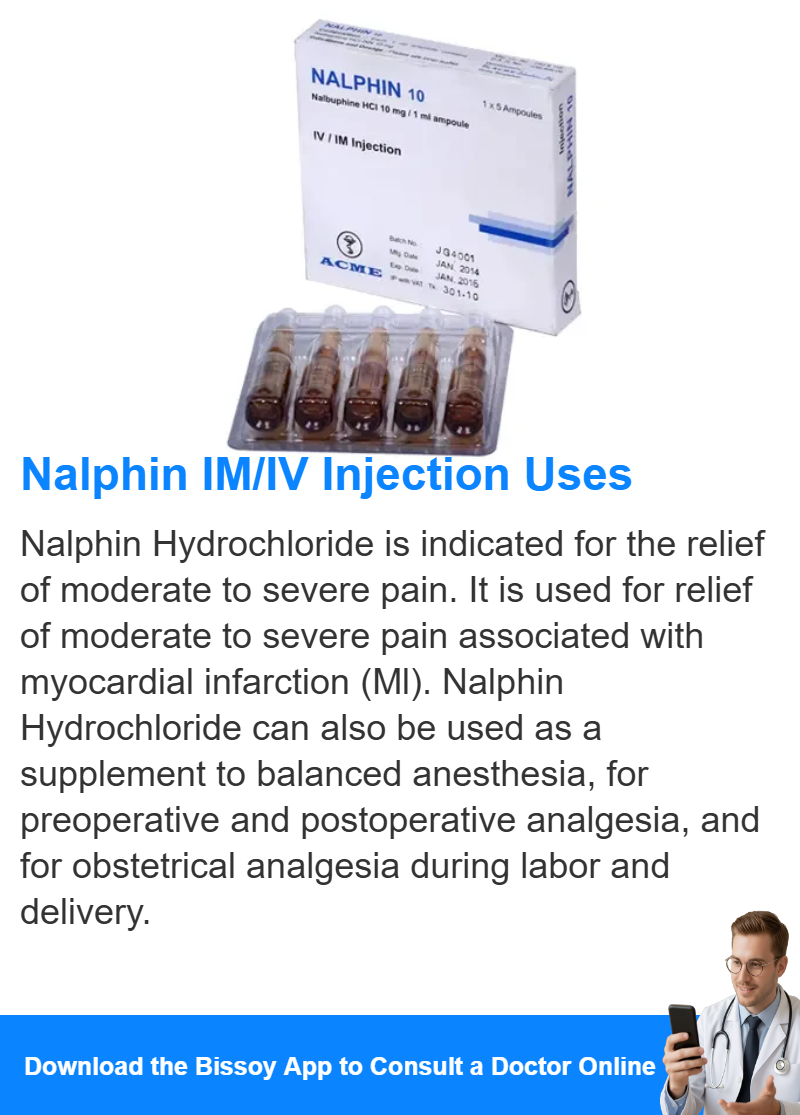
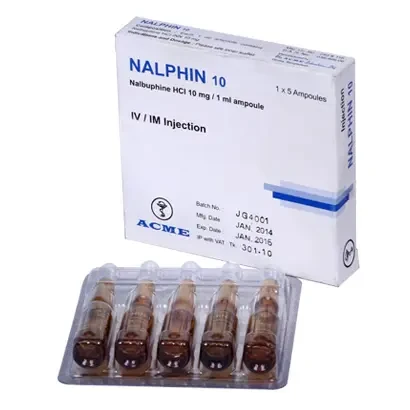
Nalphin IM/IV Injection 10 mg/ml is an opioid analgesic used to manage moderate to severe pain. It is classified as a mixed opioid agonist-antagonist, meaning it can activate some opioid receptors while blocking others. This unique profile provides pain relief while potentially reducing some of the side effects commonly associated with pure opioid agonists.
Uses
Nalphin IM/IV Injection 10 mg/ml is primarily used for:
- Management of moderate to severe pain, including pain associated with surgical procedures or trauma.
- Relief of pain during labor and delivery.
- Providing analgesia in various clinical settings, including preoperative and postoperative care.
| Brand Name | Nalphin |
|---|---|
| Type | IM/IV Injection |
| Weight | 10 mg/ml |
| Generic | Nalbuphine |
| Manufacturer | ACME Laboratories Ltd. |
| Available in | English বাংলা |
Mechanism of Action
Nalphin IM/IV Injection 10 mg/ml acts as an agonist at kappa-opioid receptors and an antagonist at mu-opioid receptors. By activating kappa receptors, it provides pain relief. The antagonistic action at mu receptors helps reduce the risk of some side effects, such as respiratory depression, that are commonly seen with pure opioid agonists. This mixed activity contributes to its analgesic effects and modifies the overall opioid experience.
How Long Does It Take to Work?
Nalphin IM/IV Injection 10 mg/ml typically begins to provide pain relief within 1 to 2 hours of administration, with peak effects occurring within 1 to 2 hours for intravenous administration and up to 3 hours for intramuscular or subcutaneous administration. The onset of action can vary based on the route of administration and individual patient factors.
Absorption
Nalphin IM/IV Injection 10 mg/ml is well-absorbed when administered intravenously, intramuscularly, or subcutaneously. The drug's bioavailability is high with intravenous administration, providing rapid onset of analgesic effects. For other routes, absorption is relatively consistent but may be slower compared to intravenous use.
Route of Elimination
Nalphin IM/IV Injection 10 mg/ml is primarily metabolized in the liver. The drug is excreted through the urine, with a significant portion of the dose eliminated as metabolites. Minimal amounts are excreted unchanged in the urine.
Dosage
The usual recommended adult dose is 10 mg for a 70 kg individual, administered intramuscularly or intravenously; this dose may be repeated every 3 to 6 hours as necessary. Dosage should be adjusted according to the severity of the pain, physical status of the patient, and other medications which the patient may be receiving.Moderate to severe pain: by intravenous or intramuscular injection 10-20 mg for 70 kg patient, adjusted as required; child up to 0.3 mg/kg repeated once or twice as necessary.
Preoperative anesthesia: by intravenous or intramuscular injection 0.1-0.2 mg/kg.
Obstetrical analgesia during labor & delivery: by intravenous injection 0.3-1 mg/kg over 10-15 minutes with maintenance doses of 0.25-0.5 mg/kg in single intravenous administration as required.
Intraoperative analgesia: by intravenous injection 0.25 - 0.5 mg/kg at 30 minutes intervals.
Myocardial infarction: By slow intravenous injection 10-20 mg, repeated after 30 minutes if necessary. Larger dose is required when used as supplement of anesthesia than that required for analgesia.
Children from 18 months to 15 years old: usually 0.2mg/kg body weight, given preferably by intravenous or intramuscular injection. Maintenance doses may be given at intervals of 4 to 6 hours or the dose must be determined by the physician.
The dosage of Nalphin IM/IV Injection 10 mg/ml varies based on the severity of pain, route of administration, and patient characteristics:
- For intravenous administration, the typical dose ranges from 10 to 20 mg every 3 to 6 hours as needed.
- For intramuscular or subcutaneous administration, the typical dose is 10 to 20 mg every 3 to 6 hours as needed.
Administration
Nalphin IM/IV Injection 10 mg/ml can be administered intravenously, intramuscularly, or subcutaneously. It is generally administered by healthcare professionals in a clinical setting to ensure proper dosing and monitoring of side effects. The intravenous route is preferred for rapid onset of pain relief.
Side Effects
Common side effects of Nalphin IM/IV Injection 10 mg/ml include:
- Nausea and vomiting
- Drowsiness
- Dizziness
- Constipation
- Dry mouth
Toxicity
Overdose or excessive use of Nalphin IM/IV Injection 10 mg/ml can lead to severe toxicity, including:
- Respiratory depression
- Severe sedation
- Altered mental status
Precautions
Precautions should be taken when using Nalphin IM/IV Injection 10 mg/ml in patients with:
- Respiratory conditions, due to the risk of respiratory depression.
- Liver impairment, as it may affect drug metabolism and elimination.
- History of substance abuse, due to the potential for dependence and misuse.
Interaction
Nalphin IM/IV Injection 10 mg/ml may interact with other central nervous system depressants, including alcohol, benzodiazepines, and other opioids, potentially increasing the risk of respiratory depression and sedation. It is important to monitor patients for interactions and adjust doses accordingly.
Disease Interaction
Caution is advised in patients with hepatic impairment, as the liver is responsible for metabolizing Nalphin IM/IV Injection 10 mg/ml. Dose adjustments and close monitoring are recommended for individuals with liver disease to prevent accumulation and toxicity.
Drug Interaction
Drug interactions with Nalphin IM/IV Injection 10 mg/ml include:
- Central nervous system depressants: Increased risk of sedation and respiratory depression.
- Other opioids: Potential for additive effects and increased side effects.
- CYP3A4 inhibitors or inducers: May affect Nalphin IM/IV Injection 10 mg/ml metabolism.
Food Interactions
Food does not significantly affect the absorption or efficacy of Nalphin IM/IV Injection 10 mg/ml. It can be administered with or without food, depending on the clinical setting and patient needs.
Pregnancy Use
Nalphin IM/IV Injection 10 mg/ml is classified as Category C for pregnancy. The drug should be used during pregnancy only if the potential benefits outweigh the risks. Limited data are available on its use in pregnant women, and it should be administered under the guidance of a healthcare provider.
Lactation Use
Nalphin IM/IV Injection 10 mg/ml is excreted in breast milk, and its use during lactation should be approached with caution. It is recommended to avoid breastfeeding while using Nalphin IM/IV Injection 10 mg/ml or to consult with a healthcare provider for alternatives.
Acute Overdose
In cases of acute overdose, Nalphin IM/IV Injection 10 mg/ml may cause severe respiratory depression, sedation, and altered mental status. Immediate medical intervention is required, which may include supportive care and the use of opioid antagonists such as naloxone.
Contraindication
Nalphin IM/IV Injection 10 mg/ml is contraindicated in patients with known hypersensitivity to the drug. It should also be avoided in patients with severe respiratory depression or acute asthma, as it may exacerbate these conditions.
Use Direction
Patients should follow the prescribed dosage and administration instructions provided by their healthcare provider. Regular monitoring and adherence to treatment guidelines are essential for effective pain management and safety.
Storage Conditions
Nalphin IM/IV Injection 10 mg/ml should be stored at room temperature, away from moisture and heat. It should be kept in its original container and out of reach of children. Proper storage conditions help maintain the drug's efficacy and safety.
Volume of Distribution
The volume of distribution of Nalphin IM/IV Injection 10 mg/ml is approximately 0.8 L/kg, indicating that it is distributed throughout body tissues.
Half Life
The half-life of Nalphin IM/IV Injection 10 mg/ml ranges from 2 to 3 hours, which allows for multiple doses to be administered throughout the day as needed for pain management.
Clearance
Nalphin IM/IV Injection 10 mg/ml is primarily cleared through the liver and is excreted in the urine. The clearance rate can be influenced by liver and renal function, requiring adjustments and monitoring in patients with compromised organ function.
See in details version Nalphin IM/IV Injection 10 mg/ml also Nalphin IM/IV Injection 10 mg/ml in bangla
Social card