Introduction
Sodium Chloride (NaCl), commonly known as table salt, is an essential electrolyte used in various medical and dietary applications. In tablet form, it is often used to manage sodium levels in the body and to supplement dietary intake when necessary. Sodium chloride plays a critical role in maintaining fluid balance, nerve function, and muscle contraction.
Uses
Sodium Chloride tablets are used for several purposes, including:
- Electrolyte replacement: To correct sodium deficiencies or imbalances.
- Treatment of hyponatremia: To increase sodium levels in the blood.
- As a dietary supplement: In cases where dietary intake of sodium is insufficient.
- Management of conditions associated with sodium loss: Such as prolonged vomiting, diarrhea, or excessive sweating.
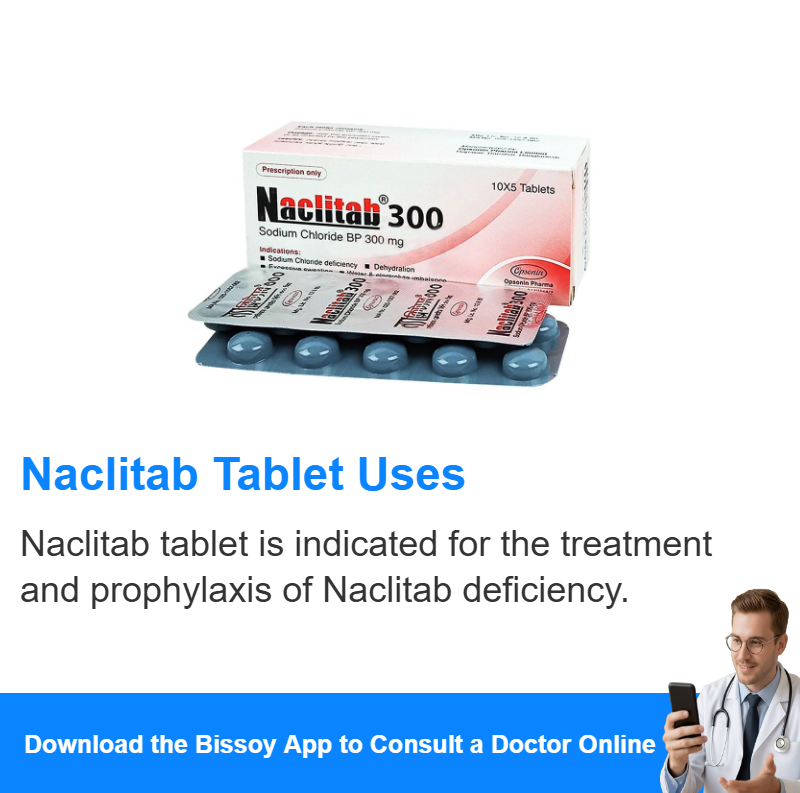
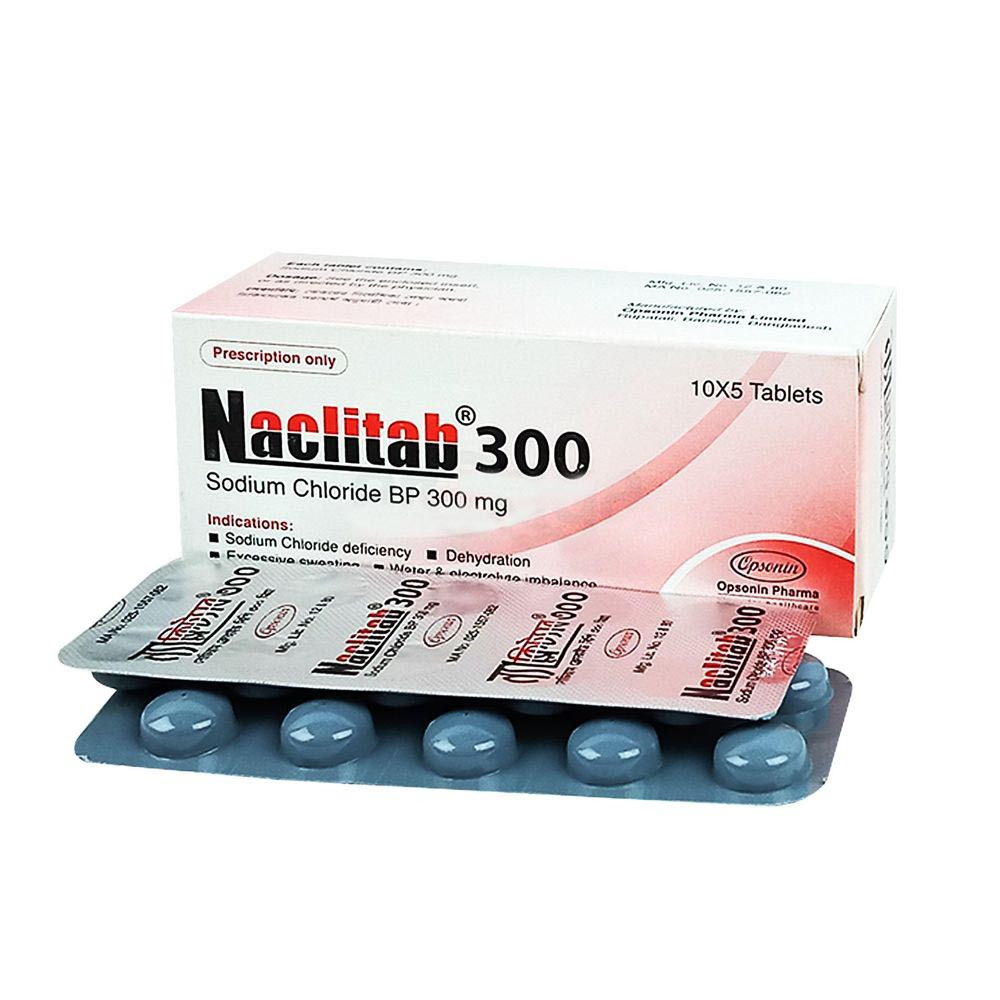
| Brand Name | Naclitab |
|---|---|
| Type | Tablet |
| Weight | 300 mg |
| Generic | Sodium Chloride (Tablet) |
| Manufacturer | Opsonin Pharma Ltd. |
| Available in | English বাংলা |
Mechanism of Action
Sodium Chloride tablets dissociate into sodium and chloride ions in the body. Sodium ions help maintain fluid balance, osmotic pressure, and are crucial for nerve and muscle function. Chloride ions assist in maintaining electrolyte balance and are essential for proper digestion as part of hydrochloric acid in the stomach.
How Long Does It Take to Work?
The effects of Sodium Chloride tablets are usually observed within a few hours after ingestion. The time to noticeable effects can vary depending on the individual’s metabolic rate, the degree of sodium deficiency, and the condition being treated.
Absorption
Sodium Chloride is rapidly absorbed from the gastrointestinal tract. After ingestion, the sodium and chloride ions are absorbed into the bloodstream through the small intestine and distributed throughout the body.
Route of Elimination
The primary route of elimination for sodium chloride is through the kidneys. Sodium and chloride are filtered out of the blood and excreted in the urine. Excess sodium may also be excreted through sweat and feces.
Dosage
It is important that the tablet should be swallowed whole with water (approx. 70 ml per tablet where kidney function is normal to avoid hypernatremia), and not chewed.Adults: For prophylaxis 8-16 tablets per day. For treatment dosage to be adjusted to individual needs up to a maximum of 40 tablets per day in case of severe salt depletion. For control of muscle cramps during routine maintenance haemodialysis usually 20-32 tablets per dialysis. In some cases of chronic renal salt-wasting, up to 40 tablets per day may be required with appropriate fluid intake.
Children: Dosage should be adjusted to individual needs.
Elderly: No special dosage adjustment.
The dosage of Sodium Chloride tablets depends on the medical condition being treated and the patient’s needs. Typical dosages might include:
- For electrolyte replacement: 1-2 grams daily, adjusted according to individual requirements.
- For hyponatremia: Dosage is personalized based on blood sodium levels and medical supervision.
- For dietary supplementation: Usually, 1 gram per day, depending on dietary intake and recommendations from a healthcare provider.
Administration
Sodium Chloride tablets should be taken orally, usually with water. It is important to follow the dosage instructions provided by a healthcare professional to avoid overuse and potential side effects.
Side Effects
Common side effects may include:
- Gastrointestinal discomfort: Such as nausea or stomach upset.
- Increased thirst and fluid retention.
- Swelling or edema, particularly in individuals with pre-existing conditions affecting fluid balance.
Toxicity
Acute toxicity from excessive sodium chloride intake can lead to symptoms such as:
- High blood pressure.
- Edema or fluid retention.
- Severe dehydration and electrolyte imbalances.
Precautions
Precautions include:
- Monitoring sodium intake, especially in individuals with cardiovascular, renal, or hypertension issues.
- Adjusting dosage based on individual health conditions and dietary needs.
- Consulting with a healthcare provider before starting supplementation, particularly if you have pre-existing health conditions.
Interaction
Sodium Chloride can interact with medications that affect fluid balance or blood pressure, such as diuretics or antihypertensive agents. Always inform your healthcare provider of all medications you are taking to avoid potential interactions.
Disease Interaction
Individuals with diseases such as hypertension, heart failure, or kidney disorders should use Sodium Chloride tablets with caution. It is important to manage sodium intake carefully in these conditions to avoid exacerbating health issues.
Drug Interaction
Interactions may occur with drugs that alter sodium balance or fluid retention. For example, diuretics can increase sodium loss, potentially necessitating adjustments in sodium chloride intake. Consult with a healthcare provider for personalized advice on drug interactions.
Food Interactions
There are generally no significant food interactions with Sodium Chloride tablets. However, consuming high-sodium foods in conjunction with supplements may lead to excessive sodium intake.
Pregnancy Use
Sodium Chloride tablets are generally considered safe during pregnancy when used as directed. It is important to consult with a healthcare provider to ensure appropriate use and dosage during pregnancy.
Lactation Use
Sodium Chloride tablets are also generally considered safe during lactation. No special precautions are usually necessary, but consult with a healthcare provider if there are any concerns regarding supplementation during breastfeeding.
Acute Overdose
Acute overdose of Sodium Chloride can lead to severe symptoms such as high blood pressure, edema, and electrolyte imbalances. If an overdose is suspected, seek immediate medical attention to address symptoms and manage the situation appropriately.
Contraindication
Sodium Chloride tablets are contraindicated in individuals with conditions that involve sodium retention or fluid overload, such as severe heart failure or uncontrolled hypertension. Use should be carefully monitored in these cases.
Use Direction
Follow the specific dosage and administration instructions provided by a healthcare professional. Do not exceed the recommended dosage to avoid potential side effects and complications.
Storage Conditions
Store Sodium Chloride tablets in a cool, dry place, away from direct sunlight and moisture. Keep the container tightly closed to prevent contamination and maintain the tablet’s efficacy.
Volume of Distribution
The volume of distribution for Sodium Chloride is not typically specified as it distributes widely in body fluids and tissues, maintaining fluid balance and electrolyte levels.
Half Life
The half-life of sodium chloride in the body is variable and depends on renal function and overall fluid balance. Sodium and chloride are rapidly processed and excreted by the kidneys, so their effects are transient.
Clearance
Clearance of Sodium Chloride primarily occurs through the kidneys. Sodium and chloride are filtered from the blood and excreted in the urine. The rate of clearance can be influenced by kidney function and fluid balance.
See in details version Naclitab Tablet 300 mg also Naclitab Tablet 300 mg in bangla
Social card
Some Frequently Asked Questions About Naclitab Tablet 300 mg


Dr. Md. Tafiqul Islam Taufiq
Kidney, Urology, Andrology, Laparoscopy Specialist & Surgeon