Introduction
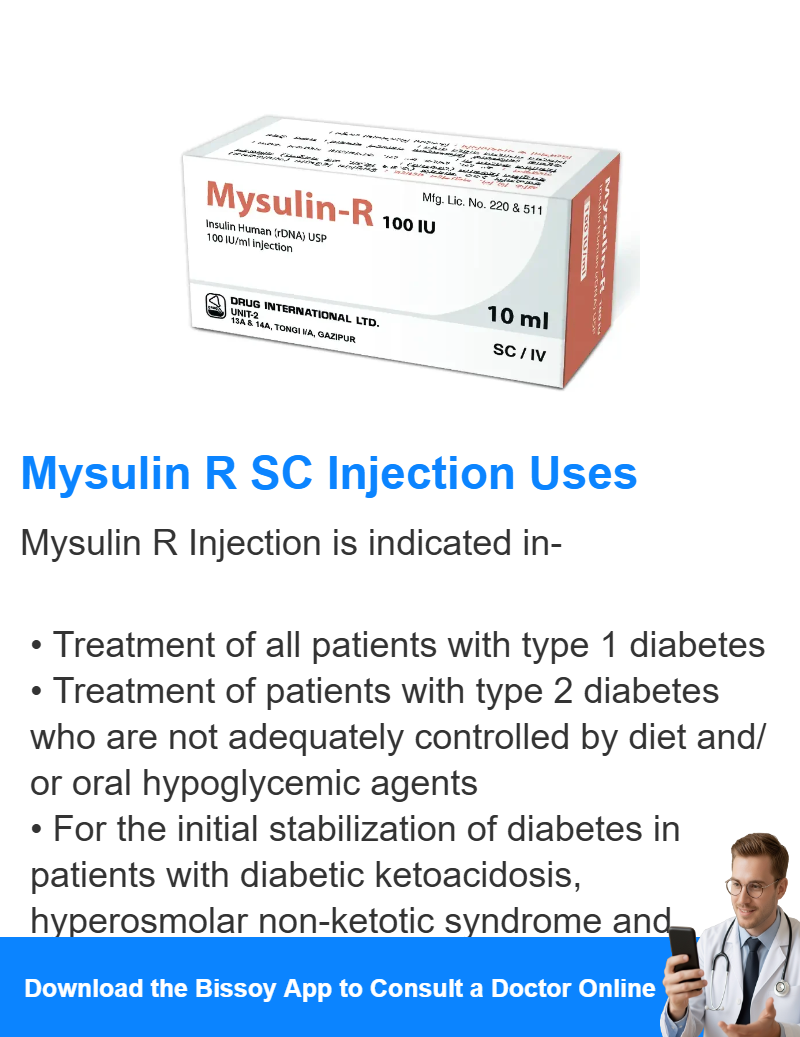
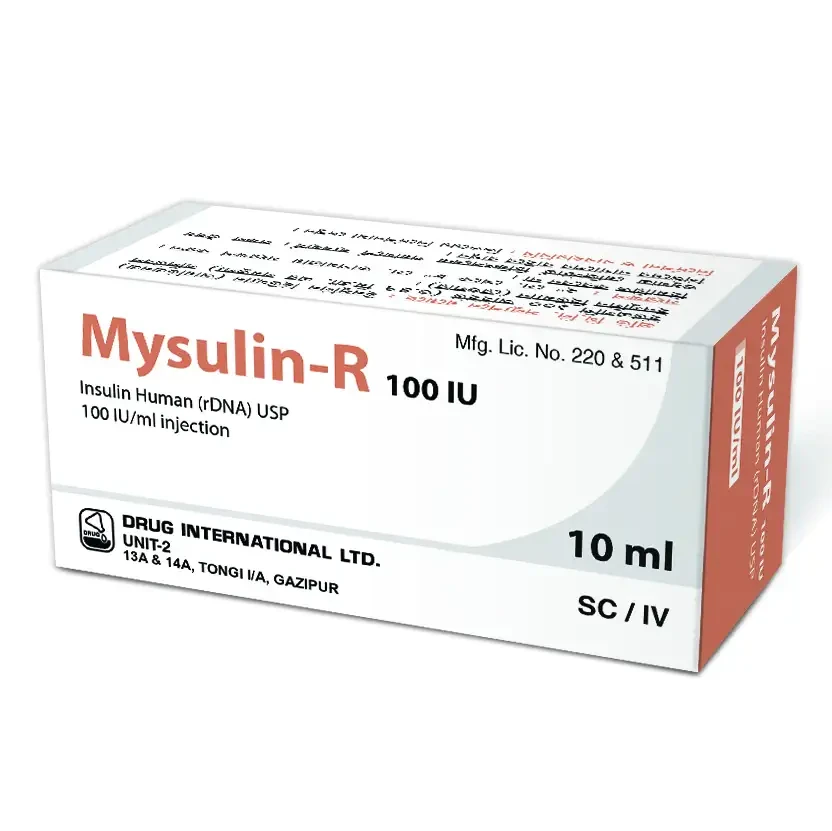
Mysulin R SC Injection 100 IU/ml refers to recombinant DNA technology-derived human insulin used to manage diabetes mellitus. It is identical to the insulin produced by the pancreas in humans and helps regulate blood glucose levels.
Uses
Mysulin R SC Injection 100 IU/ml is used for:
- Managing blood glucose levels in individuals with Type 1 diabetes mellitus, where the pancreas does not produce insulin.
- Controlling blood glucose levels in individuals with Type 2 diabetes mellitus, particularly when oral medications are insufficient.
- Providing insulin coverage during periods of stress, illness, or surgery in diabetic patients.
Mechanism of Action
Mysulin R SC Injection 100 IU/ml facilitates the uptake of glucose into cells by binding to insulin receptors on cell surfaces. This process stimulates glucose transport into cells, primarily muscle and fat cells, and helps regulate blood glucose levels by promoting glycogen storage and inhibiting glucose production in the liver.
How Long Does It Take to Work?
The onset of action varies depending on the specific formulation of insulin. Generally:
- Rapid-acting insulins start working within 15 minutes.
- Short-acting insulins take about 30 minutes to 1 hour to start working.
- Intermediate-acting insulins start to work within 1 to 2 hours.
- Long-acting insulins may take up to 6 hours to reach full effect.
Absorption
Mysulin R SC Injection 100 IU/ml is absorbed subcutaneously from the injection site into the bloodstream. The rate of absorption can be influenced by factors such as injection site, blood flow, and the specific formulation of insulin used.
Route of Elimination
Insulin is metabolized primarily in the liver and kidneys. The hormone is broken down by insulinase and other enzymes, and its metabolites are excreted via the urine.
Dosage
Dosage is individual and determined by the physician in accordance with the needs of the patient.The average range of total daily insulin requirement for maintenance therapy in type 1 diabetic patients lies between 0.5 and 1.0 IU/Kg. In pre-pubertal children it usually varies from 0.7 to 1.0 IU/ Kg.
The daily insulin requirement may be higher in patients with insulin resistance (e.g. during puberty in the young or due to obesity) and lower in patients with endogenous insulin production or during the period of partial remission.
Initial dosage for type 2 diabetic patients are often lower, e.g. 0.3 to 0.6 IU/ Kg/ Day.
An injection should be followed within 30 minutes by a meal or snack containing carbohydrates.
Dosage is individualized based on the patient's needs, blood glucose levels, and type of diabetes. General guidelines are:
- Type 1 diabetes: Usually requires multiple daily injections of both rapid-acting and long-acting insulins or use of an insulin pump.
- Type 2 diabetes: Dosage may start lower and increase based on blood glucose monitoring. Often involves a combination of insulin types.
- Adjustments are made based on dietary intake, physical activity, and other factors.
Administration
Mysulin R SC Injection 100 IU/ml is administered subcutaneously, typically in the abdominal area, thighs, or upper arms. It can be given using a syringe, insulin pen, or insulin pump. The site of injection should be rotated to avoid lipodystrophy.
Side Effects
Common side effects include:
- Hypoglycemia (low blood sugar)
- Injection site reactions (redness, swelling, or itching)
- Weight gain
Severe side effects may include:
- Severe allergic reactions
- Insulin resistance
Toxicity
Toxicity primarily results from an overdose of insulin, leading to hypoglycemia. Symptoms include shakiness, sweating, confusion, rapid heartbeat, and, in severe cases, seizures or loss of consciousness. Immediate treatment with glucose or glucagon is required.
Precautions
Precautions include:
- Monitoring blood glucose levels regularly to prevent hypoglycemia or hyperglycemia.
- Adjusting dosage during periods of illness, stress, or changes in physical activity.
- Educating patients on recognizing and managing hypoglycemia.
Interaction
Mysulin R SC Injection 100 IU/ml may interact with various drugs, including:
- Oral hypoglycemic agents, which may require dosage adjustments.
- Beta-blockers, which may mask symptoms of hypoglycemia.
- Corticosteroids, which can increase blood glucose levels.
Disease Interaction
Patients with the following conditions should use insulin with caution:
- Liver or kidney disease, as these may affect insulin metabolism.
- Conditions that affect the absorption of insulin, such as gastrointestinal issues or poor circulation.
Drug Interaction
Drug interactions can include:
- Medications that affect blood glucose levels, such as diuretics or certain antidepressants.
- Drugs that can alter insulin requirements, such as some antibiotics or antiepileptics.
Food Interactions
Food interactions are minimal, but it is important to maintain a consistent meal schedule to manage blood glucose levels effectively. Significant changes in diet or carbohydrate intake may require insulin dose adjustments.
Pregnancy Use
Mysulin R SC Injection 100 IU/ml is generally considered safe during pregnancy and is often used to manage gestational diabetes or pre-existing diabetes. Dosage may need to be adjusted based on changing insulin needs during pregnancy.
Lactation Use
Insulin is not significantly excreted in breast milk and is considered safe for use during lactation. However, blood glucose levels should be monitored regularly to ensure appropriate insulin management.
Acute Overdose
Acute overdose of insulin can cause severe hypoglycemia. Immediate treatment with glucose or glucagon is necessary. Monitoring and supportive care are crucial to prevent complications.
Contraindication
Contraindications include:
- Hypoglycemia or conditions leading to hypoglycemic episodes.
- Known hypersensitivity to insulin or any component of the formulation.
Use Direction
Mysulin R SC Injection 100 IU/ml should be used according to the prescribed regimen. Patients should be instructed on proper injection techniques, monitoring blood glucose levels, and recognizing signs of hypo- and hyperglycemia.
Storage Conditions
Store insulin at 2°C to 8°C (36°F to 46°F) before use. After opening, insulin can be stored at room temperature (up to 25°C or 77°F) for up to 28 days. Protect from light and heat, and do not freeze.
Volume of Distribution
The volume of distribution of insulin is relatively low, approximately 0.1 to 0.3 L/kg. It is distributed primarily within the extracellular fluid space.
Half Life
The half-life of insulin varies by formulation. Rapid-acting insulins have a half-life of about 4 to 6 hours, while long-acting insulins can have a half-life of up to 24 hours or more.
Clearance
Insulin is cleared from the bloodstream primarily through hepatic metabolism and renal excretion. Clearance rates may be influenced by liver and kidney function as well as insulin sensitivity.