Introduction
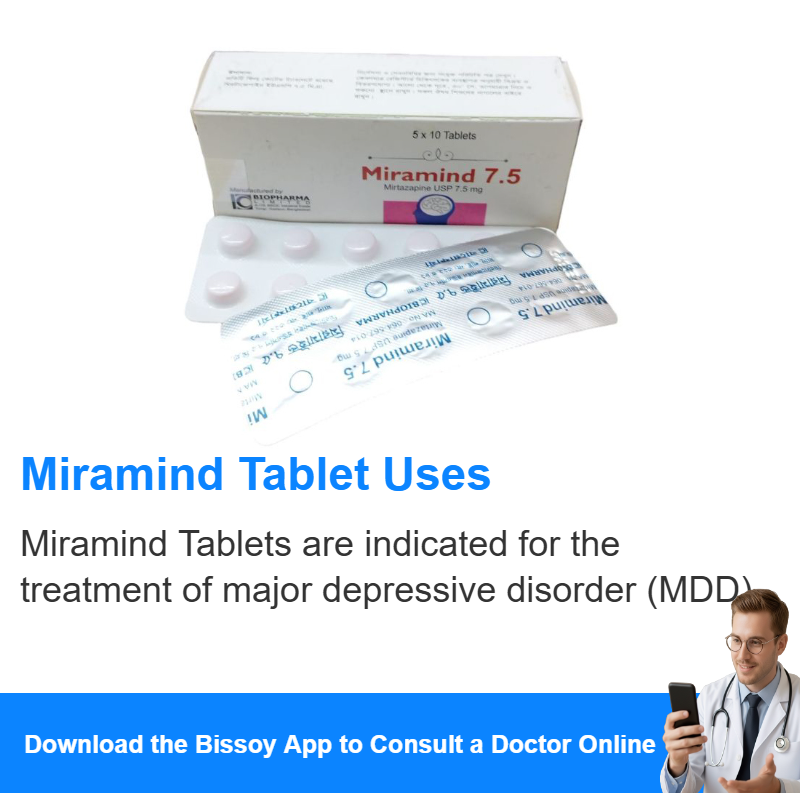
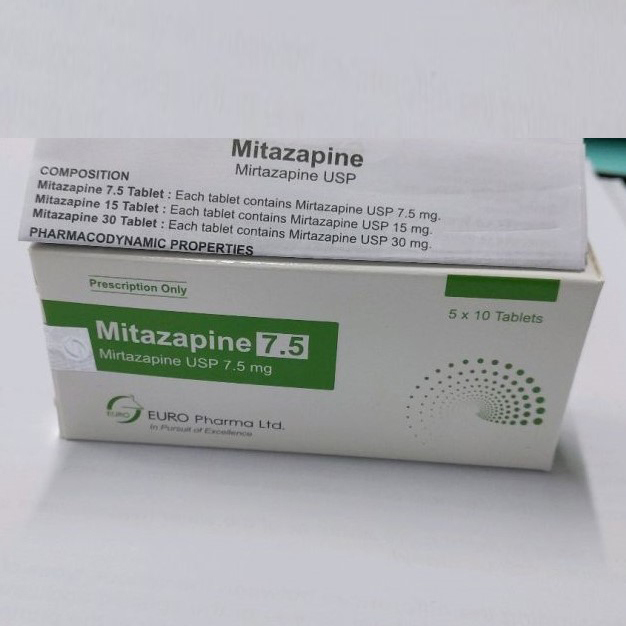
Miramind Tablet 7.5 mg is a tetracyclic piperazino-azepine antidepressant agent that was initially approved for the treatment of major depressive disorder (MDD) in the Netherlands in 1994. This drug was first manufactured by Organon Inc. The effects of this drug may be observed as early as 1 week after beginning therapy.
In addition to its beneficial effects in depression, mirtazapine has been reported to be efficacious in the off-label management of various other conditions. It may improve the symptoms of neurological disorders, reverse weight loss caused by medical conditions, improve sleep, and prevent nausea and vomiting after surgery.
Uses
Miramind Tablet 7.5 mg is a tetracyclic antidepressant used in the treatment of major depression and is used off-label as a drug for insomnia and to increase appetite.
This drug is indicated for the treatment of major depressive disorder and its associated symptoms.
Miramind Tablet 7.5 mg has been used off-label for a variety of conditions including panic disorder, generalized anxiety disorder, dysthymia, tension headaches, hot flushes, post-traumatic stress disorder (PTSD), sleep disorders, substance abuse disorders, and sexual disorders, among others.
Associated Conditions
Pharmacodynamics
General effects and a note on suicidality
Miramind Tablet 7.5 mg is effective in treating moderate to severe depression and treats many symptoms normally associated with this condition. These symptoms may include disturbed sleep, lack of appetite, and anhedonia, in addition to anxiety.. It is important to note that suicidal ideation and behavior may emerge or increase during treatment with mirtazapine, as with any other antidepressant. This risk is especially pronounced in younger individuals. Patients, medical professionals, and families should monitor for suicidal thoughts, worsening depression, anxiety, agitation, sleep changes, irritable behavior, aggression, impulsivity, restlessness, and other unusual behavior when this drug is taken or the dose is adjusted. Do not administer mirtazapine to children. When deciding to prescribe this drug, carefully consider the increased risk of suicidal thoughts and behavior, especially in young adults.
Effects on appetite and weight gain
In addition to the above effects, mirtazapine exerts stimulating effects on appetite, and has been used for increasing appetite and decreasing nausea in cancer patients. Some studies and case reports have shown that this drug improves eating habits and weight gain in patients suffering from anorexia nervosa when administered in conjunction with psychotherapy and/or other psychotropic drugs. In a clinical trial, women with depression experienced a clinically significant mean increase in body weight, fat mass, and concentrations of leptin when treated with mirtazapine for a 6-week period, with a lack of effect on glucose homeostasis.
Effects on sleep
The use of mirtazapine to treat disordered sleep has been leveraged from its tendency to cause somnolence, which is a frequently experienced adverse effect by patients taking this drug. Miramind Tablet 7.5 mg has been shown to exert beneficial effects on sleep latency, duration, and quality due to its sedating properties. Insomnia is a common occurrence in patients with depression, and mirtazapine has been found to be efficacious in treating this condition.
Mechanism of Action
Summary
The mechanism of action of mirtazapine is not fully understood but may be explained by its effects on central adrenergic and serotonergic activity. This drug exhibits a fast onset of action, a high level of response, a manageable side-effect profile, and dual noradrenergic and serotonergic effects that are unique from the effects of other antidepressants.
Effects on various receptors
It has been shown that both noradrenergic and serotonergic activity increase following mirtazapine administration. The results of these studies demonstrate mirtazapine exerts antagonist activity at presynaptic α2-adrenergic inhibitory autoreceptors and heteroreceptors in the central nervous system. This is thought to lead to enhanced noradrenergic and serotonergic activity , which are known to improve the symptoms of depression and form the basis of antidepressant therapy.
Miramind Tablet 7.5 mg is a strong antagonist of serotonin 5-HT2 and 5-HT3 receptors. It has not been found to bind significantly to the serotonin 5-HT1A and 5-HT1B receptors but indirectly increases 5-HT1A transmission.
In addition to the above effects, mirtazapine is a peripheral α1-adrenergic antagonist. This action may explain episodes of orthostatic hypotension that have been reported after mirtazapine use. Miramind Tablet 7.5 mg is a potent histamine (H1) receptor antagonist, which may contribute to its powerful sedating effects. The pain-relieving effects of mirtazapine may be explained by its effects on opioid receptors.
Absorption
The absorption of this drug is rapid and complete. Due to first pass metabolism in the liver and metabolism in the gut wall, absolute bioavailability is about 50%. Peak blood concentrations are attained within about 2 hours after an oral dose. Food has little effect on the absorption of mirtazapine, and no dose adjustment is required if it is taken with food. Steady-state levels are achieved by about 5 days after the initial dose. Miramind Tablet 7.5 mg pharmacokinetics vary across gender and age range. Females and the elderly population have been shown to have higher blood concentrations in comparison to males and younger adults.
Volume of Distribution
The volume of distribution after an oral steady-state dose was measured to be 107 ± 42L in a pharmacokinetic study.
Protein Binding
Miramind Tablet 7.5 mg is about 85% bound to plasma proteins.
Route of Elimination
This drug is mainly excreted by the kidney. It is 75% eliminated in the urine and 15% eliminated in the feces.
Half Life
20-40 hours
Clearance
Total body clearance in males was found to be 31 L/h in a clinical pharmacokinetics study after intravenous administration.
Clearance in elderly patients
Miramind Tablet 7.5 mg clearance is slower in the elderly than in younger subjects. Exercise caution when this drug is given to elderly patients. In a clinical trial, elderly males showed a marked decrease in mirtazapine clearance when compared to young males taking the same dose. This difference was less significant when clearance was compared between elderly females and younger females taking mirtazapine.
Clearance in hepatic and renal impairment
Patients with hepatic and renal impairment have decreased rates of clearance and dosage adjustments may be necessary for these patients. Moderate renal impairment and hepatic impairment cause about a 30% decrease in mirtazapine clearance. Severe renal impairment leads to a 50% decrease in mirtazapine clearance.
Toxicity
LD50
Oral LD50 was 830 mg/kg in male Swiss mice 24 hours after being administered mirtazapine.
Overdose information
Activated charcoal should be administered during an overdose to absorb excess mirtazapine. General supportive therapy should be employed, including maintenance of an adequate airway, oxygen therapy, and ventilation therapy. Vital signs and cardiac rhythm must be monitored. It is not advisable to induce vomiting. Gastric lavage with a large-bore orogastric tube with proper protection of the airway is recommended . There is no antidote for mirtazapine available currently. Consider the possibility of mirtazapine combined with other drugs in an overdose and ensure to contact the local poison control center for guidance on management.
Carcinogenesis
At higher than normal doses, mirtazapine increased the incidence of hepatocellular adenomas and carcinomas in male mice. The highest doses administered to the mice were about 20 and 12 times the maximum recommended human dose (MRHD). Hepatocellular tumors and thyroid follicular adenoma/cystadenomas in male rats occurred at an increased rate at a higher mirtazapine dose (60 mg/kg/day). In female rats, both the medium (20 mg/kg/day) and higher (60 mg/kg/day) doses of mirtazapine increased the rate of hepatocellular adenomas. The relevance of these findings in humans is not known at this time.
Impairment of Fertility
Miramind Tablet 7.5 mg was administered to rats at doses reaching 100 mg/kg (equivalent to 20 times the maximum recommended human dose) in a fertility study. There was no impact on mating and conception, however, there was a disturbance of reproductive (estrous) cycling at higher doses. These doses were measured to be at least 3 times the maximum recommended human dose. Loss of fetus before implantation in the uterus occurred when doses equivalent to 20 times the maximum recommended dose were administered.
Use in pregnancy
This drug is categorized as a pregnancy category C drug. No adequate studies in pregnant women have been conducted. In rats, an increased rate of post-implantation demise occurred with mirtazapine administration. Additionally, an increase in deaths of rat pups during the first 3 days of lactation with a decrease in pup birth weight was noted. Studies on animals are not always relevant to human response. Miramind Tablet 7.5 mg should be used during pregnancy only if the clinical need outweighs the possible risks to the fetus.
Use in nursing
Whether this drug is excreted in human milk is unknown. Many drugs are found excreted in human breast milk, therefore caution is advised if this drug is used during nursing.
Food Interactions
- Avoid alcohol.
- Take with or without food. Food does not significantly affect absorption.
Dosage
Use in children: Use in children are not recommended to Miramind Tablet 7.5 mg.
Missed Dose: If anyone misses a dose of mirtazapine, take it as soon as remember unless it is close to when the next dose is due. If anyone missed a dose of medication and it is close to the time of next dose, skip the missed dose and should take next dose at the regularly scheduled time. One should not take double or more than prescribed dose.