Introduction
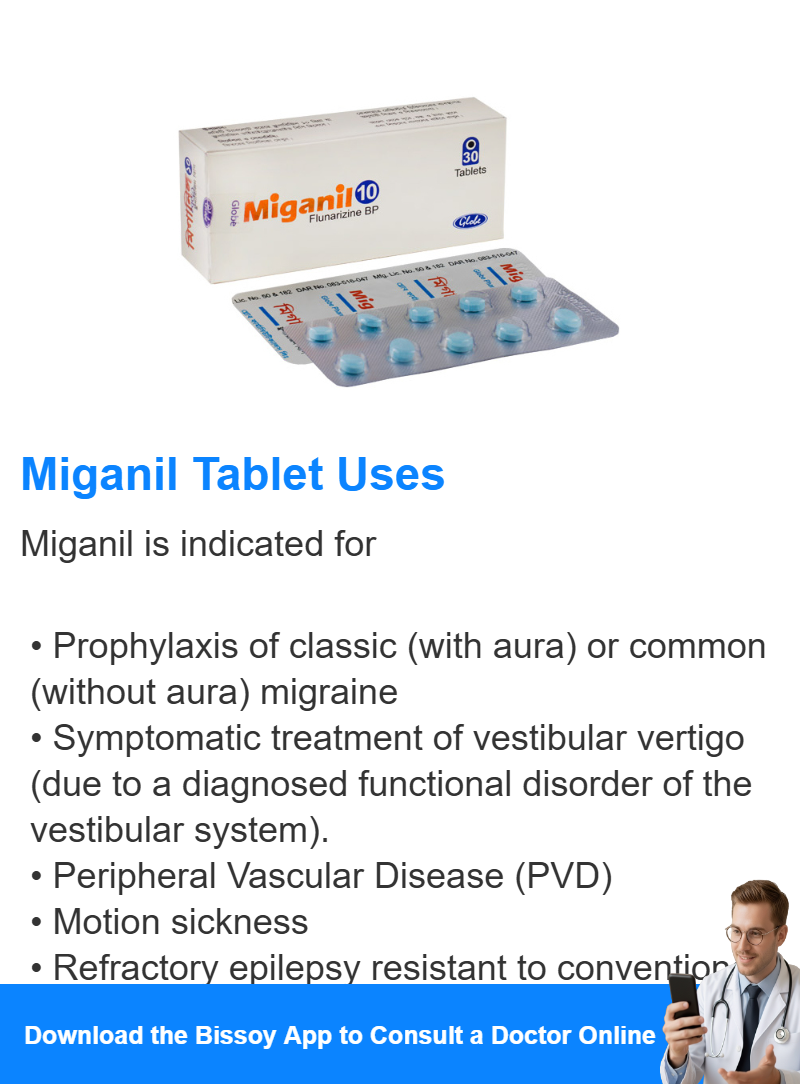
Miganil Tablet 10 mg is a selective calcium entry blocker with calmodulin binding properties and histamine H1 blocking activity. It is effective in the prophylaxis of migraine, occlusive peripheral vascular disease, vertigo of central and peripheral origin, and as an adjuvant in the therapy of epilepsy.
Uses
Miganil Tablet 10 mg is a selective calcium-entry blocker used as migraine prophylaxis in patients with severe and frequent episodes who have not responded adequately to more common treatments.
Used in the prophylaxis of migraine, occlusive peripheral vascular disease, vertigo of central and peripheral origin, and as an adjuvant in the therapy of epilepsy.
Associated Conditions
Pharmacodynamics
Miganil Tablet 10 mg is a selective calcium entry blocker with calmodulin binding properties and histamine H1 blocking activity.
Mechanism of Action
Miganil Tablet 10 mg inhibits the influx of extracellular calcium through myocardial and vascular membrane pores by physically plugging the channel. The decrease in intracellular calcium inhibits the contractile processes of smooth muscle cells, causing dilation of the coronary and systemic arteries, increased oxygen delivery to the myocardial tissue, decreased total peripheral resistance, decreased systemic blood pressure, and decreased afterload.
Absorption
85% following oral administration.
Protein Binding
99% bound to plasma proteins
Half Life
18 days
Toxicity
-Miganil Tablet 10 mg should be used with care in patients with depression or those being prescribed other agents, such as phenothiazines, concurrently, which may cause extrapyramidal side-effects. -Acute overdosage has been reported and the observed symptoms were sedation, agitation and tachycardia. -Treatment of acute overdosage consists of charcoal administration, induction of emesis or gastric lavage, and supportive measures. No specific antidote is known.
Food Interactions
- Avoid alcohol.
- Take with or without food. The absorption is unaffected by food.
Dosage
- Starting Dose: 10 mg at night in patients less than 65 years of age and 5 mg daily in patients older than 65 years. If, during this treatment depressive, extrapyramidal or other unacceptable symptoms occur, administration should be discontinued. If, after 2 months of this initial treatment, no significant improvement is observed, the patient should be considered a non-responder and administration should be discontinued.
- Maintenance Treatment: If a patient is responding satisfactorily and if a maintenance treatment is needed, the dose should be decreased to 5 days treatment at the same daily dose with two successive medicine free days every week. Even if the prophylactic maintenance treatment is successful and well tolerated, it should be interrupted after 6 months and it should be re-initiated only if the patient relapses.
Vertigo & motion sickness: 10-20 mg daily for adults and 5 mg daily for children (> 40 kg).
Epileptic seizure: 15-20 mg daily in adults and 5 to 10 mg daily for children as an add-on therapy