Introduction
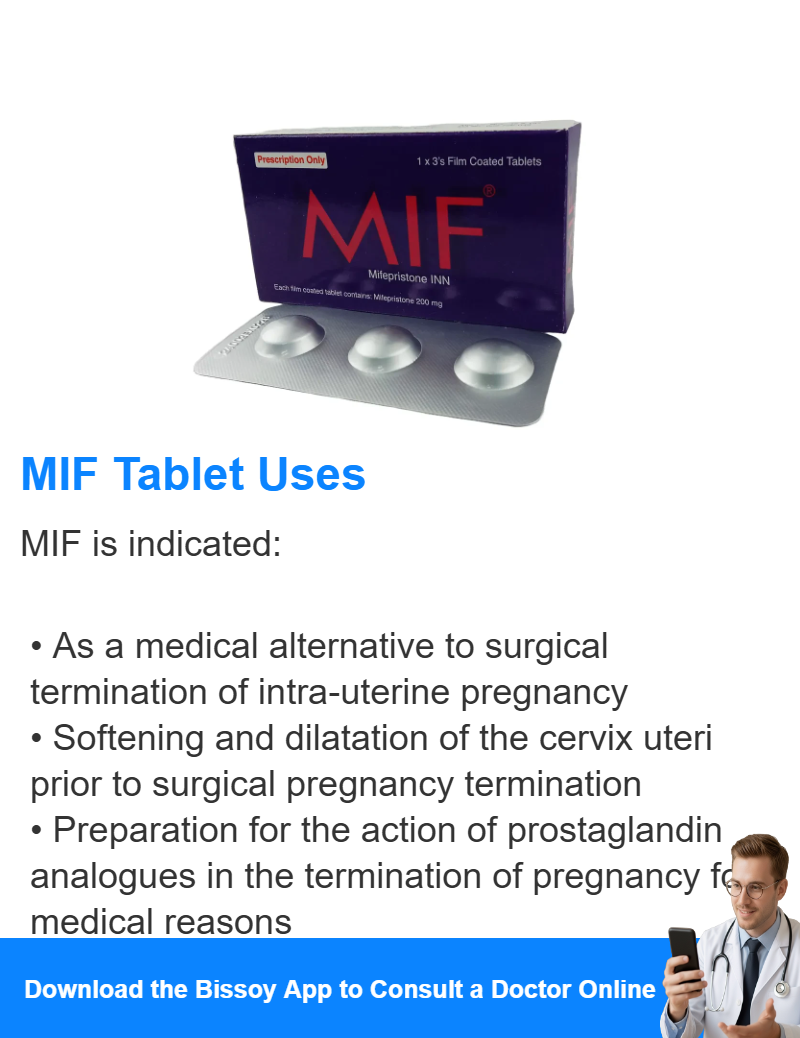
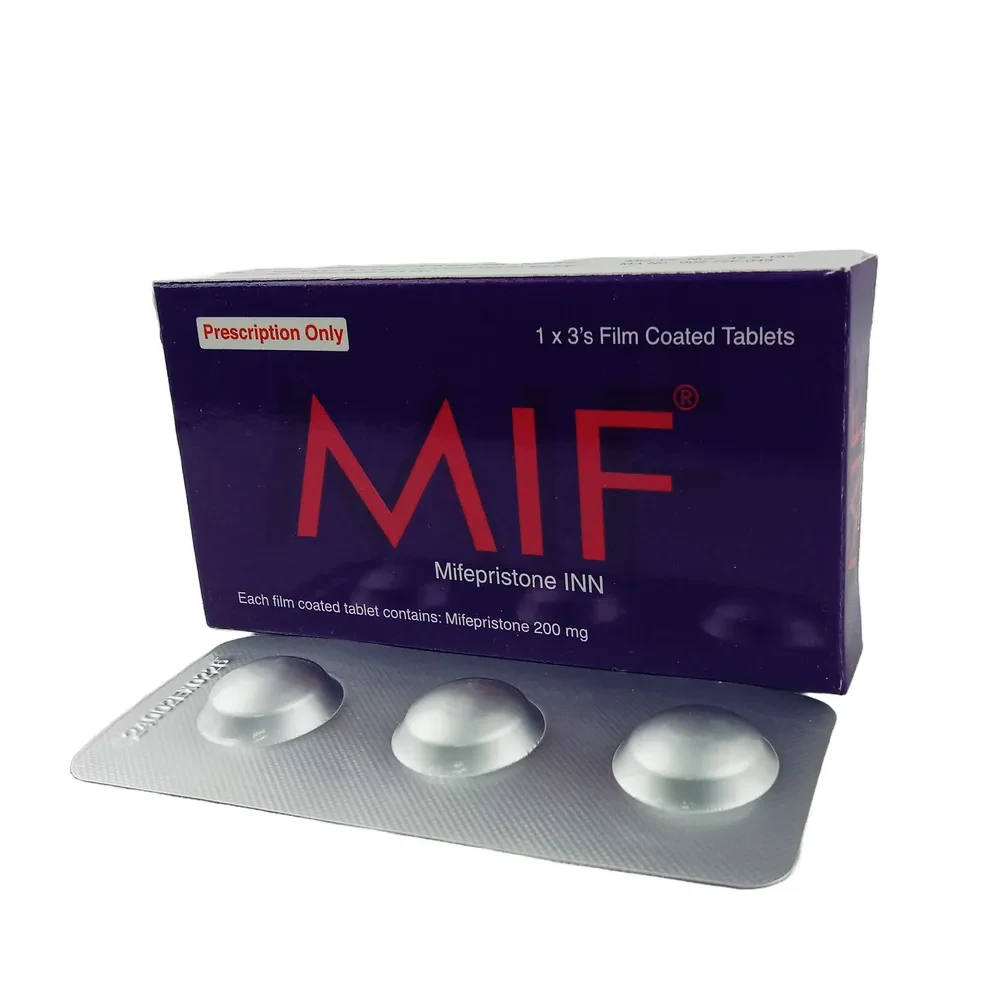
MIF Tablet 200 mg is a progestational and glucocorticoid hormone antagonist. It blocks progesterone activity, causing endometrial changes and bleeding during the luteal phase and early pregnancy by promoting the release of endogenous prostaglandins. As a glucocorticoid receptor antagonist, it is also used in the management of hypercortisolism associated with nonpituitary Cushing syndrome. MIF Tablet 200 mg is available in different formulations for specific clinical uses and is under investigation for additional applications, including psychotic depression.
Uses
MIF Tablet 200 mg is a cortisol receptor blocker used to treat Cushing's syndrome, and to terminate pregnancies up to 70 days gestation.
For the medical termination of intrauterine pregnancy through 49 days' pregnancy. Also indicated to control hyperglycemia secondary to hypercortisolism in adult patients with endogenous Cushing's syndrome who have type 2 diabetes mellitus or glucose intolerance and are not candidates for surgery or have had unsuccessful surgery.
Associated Conditions
Pharmacodynamics
MIF Tablet 200 mg is a synthetic steroid with antiprogestational effects indicated for the medical termination of intrauterine pregnancy through 49 days' pregnancy. Doses of 1 mg/kg or greater of mifepristone have been shown to antagonize the endometrial and myometrial effects of progesterone in women. During pregnancy, the compound sensitizes the myometrium to the contraction-inducing activity of prostaglandins. MIF Tablet 200 mg also exhibits antiglucocorticoid and weak antiandrogenic activity. The activity of the glucocorticoid dexamethasone in rats was inhibited following doses of 10 to 25 mg/kg of mifepristone. Doses of 4.5 mg/kg or greater in human beings resulted in a compensatory elevation of adrenocorticotropic hormone (ACTH) and cortisol.
Mechanism of Action
The anti-progestational activity of mifepristone results from competitive interaction with progesterone at progesterone-receptor sites. Based on studies with various oral doses in several animal species (mouse, rat, rabbit and monkey), the compound inhibits the activity of endogenous or exogenous progesterone. The termination of pregnancy results.
In the treatment of Cushing's syndrome, MIF Tablet 200 mg blocks the binding of cortisol to its receptor. It does not decrease cortisol production but reduces the effects of excess cortisol, such as high blood sugar levels.
Absorption
The absolute bioavailability of a 20 mg oral dose is 69%
Protein Binding
98% (bound to plasma proteins, albumin and a 1-acid glycoprotein)
Route of Elimination
Fecal: 83%; Renal: 9%.
Half Life
18 hours
Toxicity
Nearly all of the women who receive mifepristone will report adverse reactions, and many can be expected to report more than one such reaction. About 90% of patients report adverse reactions following administration of misoprostol on day three of the treatment procedure. Side effects include more heavy bleeding than a heavy menstrual period, abdominal pain, uterine cramping, nausea, vomiting, and diarrhea.
Food Interactions
- Avoid grapefruit products. Grapefruit inhibits the metabolism of mifepristone through the CYP3A4 pathway causing increased serum levels of mifepristone.
- Take with food. Taking mifepristone with meals has been shown to increase serum levels of mifepristone.