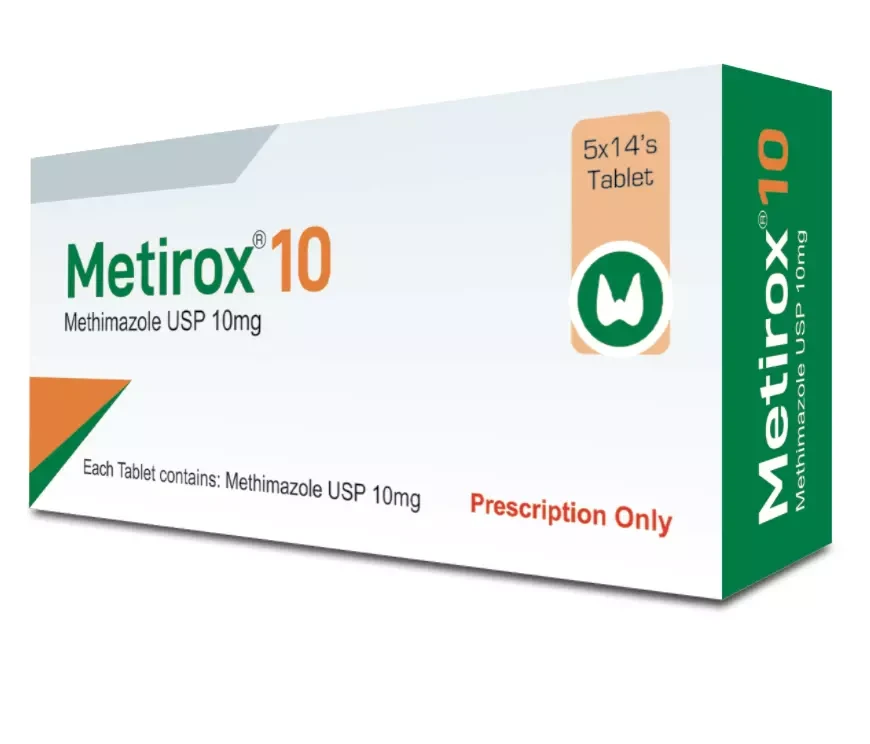
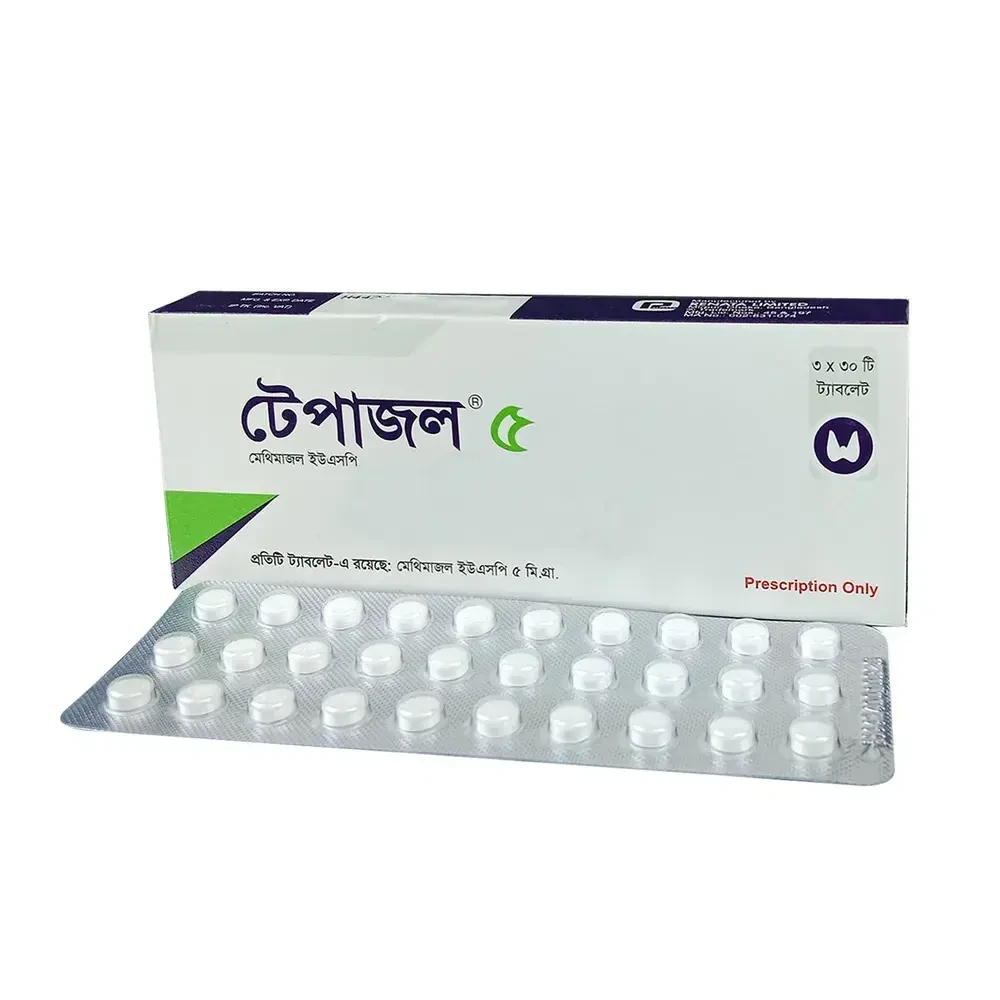
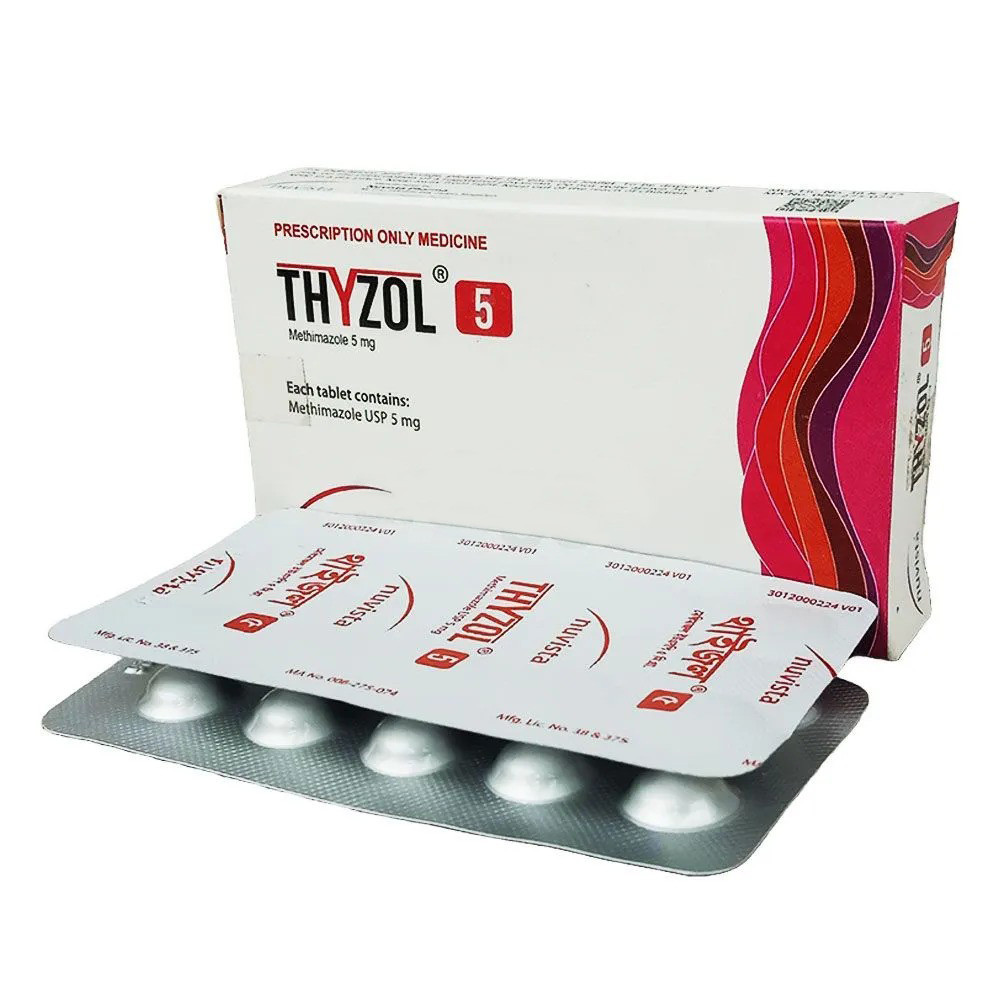
Metirox Tablet 5 mg
Metirox Tablet 5 mg (also known as Tapazole) is an antithyroid medication used in the treatment of hyperthyroidism, a condition in which an overactive thyroid gland produces an excessive amount of thyroid hormones. It is used alone or in combination with other medications to control the levels. Metirox Tablet 5 mg works by inhibiting the production of thyroid hormones in the thyroid gland, thereby reducing symptoms associated with the condition.
Uses For
Metirox Tablet 5 mg is used to treat an overactive thyroid gland (hyperthyroidism). It helps to reduce the amount of thyroid hormones produced by the thyroid gland, and thus helps to reduce the symptoms associated with the condition such as weight loss, racing heart rate, sweating, nervousness, irritability, fatigue, and heat intolerance.
| Brand Name | Metirox |
|---|---|
| Type | Tablet |
| Weight | 5 mg |
| Generic | Methimazole |
| Manufacturer | Renata Limited |
| Available in | English বাংলা |
Mechanism of Action
Metirox Tablet 5 mg works by inhibiting the production of thyroid hormones in the thyroid gland. This is accomplished by blocking an enzyme called thyroid peroxidase, which is required for thyroid hormone production. The reduction in the thyroid hormones results in a decrease in symptoms associated with the condition.
How Long Does It Take to Work?
Metirox Tablet 5 mg usually takes about 4 to 6 weeks to start taking effect. It is important to continue taking the medication regularly during this time to ensure that it has the desired effect.
Absorption
Metirox Tablet 5 mg is rapidly absorbed from the gastrointestinal tract after oral administration. The maximum concentration of the drug in the bloodstream is reached 1-2 hours after administration.
Route of Elimination
Metirox Tablet 5 mg is eliminated mainly through the kidneys. About 70-80% of an administered dose is excreted in the urine within 24 hours.
Dosage
Methimazole is administered orally. The total daily dosage is usually given in 3 divided doses at approximately 8 hour intervals.Adults: The initial daily dosage is 15 mg for mild hyperthyroidism, 30 to 40 mg for moderately severe hyperthyroidism, and 60 mg for severe hyperthyroidism, divided into 3 doses at 8 hour intervals. The maintenance dosage is 5 to 15 mg daily.
Pediatric: Initially, the daily dosage is 0.4 mg/kg of body weight divided into 3 doses and given at 8 hour intervals. The maintenance dosage is approximately 1/2 of the initial dose.
Use in children & adolescents: Because of post-marketing reports of severe liver injury in pediatric patient treated with propylthiouracil, Methimazole is the preferred choice when an antithyroid drug is required for a pediatric patient.
Metirox Tablet 5 mg is available in tablets of 5mg and 10mg and as an oral suspension of 5mg/5ml. The dose of Metirox Tablet 5 mg depends on the severity of the condition and the response to treatment. Typical doses range from 5-60mg/day, taken in either one or two divided doses.
Administration
Metirox Tablet 5 mg is typically taken orally with or without food. It is important to take it regularly and continue to take it even if you feel better. It usually takes 4 to 6 weeks before the medication begins to take effect.
Side Effect
Common side effects associated with the use of Metirox Tablet 5 mg include dysgeusia (altered sense of taste), headache, nausea, vomiting, diarrhea, skin rash, and joint pain. Rare but serious side effects include allergic reactions, anemia, fever, abdominal pain, chest pain, loss of appetite, and yellowing of the skin or eyes (jaundice). If any of these side effects occur, seek medical attention immediately.
Toxicity
Metirox Tablet 5 mg can cause acute renal failure and agranulocytosis (low white blood cell count) when taken at high doses or for prolonged periods of time. If any signs or symptoms of these conditions occur, seek medical attention immediately.
Precaution
Metirox Tablet 5 mg should be used with caution in patients with kidney or liver disease, as well as in patients taking other medications. It is also important to closely monitor your kidney and liver function while taking the medication. Tell your doctor if you develop any signs or symptoms of an allergic reaction (e.g., rash, itching, difficulty breathing), anemia, or jaundice.
Interaction
Metirox Tablet 5 mg may interact with certain medications, including certain antibiotics, antifungals, certain chemotherapy drugs, and certain blood pressure medications. It is important to inform your doctor of any medications you are taking before starting this medication.
Disease interaction
Patients with psychosis, renal insufficiency, or liver dysfunction may be at an increased risk for adverse effects when taking Metirox Tablet 5 mg. Patients being treated for hyperthyroidism may also be at increased risk for thyroid storm and should be monitored closely for such signs and symptoms.
Drug interaction
Metirox Tablet 5 mg may interact with certain medications, including certain antibiotics, antifungals, certain chemotherapy drugs, and certain blood pressure medications. Tell your doctor about all of the medications you are taking, including both prescription and non-prescription drugs, vitamins, and herbal supplements, so your doctor can determine if the drug is right for you.
Food interactions
Metirox Tablet 5 mg can be taken with or without food. However, it is important to avoid grapefruit juice or any other food that may interact with the drug.
Pregnancy Use
Metirox Tablet 5 mg is classified as a pregnancy Category C drug, which means it has not been adequately studied in pregnant women. It is not recommended for use in pregnant women due to the potential risk of adverse effects on the fetus. Patients taking the drug should use effective birth control, as exposure to the drug during early pregnancy can cause severe birth defects.
Lactation Use
Metirox Tablet 5 mg is excreted into human milk and has the potential to affect the nursing infant. It is not recommended for use in nursing mothers due to the potential risk of adverse effects on the nursing infant.
Acute Overdose
Acute overdose of Metirox Tablet 5 mg can cause severe nausea, vomiting, diarrhea, abdominal pain, fever, and jaundice. If symptoms of an overdose occur, seek immediate medical attention.
Contraindication
Metirox Tablet 5 mg is contraindicated for use in patients with a known hypersensitivity or allergy to the medication. It is also contraindicated in patients with certain underlying medical conditions, such as certain heart conditions, myasthenia gravis, and low levels of blood platelets.
Use Direction
Metirox Tablet 5 mg should be taken as directed by your doctor. Take it with or without food, at the same time each day. Do not take more or less than the prescribed dose and do not discontinue use without your doctor's approval.
Storage Condition
Metirox Tablet 5 mg should be stored at room temperature, in a dry and dark place. Keep it away from children and pets.
Volume of Distribution
Metirox Tablet 5 mg has a volume of distribution of 1.3 L/kg and is widely distributed throughout the body.
Half Life
Metirox Tablet 5 mg has a half-life of 1-4 hours.
Clearance
Metirox Tablet 5 mg is cleared from the body through the kidneys. The renal clearance of Metirox Tablet 5 mg is 1.3 L/hr/kg.
See in details version Metirox Tablet 5 mg also Metirox Tablet 5 mg in bangla
Social card