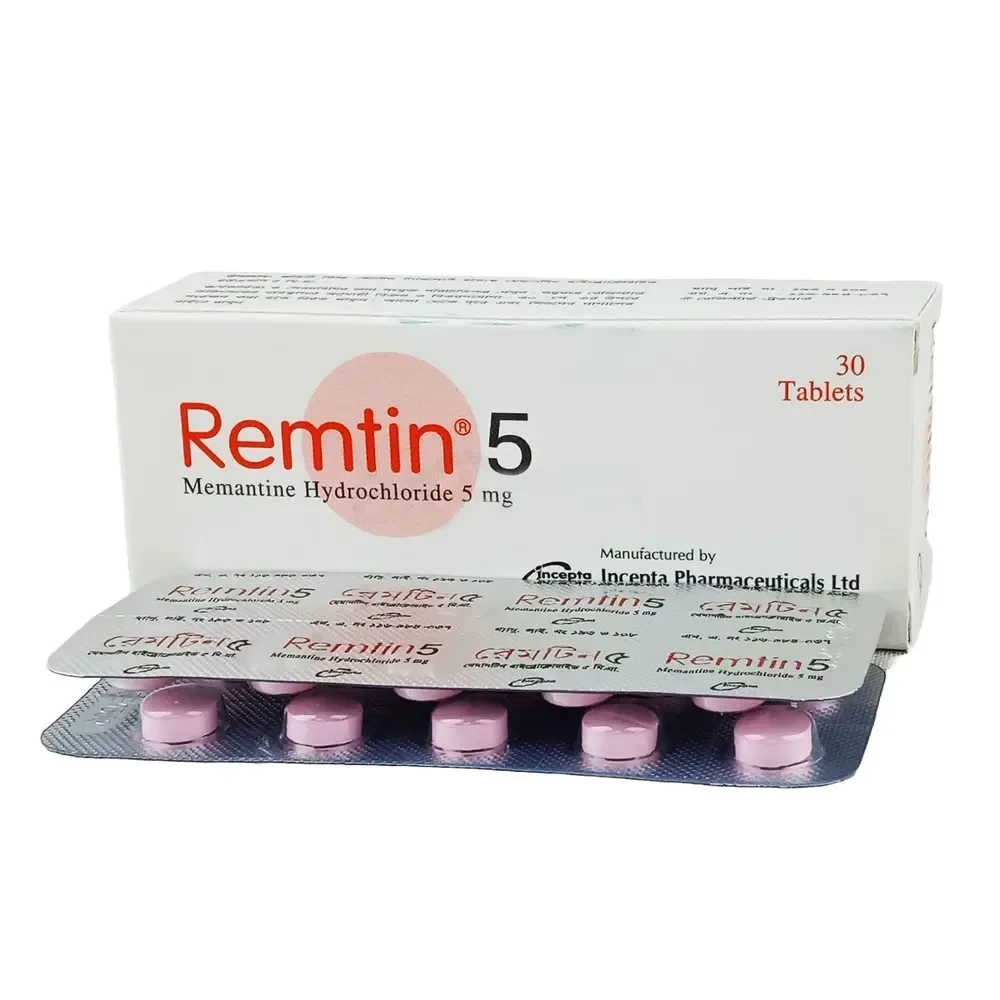
Introduction
Memanto Tablet 5 mg is an N-methyl-D-aspartate (NMDA) receptor antagonist used in the treatment of Alzheimer's disease, Parkinson's Disease, and other neurodegenerative disorders. It was approved by the US Food and Drug Administration (FDA) in 2003 as a treatment for moderate-to-severe Alzheimer’s disease.
Uses
Memanto Tablet 5 mg is used to treat moderate-to-severe Alzheimer's disease. It is also used to reduce symptoms of Parkinson's disease.
Mechanism of Action
Memanto Tablet 5 mg works by blocking the action of the neurotransmitter glutamate, which is thought to be responsible for some of the damaging effects of Alzheimer's disease. The drug is thought to selectively block the NMDA receptors in the brain, reducing their activity and limiting the damage caused by excessive amounts of glutamate.
How Long Does It Take To Work?
Memanto Tablet 5 mg is generally believed to take approximately three to four weeks of consistent use for any benefits to be felt. However, individual results may vary depending on the severity of the patient's condition.
Absorption
Memanto Tablet 5 mg is rapidly absorbed from the gastrointestinal tract with peak concentrations occurring 1-3 hours after administration.
Route of Elimination
Memanto Tablet 5 mg is eliminated primarily via the kidneys. Approximately 60% of a single dose is eliminated via the kidneys in the form of the unchanged drug.
Dosage
The recommended maintenance dose of Memantine for adults and older patients is 20 mg every day. In order to lower the risk of side effects, the dose should be achieved by upward titration with 5 mg per week over 3 weeks, achieving the maintenance dose of 20 mg/day from the start of week 4 according to the following dosage guideline:
Week 1 (Everyday): Morning- 5 mg (1 tablet), Night- No dose
Week 2 (Everyday): Morning- 5 mg (1 tablet), Night- 5 mg (1 tablet)
Week 3 (Everyday): Morning- 10 mg (2 tablets), Night- 5 mg (1 tablet)
Week 4 and onwards (Everyday): Morning- 10 mg (2 tablets), Night- 10 mg (2 tablets)
Missed Dose: If any dose is missed, just wait and take the next dose at the usual time. Do not double the dose to compensate for the missed dose.
In case renal impairment: In patients with moderate renal impairment (creatinine clearance 30-49 ml/min) daily dose should be 10 mg (1 ml solution, equivalent to two downward strokes). If tolerated well after at least 7 days of treatment, the dose could be increased up to 20 mg/day according to standard titration scheme. In patients with severe renal impairment (creatinine clearance 5-29 ml/min) daily dose should be 10 mg (1 ml solution, equivalent to two downward strokes) per day.
In case of hepatic impairment: In patients with mild or moderate hepatic impaired function, no dosage adjustment is needed. Administration of memantine is not recommended in patients with severe hepatic impairment.
Children under 18 years: Memantine is not recommended for use in children below 18 years due to lack of data on safety and efficacy.

The recommended starting dose of Memanto Tablet 5 mg is 5 mg orally once a day, with or without food. The dose may be increased to 10 mg orally once a day after approximately one week if needed. Further increases should only be made after considering factors such as tolerability, efficacy, and adverse effects.
Administration
Memanto Tablet 5 mg is available as a tablet or an oral solution and can be administered orally.
Side Effects
Common side effects associated with Memanto Tablet 5 mg include dizziness, headache, constipation, and confusion. Rare side effects include serious kidney and liver problems.
Toxicity
The acute toxicity of Memanto Tablet 5 mg is considered low. The drug has been extensively studied and is an approved treatment for moderate-to-severe Alzheimer's disease.
Precautions
Patients taking Memanto Tablet 5 mg should be monitored for changes in behavior and cognitive abilities. Patients should also be monitored for signs and symptoms of serious adverse events, such as abdominal pain, diarrhea, vomiting, rash, and changes in vision. Patients should inform their doctor if they have any allergies, or if they are taking any other prescription or over-the-counter medications.
Interaction
Memanto Tablet 5 mg can potentially interact with other drugs, including anticonvulsants, antidepressants, antihistamines, and some antibiotics. Patients should notify their doctor before using any additional medications.
Disease Interaction
Memanto Tablet 5 mg may worsen the symptoms of certain medical conditions, including depression, bipolar disorder, and schizophrenia. Patients should inform their doctor if they have any of these conditions.
Drug Interaction
Memanto Tablet 5 mg can interact with other medications, including anticonvulsants, antihistamines, antidepressants, and some antibiotics. Patients should notify their doctor if they are taking any other prescription or over-the-counter medications.
Food Interactions
Memanto Tablet 5 mg is not known to interact with food. However, it is important to inform one's doctor about any dietary changes, as some foods can interfere with the absorption of medication.
Pregnancy Use
Memanto Tablet 5 mg is classified as a pregnancy category C drug and should be used with caution during pregnancy. It is not recommended for use by pregnant women unless the benefits outweigh the risks.
Lactation Use
Memanto Tablet 5 mg is excreted in breast milk and may cause adverse reactions in nursing infants. Women who are breastfeeding should consult their doctor before taking this medication.
Acute Overdose
Symptoms of an acute overdose may include confusion, dizziness, tachycardia, and, in severe cases, coma. Immediate medical attention is recommended for patients experiencing an acute overdose.
Contraindication
Memanto Tablet 5 mg is contraindicated in patients with known hypersensitivity to the active ingredient or any of the excipients. The use of Memanto Tablet 5 mg is also contraindicated in patients with significant hepatic impairment or in combination with other NMDA receptor antagonists such as dextromethorphan or ketamine.
Use Direction
Patients should take Memanto Tablet 5 mg according to their doctor's direction. Patients should not take more than the recommended dose and should not change their dose without consulting with their doctor.
Storage Condition
Memanto Tablet 5 mg tablets should be stored in a dry place at temperatures not exceeding 30 degrees Celsius (86 degrees Fahrenheit). The oral solution should be stored at temperatures not exceeding 25 degrees Celsius (77 degrees Fahrenheit).
Volume Of Distribution
The volume of distribution of Memanto Tablet 5 mg is approximately 1.56 L/kg.
Half Life
The elimination half-life of Memanto Tablet 5 mg ranges from 24 to 60 hours.
Clearance
The clearance of Memanto Tablet 5 mg is approximately 3.9 L/hr/kg.
See in details version Memanto Tablet 5 mg also Memanto Tablet 5 mg in bangla
Some Frequently Asked Questions About Memanto Tablet 5 mg
1. What is Memanto Tablet 5 mg?
Memanto Tablet 5 mg is a medication used to treat moderate to severe Alzheimer's disease. It works by regulating the activity of glutamate, a neurotransmitter involved in learning and memory.
2. How does Memanto Tablet 5 mg work?
Memantine works by blocking excess glutamate in the brain, which can contribute to the symptoms of Alzheimer's disease. This helps improve cognitive function and slow the progression of the disease.
3. What is Memanto Tablet 5 mg used for?
It is primarily used to treat moderate to severe Alzheimer's disease and may help improve symptoms related to memory, thinking, and daily functioning.
4. What is the usual dosage of Memanto Tablet 5 mg?
The typical starting dose is 5 mg once daily, which can be gradually increased based on your doctor’s recommendation, up to a maximum of 20 mg daily.
5. How should I take Memanto Tablet 5 mg?
Memantine is usually taken once a day, with or without food. It is important to take it at the same time each day for consistency.
6. Can I take Memanto Tablet 5 mg with food?
Yes, you can take Memantine with or without food. There is no significant effect on its absorption when taken with food.
7. What should I do if I miss a dose of Memanto Tablet 5 mg?
If you miss a dose, take it as soon as you remember, but if it's almost time for your next dose, skip the missed dose and resume your regular schedule. Do not take two doses at once.
8. What are the common side effects of Memanto Tablet 5 mg?
- Dizziness
- Headache
- Constipation
- Confusion
- Fatigue
9. Can Memanto Tablet 5 mg cause weight gain?
Weight gain is not commonly associated with Memantine, though any changes in weight should be monitored by a doctor.
10. Can I take Memanto Tablet 5 mg with other medications?
Yes, but you should inform your doctor about all medications you're taking, as some drugs may interact with Memantine, especially those affecting the central nervous system.
11. Can Memanto Tablet 5 mg cause high blood pressure?
High blood pressure is not a typical side effect, but it is important to monitor blood pressure regularly during treatment.
12. Is Memanto Tablet 5 mg safe during pregnancy?
Memantine is classified as pregnancy category B. It is not known to harm an unborn baby, but you should consult your doctor before taking it during pregnancy.
13. Can I take Memanto Tablet 5 mg while breastfeeding?
It is not recommended to use Memantine while breastfeeding unless your doctor deems it necessary, as it may pass into breast milk.
14. Does Memanto Tablet 5 mg affect sleep?
Yes, some patients may experience sleep disturbances, such as insomnia or unusual dreams, while taking Memantine.
15. Can I drink alcohol while taking Memanto Tablet 5 mg?
It is advisable to limit alcohol consumption while taking Memantine, as alcohol can worsen certain side effects such as dizziness or confusion.
16. Can Memanto Tablet 5 mg cause dizziness?
Yes, dizziness is a common side effect of Memantine, especially when standing up quickly.
17. How long does it take for Memanto Tablet 5 mg to work?
It may take several weeks of consistent use before you notice an improvement in symptoms such as memory and cognition.
18. Can Memanto Tablet 5 mg improve memory?
Memantine may help improve symptoms related to memory, thinking, and daily functioning in individuals with moderate to severe Alzheimer's disease.
19. Can Memanto Tablet 5 mg cure Alzheimer's disease?
No, Memantine does not cure Alzheimer's disease. It can help manage symptoms and improve quality of life, but it does not stop the progression of the disease.
20. Is Memanto Tablet 5 mg a long-term treatment?
Yes, Memantine is often used long-term for managing Alzheimer's disease. Your doctor will monitor your progress regularly.
21. Can Memanto Tablet 5 mg be used in early-stage Alzheimer's disease?
Memantine is typically used for moderate to severe Alzheimer's disease, though it may be prescribed in some cases for early-stage patients based on the doctor’s assessment.
22. What should I do if I accidentally overdose on Memanto Tablet 5 mg?
If you suspect an overdose, seek immediate medical attention. Symptoms of overdose may include drowsiness, dizziness, or difficulty breathing.
23. Can Memanto Tablet 5 mg affect my mood?
Yes, some people may experience mood changes, including anxiety or irritability, while taking Memantine.
24. Can Memanto Tablet 5 mg cause hallucinations?
Hallucinations are a rare side effect of Memantine but may occur, especially in elderly patients.
25. Can I stop taking Memanto Tablet 5 mg suddenly?
It is not recommended to stop Memantine suddenly without consulting your doctor, as abrupt discontinuation may lead to withdrawal symptoms or worsening of symptoms.
26. How should I store Memanto Tablet 5 mg?
Store Memantine at room temperature, away from heat and moisture. Keep it out of the reach of children.
27. Can Memanto Tablet 5 mg cause constipation?
Yes, constipation is a common side effect of Memantine, and it can be managed by maintaining a healthy diet and staying hydrated.
28. Does Memanto Tablet 5 mg affect appetite?
Memantine does not usually cause significant changes in appetite, though some individuals may experience loss of appetite or weight loss.
29. Can Memanto Tablet 5 mg be used for other types of dementia?
Memantine is primarily used for Alzheimer's disease, but it is sometimes used off-label for other types of dementia, such as vascular dementia.
30. Can Memanto Tablet 5 mg cause headaches?
Yes, headaches are a common side effect of Memantine, especially during the initial stages of treatment.
31. Is Memanto Tablet 5 mg safe for people with kidney problems?
Memantine should be used with caution in people with kidney problems, as it is eliminated through the kidneys. Your doctor may adjust the dosage based on your kidney function.
32. Can Memanto Tablet 5 mg cause dry mouth?
Dry mouth is a rare side effect, but it can occur in some patients taking Memantine.
33. Is Memanto Tablet 5 mg available in generic form?
Yes, Memantine is available in both brand-name and generic forms.
34. Can Memanto Tablet 5 mg be taken with antidepressants?
It is important to consult your doctor if you are taking antidepressants, as there may be a potential for interactions, especially with drugs that affect the central nervous system.
35. Does Memanto Tablet 5 mg help with other cognitive issues besides Alzheimer's?
Memantine is mainly used for Alzheimer's disease, but it may be beneficial for other cognitive impairments, depending on the doctor's evaluation.
36. Can Memanto Tablet 5 mg cause nausea?
Yes, nausea is a possible side effect of Memantine, especially when starting treatment.
37. How does Memantine compare to other Alzheimer's medications?
Memantine works differently from cholinesterase inhibitors, another class of Alzheimer's drugs, and may be used in combination with them for more comprehensive treatment.
38. Does Memanto Tablet 5 mg improve quality of life?
Yes, many patients experience improvements in daily functioning and quality of life while taking Memantine.
39. How often do I need to see my doctor while taking Memanto Tablet 5 mg?
Regular doctor visits are recommended to monitor progress, manage side effects, and adjust dosages if necessary.
40. Can Memanto Tablet 5 mg cause aggression?
In rare cases, some people may experience increased aggression or agitation while taking Memantine.
41. Can Memanto Tablet 5 mg be used in children?
Memantine is not recommended for use in children under 18, as its safety and efficacy in this age group have not been established.
42. Can Memanto Tablet 5 mg cause sleepiness?
Some people may feel drowsy or tired while taking Memantine, particularly during the initial stages of treatment.
43. Can Memanto Tablet 5 mg be used for severe dementia?
Yes, Memantine is specifically used for moderate to severe Alzheimer's disease and can help manage symptoms in these stages.
44. Can Memanto Tablet 5 mg cause muscle weakness?
Muscle weakness is a rare side effect, but it may occur in some individuals taking Memantine.
45. Does Memanto Tablet 5 mg interact with alcohol?
Alcohol can increase the sedative effects of Memantine, so it is best to limit or avoid alcohol consumption while taking this medication.
46. Can Memanto Tablet 5 mg improve behavior problems in Alzheimer's?
Memantine may help with some behavior issues, like agitation and aggression, by improving cognitive function.
47. Can I take Memanto Tablet 5 mg if I have depression?
If you have depression, consult your doctor before taking Memantine, as mood changes can occur, and adjustments may be needed.
48. Can Memanto Tablet 5 mg cause leg cramps?
Leg cramps are not a common side effect, but some individuals may experience muscle cramps while taking Memantine.
49. How do I know if Memanto Tablet 5 mg is effective?
Your doctor will monitor your symptoms, including cognitive function and daily activities, to determine if Memantine is working effectively.
50. Can Memanto Tablet 5 mg improve the ability to perform daily activities?
Yes, many individuals experience improvements in the ability to carry out daily activities like dressing, eating, and bathing while taking Memantine.
*** Taking medicines without doctor's advice can cause long-term problems.