Introduction

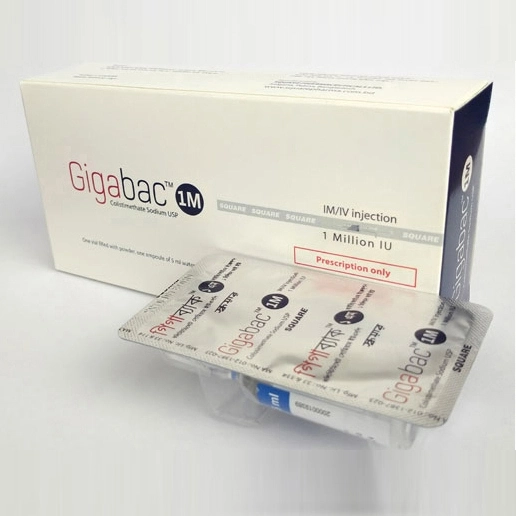
Colistimethate sodium, also known as colistin, is an antibiotic used primarily for the treatment of infections caused by multidrug-resistant Gram-negative bacteria. It is a member of the polymyxin class of antibiotics, which are known for their effectiveness against a range of resistant pathogens.

Uses

Colistimethate sodium is used to treat:

  • Infections caused by Pseudomonas aeruginosa, Acinetobacter baumannii, and other resistant Gram-negative bacteria.
  • Complicated urinary tract infections, respiratory tract infections, and sepsis.
  • Colistimethate sodium is often reserved for severe infections where other antibiotics are ineffective.
Its use is typically considered when other treatment options have failed due to resistance or allergy.

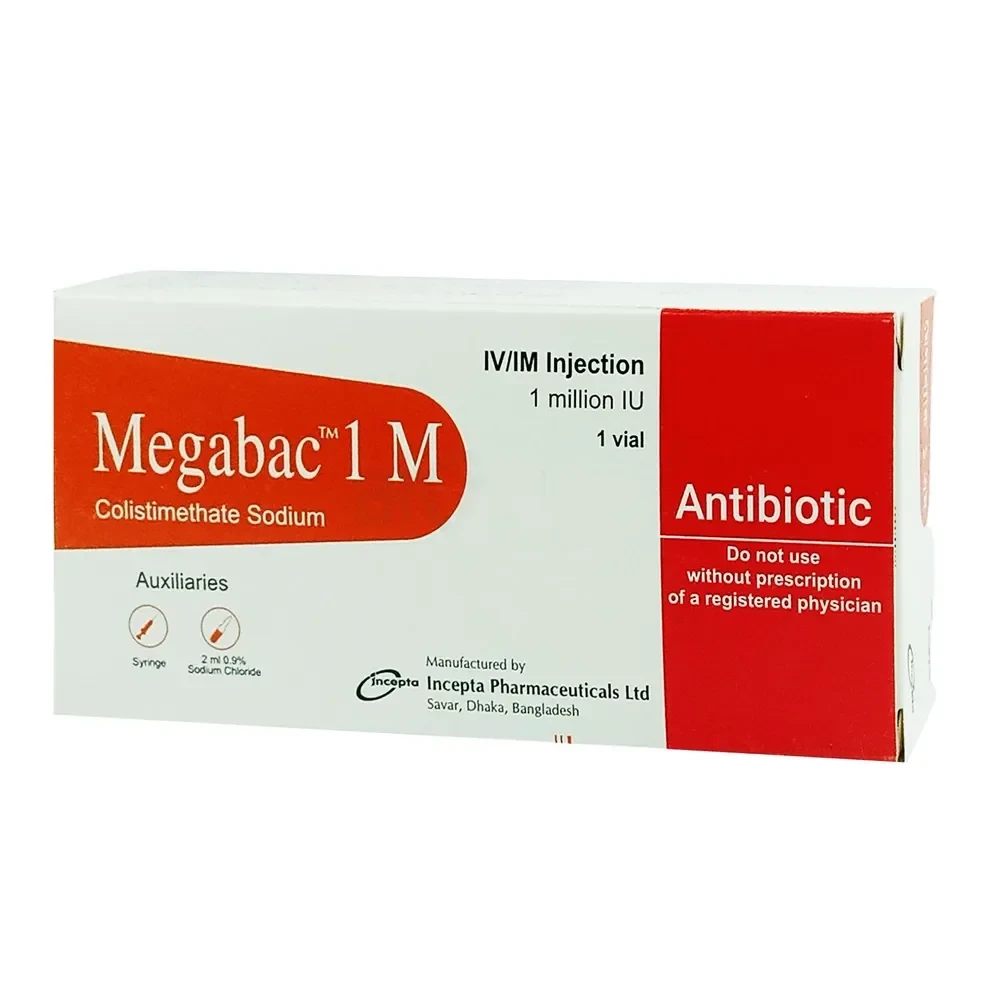
Brand Name Megabac
Type IM/IV Injection
Weight 1 MIU (34 mg)
Generic Colistimethate Sodium
Manufacturer Incepta Pharmaceuticals Ltd.
Available in English বাংলা

Mechanism of Action

Colistimethate sodium works by:

  • Binding to the bacterial cell membrane and disrupting its integrity.
  • Increasing membrane permeability, leading to leakage of essential intracellular components and ultimately bacterial cell death.
This action is effective against Gram-negative bacteria by compromising their outer membrane and causing cell lysis.

How Long Does It Take to Work?

Therapeutic effects can typically be observed within a few days of starting treatment. Improvement in symptoms may be seen as early as 48 to 72 hours, though the full course of therapy is often needed to clear the infection completely.

Absorption

Colistimethate sodium is not absorbed well from the gastrointestinal tract when administered orally. Therefore, it is usually given intravenously, intramuscularly, or via inhalation for systemic infections. Inhaled colistin achieves high local concentrations in the lungs.

Route of Elimination

Colistimethate sodium is primarily excreted by the kidneys:

  • It is metabolized to its active form, colistin, and then excreted unchanged in the urine.
  • Approximately 50% to 70% of the dose is eliminated renally, making dose adjustments necessary in patients with renal impairment.
The drug is also eliminated to a lesser extent in the bile and feces.

Dosage

Maintenance dose: 9 MIU/day in 2-3 divided doses. In patients who are critically ill, a loading dose of 9 MIU should be administered.

Renal impairment patients: Dose adjustments in renal impairment patients are necessary. Dose reductions are recommended for patients with creatinine clearance < 50 ml/min. Twice daily dosing is recommended.
  • Creatinine clearance <50-30 ml/min: daily dose 5.5-7.5 MIU
  • Creatinine clearance <30-10 ml/min: daily dose 4.5-5.5 MIU
  • Creatinine clearance <10 ml/min: daily dose 3.5 MIU
Haemodialysis (HD) patients:
  • No-HD days: 2.25 MIU/day (2.2-2.3 MIU/day).
  • HD days: 3 MIU/day (Should be given after the HD session) Twice daily dosing is recommended.
Pediatric population: The dose should be based on lean body weight.
  • Children ≤40 kg: 75,000-150,000 IU/kg/day divided into 3 doses.
  • Children >40 kg: >150,000 IU/kg/day has been reported in children with cystic fibrosis.
Hepatic impairment patients: There are no data in patients with hepatic impairment. Caution is advised when administering colistimethate sodium in these patients.

Dosage varies based on the type of infection, severity, and patient condition:

  • For intravenous use: The typical dose ranges from 2.5 to 5 mg/kg of body weight every 8 to 12 hours. Dosing may be adjusted based on renal function and clinical response.
  • For inhalation use: The usual dose is 75 to 150 mg twice daily for patients with respiratory infections. This route is used primarily for cystic fibrosis and other chronic lung infections.
Dosing should be individualized based on patient-specific factors and susceptibility of the pathogen.

Administration

Colistimethate sodium is administered via:

  • Intravenous: Administered through an intravenous infusion or bolus injection, usually in a hospital setting.
  • Intramuscular: Administered via intramuscular injection for certain infections.
  • Inhalation: Delivered via a nebulizer for localized lung infections.
Ensure proper administration techniques to avoid complications and achieve therapeutic levels.

Side Effects

Common side effects include:

  • Nephrotoxicity, including renal impairment and elevated creatinine levels.
  • Neurotoxicity, such as dizziness, headache, or peripheral neuropathy.
  • Local reactions at the injection site or respiratory tract irritation with inhalation.
Serious side effects are rare but can include severe allergic reactions and organ toxicity.

Toxicity

Toxicity risks are associated with:

  • High doses or prolonged use, which can lead to renal and neurological toxicity.
  • Monitoring of renal function and drug levels is important to avoid adverse effects.
In cases of suspected overdose or severe adverse effects, immediate medical attention is required.

Precautions

Precautions include:

  • Regular monitoring of renal function due to the risk of nephrotoxicity.
  • Adjustment of dosage in patients with renal impairment.
  • Avoidance of concurrent use with other nephrotoxic drugs.
Use with caution in patients with pre-existing neurological conditions or those prone to renal dysfunction.

Interaction

Colistimethate sodium may interact with:

  • Other nephrotoxic agents, such as aminoglycosides or non-steroidal anti-inflammatory drugs (NSAIDs), increasing the risk of renal toxicity.
  • Neuromuscular blockers, potentially enhancing neuromuscular blockade.
Inform healthcare providers of all medications being taken to avoid potential interactions.

Disease Interaction

Use with caution in patients with:

  • Pre-existing renal disease, as colistin can exacerbate renal impairment.
  • Neurological disorders, due to the potential for neurotoxic effects.
Regular monitoring and dosage adjustments may be necessary in these patients.

Drug Interaction

Significant drug interactions include:

  • Increased risk of nephrotoxicity with other nephrotoxic drugs.
  • Potential interaction with drugs affecting renal function or excretion.
Review all medications with a healthcare provider to avoid adverse interactions.

Food Interactions

There are no specific food interactions with colistimethate sodium. It can be used regardless of food intake. However, follow any additional instructions provided by your healthcare provider or pharmacist.

Pregnancy Use

The safety of colistimethate sodium during pregnancy is not well-established. It should only be used if the benefits outweigh the risks. Consult with a healthcare provider to assess the potential risks and benefits in pregnant patients.

Lactation Use

The use of colistimethate sodium during lactation has not been well-studied. It is generally recommended to use caution and consult with a healthcare provider to determine the safety of use while breastfeeding.

Acute Overdose

In cases of acute overdose, symptoms may include severe renal impairment and neurotoxicity. Immediate medical attention is necessary to manage the overdose. Treatment may involve supportive care and monitoring for adverse effects.

Contraindication

Colistimethate sodium is contraindicated in:

  • Patients with known hypersensitivity to colistin or any component of the formulation.
  • Patients with severe renal impairment without appropriate dosage adjustments.
Ensure to review patient history and consult with a healthcare provider before starting treatment.

Use Direction

Follow the specific dosing and administration instructions provided by your healthcare provider or the product labeling. Adhere to recommended doses and administration routes to achieve optimal therapeutic outcomes.

Storage Conditions

Store colistimethate sodium in a cool, dry place away from direct sunlight. Keep the medication tightly closed and out of reach of children. Follow any additional storage instructions provided with the product to maintain its efficacy.

Volume of Distribution

The volume of distribution for colistimethate sodium is not well-defined but is generally limited to the extracellular fluid and tissues, including the lungs when inhaled. It distributes into body tissues but is primarily active in the areas of infection.

Half Life

The half-life of colistin (the active form of colistimethate sodium) is approximately 4 to 6 hours. This may vary based on renal function and other individual patient factors. Regular dosing adjustments may be required based on therapeutic drug monitoring.

Clearance

Colistimethate sodium is primarily cleared by the kidneys. Renal impairment can significantly affect the clearance rate, necessitating dose adjustments to prevent toxicity and ensure effective treatment.

See in details version Megabac IM/IV Injection 1 MIU (34 mg) also Megabac IM/IV Injection 1 MIU (34 mg) in bangla

Social card

Uses

Some Frequently Asked Questions About Megabac IM/IV Injection 1 MIU (34 mg)

*** Taking medicines without doctor's advice can cause long-term problems.
Dr. Khandker Mahbuba Jannat

Dr. Khandker Mahbuba Jannat

Gynecology, Obstetrics Specialist & Surgeon

Call Doctor
Prof. Dr. Nasima Begum

Prof. Dr. Nasima Begum

Gynecology, Obstetrics, Infertility Specialist & Surgeon

Call Doctor
Related Medicines