Introduction
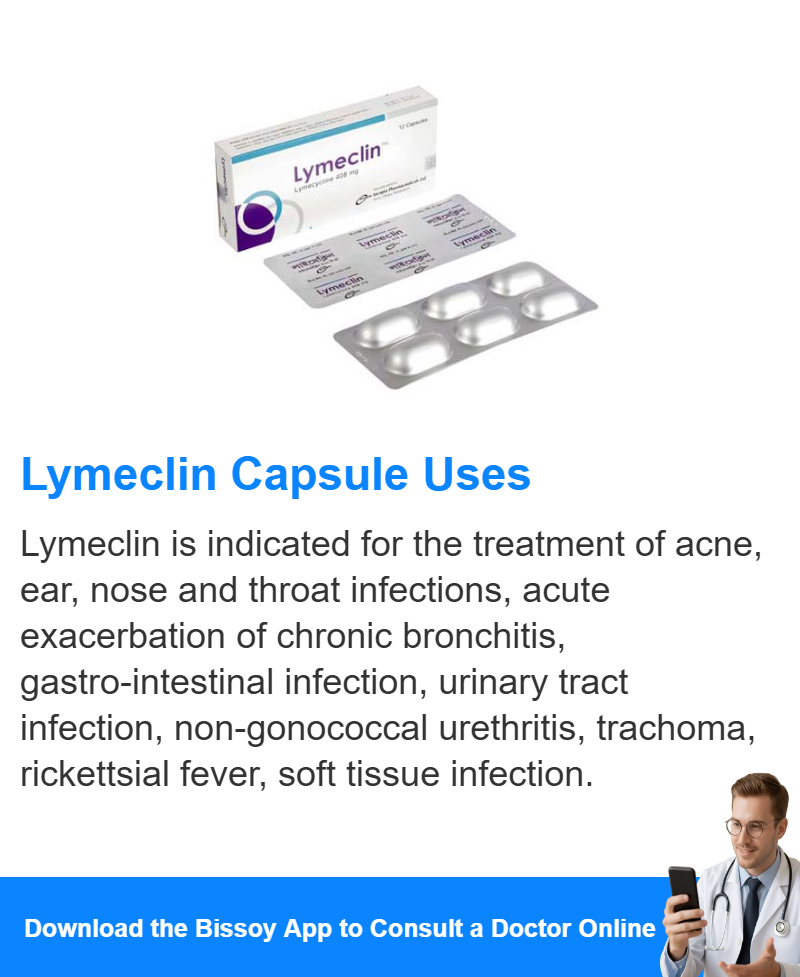
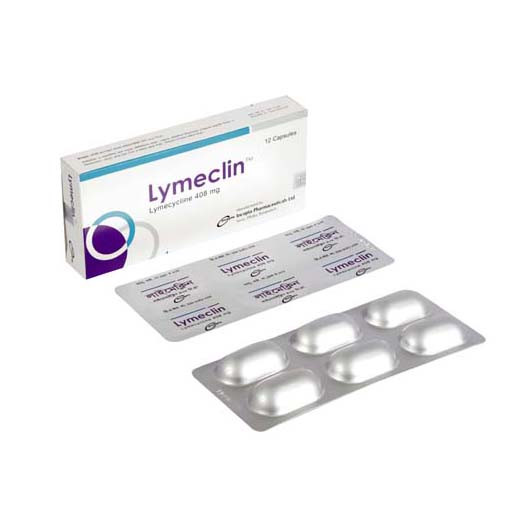
Lymeclin Capsule 408 mg is a second-generation, broad-spectrum tetracycline antibiotic used primarily to treat acne and other susceptible bacterial infections. It inhibits bacterial protein synthesis, thereby preventing bacterial growth. Lymeclin Capsule 408 mg has demonstrated efficacy and safety comparable to minocycline and is considered a cost-effective treatment option for acne.
Uses
Lymeclin Capsule 408 mg is a tetracycline antibiotic used for the treatment of acne vulgaris and other susceptible infections.
Lymeclin Capsule 408 mg is used for the treatment of acne in addition to other susceptible infections; propionibacterium is often the cause of acne. Some of the infections that can be treated with lymecycline include upper respiratory tract infections, urinary tract infections, bronchitis, chlamydial infections, and rickettsial infections.
Associated Conditions
Pharmacodynamics
Lymeclin Capsule 408 mg, like other tetracyclines, exerts bacteriostatic actions on intracellular and extracellular bacteria, treating susceptible bacterial infections. It has been shown to be safe and effective in the treatment of moderate to severe acne.
It is important to note that like other tetracyclines, lymecycline may cause esophageal irritation and ulceration, which can be prevented by drinking adequate fluids during administration. It also has the potential to cause photosensitivity. Lymeclin Capsule 408 mg can lead to renal tubular acidosis or hepatic toxicity. It is not recommended to administer this drug in patients with renal disease or severe hepatic disease.
Mechanism of Action
Normally, the ribosome synthesizes proteins through the binding of aminoacyl-tRNA to the mRNA-ribosome complex. Lymeclin Capsule 408 mg binds to the 30S ribosomal subunit, preventing amino-acyl tRNA from binding to the A site of the ribosome, which prevents the elongation of polypeptide chains. This results in bacteriostatic actions, treating various infections.
Absorption
Lymeclin Capsule 408 mg is 77-88% absorbed after oral administration with a relative bioavailability of 70%. The Cmax of lymecycline is 2.1 mg/L and is achieved about 3 hours after administration. The AUC is 21.9 ± 4.3 mg·h/L.
Volume of Distribution
Lymeclin Capsule 408 mg is lipophilic and easily crosses the cell membrane and passively diffuses through bacterial porin channels. As a second-generation tetracycline, the concentration in the bile ranges from 10 to 25 times higher than plasma concentration. In general, the volume of distribution of tetracyclines ranges from 1.3–1.7 L/kg or 100–130 L.
Route of Elimination
Lymeclin Capsule 408 mg is 25% eliminated in the urine. Based on being a member of the tetracycline drug class, fecal elimination is likely another route of elimination.
Half Life
The half-life of lymecycline is approximately 8 hours.
Clearance
Lymeclin Capsule 408 mg is partially cleared by the kidneys, like other tetracyclines.
Toxicity
The oral LD50 of lymecycline in rats is 3200 mg/kg. Overdoses with lymecycline are rare. In the case of an overdose, gastric lavage should be performed immediately. Provide supportive treatment and maintain fluid balance.
Food Interactions
- Take with or without food.
Dosage
- Acne: the normal dose is one capsule once a day, preferably in the morning. Lymeclin Capsule 408 mg capsules should always be taken with a glass of water. How long you will have to take Lymeclin Capsule 408 mg capsules for will depend on how quickly your condition improves. For acne this will normally be a minimum of eight weeks.
- Infections: For other infections the usual dose is one Lymeclin Capsule 408 mg capsule twice a day. Your doctor may recommend a higher or lower dose; this depends upon the type and severity of the infection. Ask your doctor if you are unsure. Lymeclin Capsule 408 mg capsules should always be taken with a glass of water.