Introduction
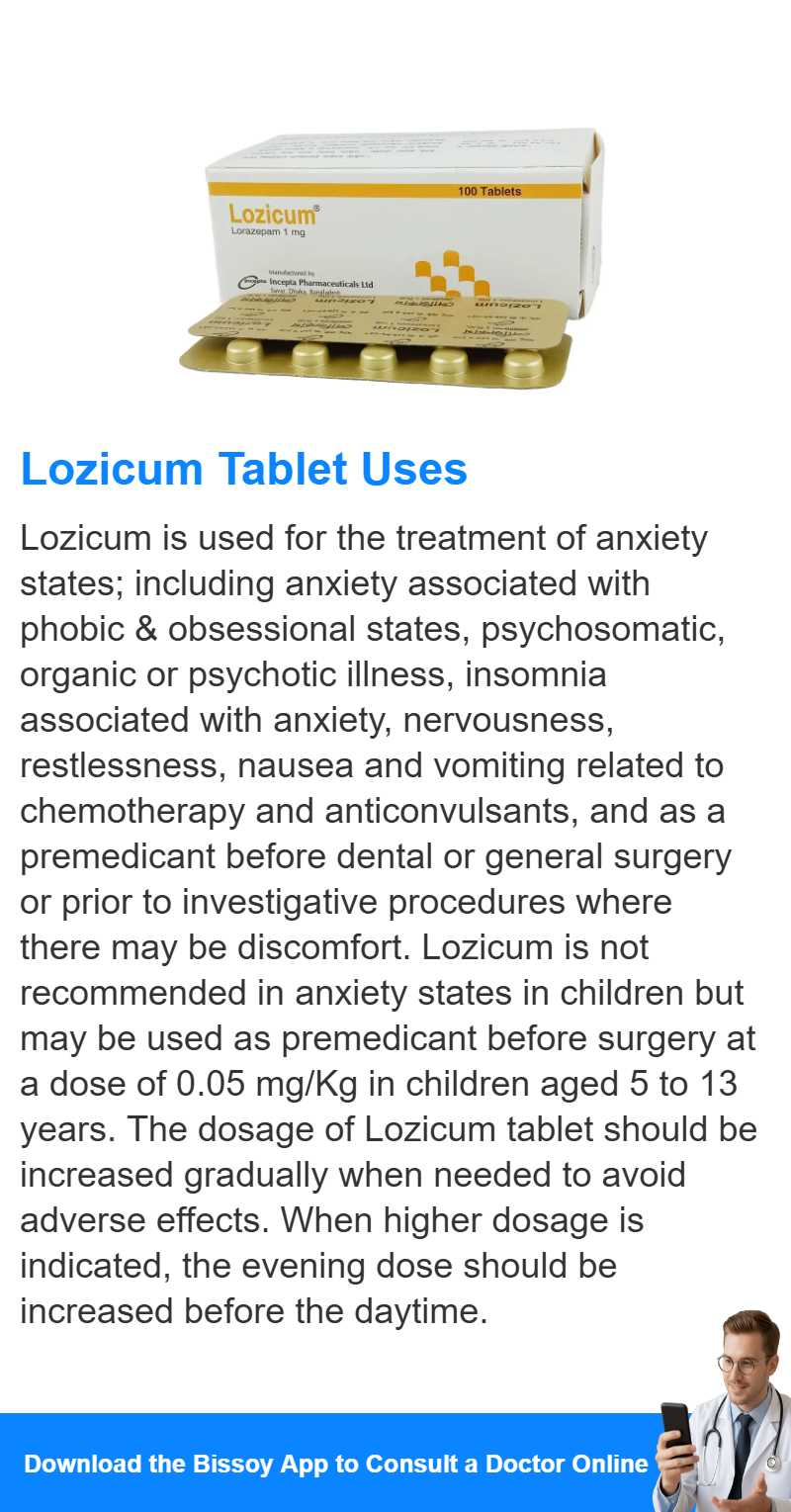
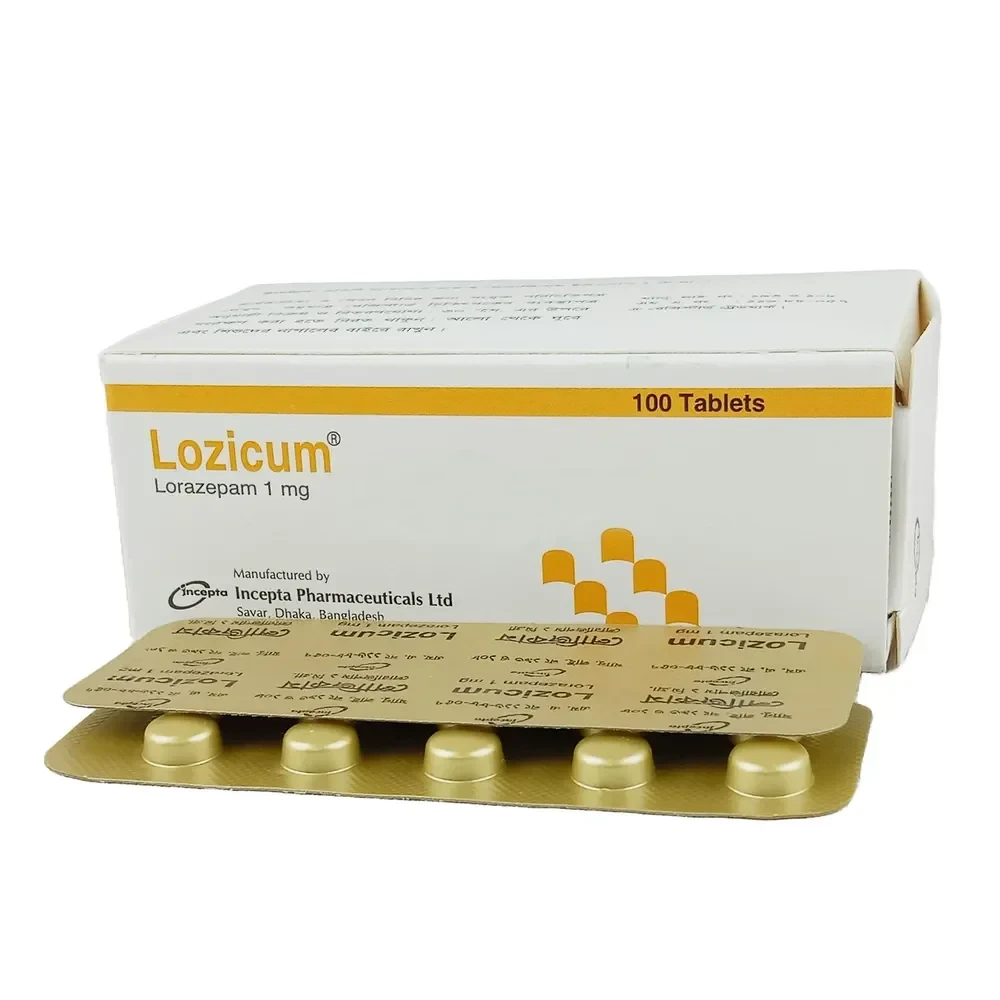
Lozicum Tablet 1 mg is a short-acting benzodiazepine with anxiolytic, sedative, hypnotic, anticonvulsant, and muscle relaxant properties. It is commonly used for the short-term management of anxiety disorders, insomnia associated with anxiety, status epilepticus, preoperative sedation, and acute agitation. Lozicum Tablet 1 mg acts by enhancing the activity of gamma-aminobutyric acid (GABA) at GABAA receptors, producing central nervous system depression and a calming effect. Its rapid onset and relatively short duration of action make it suitable for both acute and procedural use.
Uses
Lozicum Tablet 1 mg is a short-acting benzodiazepine commonly used to treat panic disorders, severe anxiety, and seizures.
Lozicum Tablet 1 mg is FDA-approved for the short-term relief of anxiety symptoms related to anxiety disorders and anxiety associated with depressive symptoms such as anxiety-associated insomnia. It is as well used as an anesthesia premedication in adults to relieve anxiety or to produce sedation/amnesia and for the treatment of status epilepticus.
Some off-label indications of lorazepam include rapid tranquilization of an agitated patient, alcohol withdrawal delirium, alcohol withdrawal syndrome, muscle spasms, insomnia, panic disorder, delirium, chemotherapy-associated anticipatory nausea and vomiting, and psychogenic catatonia.
Associated Conditions
Pharmacodynamics
The effect of lorazepam in GABA-A receptors produces an increase in the frequency of opening of the chloride ion channel. However, for its effect to generate, the neurotransmitter is required. The anticonvulsant properties of lorazepam are thought to be related to the binding to voltage-dependent sodium channels in which the sustained repetitive firing gets limited by the slow recovery of sodium channels due to the benzodiazepine effect.
The effect of lorazepam seems to be very compartmental which was observed with a different generation of sleepiness and a dizziness effect.
Mechanism of Action
Lozicum Tablet 1 mg allosterically binds on the benzodiazepine receptors in the post-synaptic GABA-A ligand-gated chloride channel in different sites of the central nervous system (CNS). This binding will result in an increase on the GABA inhibitory effects which is translated as an increase in the flow of chloride ions into the cell causing hyperpolarization and stabilization of the cellular plasma membrane.
According to the binding site of lorazepam, we can observe different activities as the binding in the amygdala is known to help mainly in anxiety disorders while the binding in the cerebral cortex helps in seizure disorders.
Absorption
Readily absorbed with an absolute bioavailability of 90% when given orally. When intramuscularly administered a dose of 4 mg, lorazepam is completely and rapidly absorbed and achieves a maximal serum concentration of 48 ng/ml in 15-30 minutes. When administered orally, the time to attained maximum concentration is observed to be of 2 hours.
Volume of Distribution
The reported volume of distribution of lorazepam is 1.3 L/kg. It is important to mention that due to the lipophilicity of lorazepam, it does not redistribute as fast in the brain.
Protein Binding
Reports indicate that 85% of lorazepam administered dose is protein bound.
Route of Elimination
When a single 2 mg oral dose is given to healthy subjects, 88% of the administered dose is recovered in urine and 7% was recovered in feces. From the excreted dose in urine, the major form is the glucuronide version that represents 74% while only 0.3% of the dose is recovered as unchanged lorazepam.
Half Life
When administered parentally, the registered half-life of lorazepam is of 14 hours.
Clearance
In vivo studies with lorazepam have shown a clearance rate of 5.8 ml.min/kg.
Toxicity
The LD50 observed by oral administration in a mouse is of 1850 mg/kg. When an overdose administration is registered, signs of CNS and respiratory depression are rapidly observed. An overdose stage can result in profound sedation, deep respiratory depression, coma, and death. When overdose is observed, it is recommended to administer emergency symptomatic medical support with attention to produce an increase in lorazepam elimination.
There is no evidence of carcinogenicity nor mutagenicity. At doses higher than 40 mg/kg there is evidence of fetal resorption and increase in fetal loss.
Food Interactions
- Avoid alcohol.
- Limit caffeine intake.
- Take with food.
Dosage
- The usual range is 2 to 6 mg/day given in divided doses, the largest dose being taken before bedtime, but the largest dosage may vary from 1 to 10 mg/day.
- For anxiety, most patients require an initial dose of 2 to 3 mg/day given b.i.d. or t.i.d.
- For elderly or debilitated patients, an initial dosage of 1 to 2 mg/day in divided doses is recommended, to be adjusted as needed and tolerated.
- For insomnia 1 to 2 mg before bedtime and as premedicant 1 to 2 mg the night before surgery and 1 to 2 hour before surgery.
For IM use, undiluted Lozicum Tablet 1 mg injection should be administered. For IV use, it must be diluted with an equal volume of compatible solutions e.g. Sterile Water for Injection, Sodium Chloride Injection, 5% Dextrose Injection. The rate of injection should not exceed 2 mg per minute.