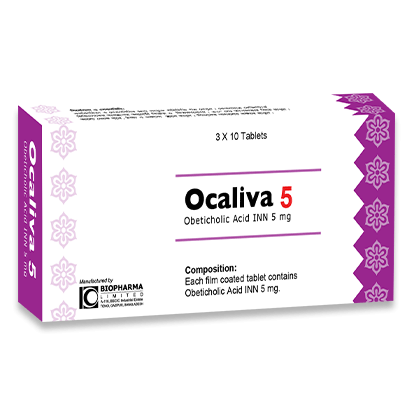
Introduction
Primary biliary cirrhosis, or PBC, is a progressive and chronic condition that leads to hepatic injury often resulting in end-stage liver failure that requires liver transplantation.
Obeticholic acid is a farnesoid-X receptor (FXR) agonist used to treat this condition, possibly allowing for increased survival.
Uses
Obeticholic acid is a bile acid analog and farnesoid X receptor agonist used to treat primary biliary cholangitis in adult patients with inadequate clinical response or intolerance to UDCA.
Obeticholic acid is indicated for the treatment of primary biliary cholangitis in combination with ursodeoxycholic acid (UDCA) in adults with an inadequate response to UDCA. It is also used as a monotherapy in adults with PBC that are unable to tolerate UDCA.
Obeticholic acid is currently being considered for FDA approval to treat fibrosis caused by non-alcoholic liver steatohepatitis (NASH), and is likely to be approved for this indication in 2020.
Associated Conditions
Pharmacodynamics
The activation of the FXR by obeticholic acid acts to reduce the synthesis of bile acids, inflammation, and the resulting hepatic fibrosis. This may increase the survival of patients with PBC, but to date, an association between obeticholic acid and survival in PBC has not been established.
Mechanism of Action
Primary biliary cirrhosis is an autoimmune process by which the bile ducts and liver are damaged progressively, leading to fibrosis and cirrhosis. Bile acids increase the risk of damage and fibrosis to the damaged bile ducts.
Obeticholic acid is a potent agonist of the farnesoid X receptor, which serves to regulate the hepatic metabolism of bile and cholesterol. This drug acts by binding to the farnesoid X receptor (FXR), found in the nucleus of liver and intestinal cells, which in turn increases liver bile flow, suppressing its production and decreasing hepatocyte exposure to excess levels of bile with cholestasis. Cholestasis is a process that normally causes inflammation and cirrhosis of the liver.
Absorption
Obeticholic acid is absorbed in the gastrointestinal tract. The Cmax of obeticholic acid occurs at approximately 1.5 hours after an oral dose and ranges from 28.8-53.7 ng/mL at doses of 5-10mg. The median Tmax for both the conjugates of obeticholic acid is about 10 hours. One product monograph reports a Tmax of 4.5h for both 5 and 10mg doses. The AUC ranged from 236.6-568.1 ng/h/mL with 5mg to 10 mg doses.
Volume of Distribution
The volume of distribution of obeticholic acid is 618 L.
Protein Binding
Obeticholic acid and its metabolic conjugates are >99% plasma protein-bound.
Route of Elimination
About 87% of an orally administered dose is accounted for in the feces. Less than 3% of the dose can be recovered in the urine.
Half Life
The biological half-life of obeticholic acid is reported to be 24 hours.
Clearance
Clearance information for obeticholic acid is not readily available in the literature.
Toxicity
LD50 information for obeticholic acid is not readily available in the literature.
The maximum documented exposure to obeticholic acid was 500 mg in healthy research volunteers. Doses of 250 mg have been administered to healthy volunteers for 12 consecutive days. Pruritus and reversible transaminase liver elevations were observed. In PBC patients who received 25mg daily to 50mg daily (2.5 to 5 times the maximum recommended dose), dose-dependent transaminase and bilirubin elevations, ascites, primary biliary cholangitis aggravation, and new-onset jaundice were reported.
In the case of an overdose with obeticholic acid, clinical monitoring and supportive care should be offered as they are required.
Food Interactions
- Take with or without food.
Dosage
Recommended Dosage Regimen: The recommended dosage of Obeticholic acid for PBC patients without cirrhosis or with compensated cirrhosis who do not have evidence of portal hypertension, who have not achieved an adequate biochemical response to an appropriate dosage of UDCA for at least 1 year or are intolerant to UDCA follows below:
- Start with a dosage of 5 mg once daily for the first 3 months.
- After the first 3 months, for patients who have not achieved an adequate reduction in ALP and/or total bilirubin and who are tolerating Obeticholic acid increase to a maximum dosage of 10 mg once daily.
Management of Patients with Intolerable Pruritus on Obeticholic acid: For patients with intolerable pruritus on Obeticholic acid consider one or more of the following management strategies. Add an antihistamine or bile acid-binding resin.
Reduce the dosage of Obeticholic acid to:
- 5 mg every other day, for patients intolerant to 5 mg once daily.
- 5 mg once daily, for patients intolerant to 10 mg once daily.
- Temporarily interrupt Obeticholic acid dosing for up to 2 weeks. Restart at a reduced dosage. For patients whose dosage is reduced or interrupted, titrate the dosage based on biochemical response and tolerability. Consider discontinuing Obeticholic acid treatment in patients who continue to experience persistent, intolerable pruritus despite management strategies.