Introduction
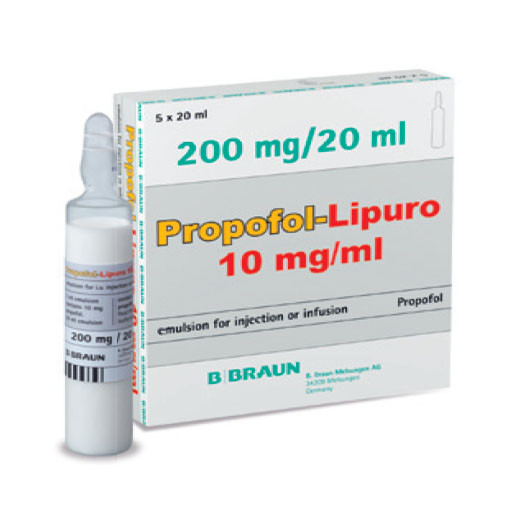
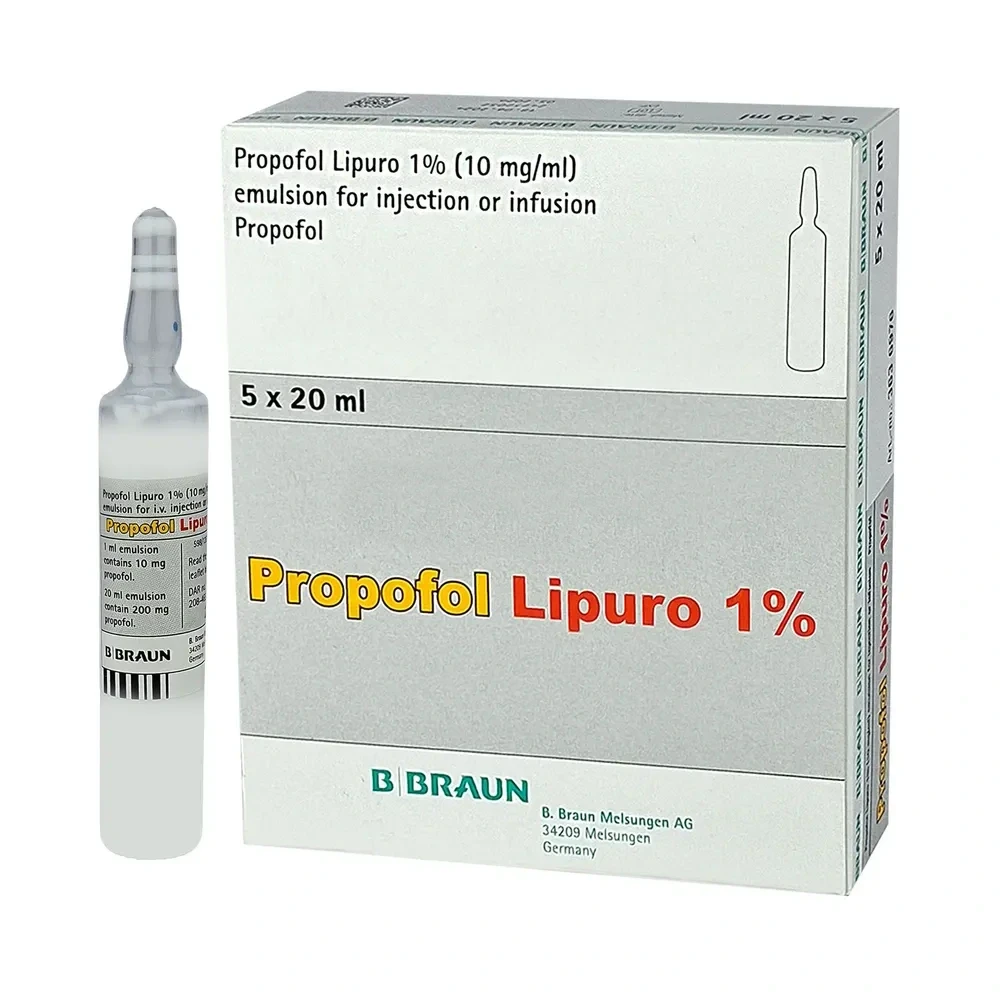
Lipuro Emulsion for infusion 200 mg/20 ml is an intravenous anaesthetic agent used for induction and maintenance of general anaesthesia. IV administration of propfol is used to induce unconsciousness after which anaesthesia may be maintained using a combination of medications. Recovery from propofol-induced anaesthesia is generally rapid and associated with less frequent side effects (e.g. drowsiness, nausea, vomiting) than with thiopental, methohexital, and etomidate. Lipuro Emulsion for infusion 200 mg/20 ml may be used prior to diagnostic procedures requiring anaesthesia, in the management of refractory status epilepticus, and for induction and/or maintenance of anaesthesia prior to and during surgeries.
Uses
Lipuro Emulsion for infusion 200 mg/20 ml is a medication used in general anesthesia and for sedation.
Used for induction and/or maintenance of anaesthesia and for management of refractory status epilepticus.
Associated Conditions
Pharmacodynamics
Lipuro Emulsion for infusion 200 mg/20 ml is a sedative-hypnotic agent for use in the induction and maintenance of anesthesia or sedation. Intravenous injection of a therapeutic dose of propofol produces hypnosis rapidly with minimal excitation, usually within 40 seconds from the start of an injection (the time for one arm-brain circulation).
Mechanism of Action
The action of propofol involves a positive modulation of the inhibitory function of the neurotransmitter gama-aminobutyric acid (GABA) through GABA-A receptors.
Absorption
Rapid - time to onset of unconsciousness is 15-30 seconds, due to rapid distribution from plasma to the CNS. Distribution is so rapid that peak plasma concentrations cannot be readily measured. Duration of action is 5-10 minutes.
Volume of Distribution
- 60 L/kg [healthy adults]
Protein Binding
95 to 99%, primarily to serum albumin and hemoglobin
Route of Elimination
It is chiefly eliminated by hepatic conjugation to inactive metabolites which are excreted by the kidney.
Half Life
Initial distribution phase t1/2α=1.8-9.5 minutes. Second redistirubtion phase t1/2β=21-70 minutes. Terminal elimination phase t1/2γ=1.5-31 hours.
Clearance
- 23 - 50 mL/kg/min
- 1.6 - 3.4 L/min [70 Kg adults]
Toxicity
Overdosage may increase pharmacologic and adverse effects or cause death.
IV LD50=53 mg/kg (mice), 42 mg/kg (rats). Oral LD50 (as a solution in soybean oil)=1230 mg/kg (mice), 600 mg/kg (rats)
Food Interactions
No interactions found.
Dosage
Adults:
Induction of general anaesthesia: The dosage of Lipuro Emulsion for infusion 200 mg/20 ml should be titrated individually against the response of the patient. The ordinary initial dosage in adults is 40 mg (4 ml) by slow intravenous bolus injection at intervals of 10 seconds until the clinical signs show the onset of anaesthesia. The ordinary induction dose in healthy patient below 55 years of age is 2.2-2.5 mg/kg. A dose of 1.0-1.5 mg/kg is often sufficient for older patient. Lower doses, most often 20 mg (2 ml) at intervals of 10 seconds, are recommended for patient of ASA grades 3 and 4.Maintenance of general anaesthesia: Anaesthesia can be maintained by administering Lipuro Emulsion for infusion 200 mg/20 ml either by continuous infusion or by repeat bolus injections to maintain sufficient anaesthesia.
Continuous infusion: The required rate of infusion varies considerably between patients. At the onset of anaesthesia (during roughly the first 10-20 minutes), some patient may require a slightly higher infusion rate (8-10 mg/kg/h). However, sufficient anaesthesia is normally achieved by infusing 4-6 (up to 12) mg/kg/h of Lipuro Emulsion for infusion 200 mg/20 ml. Repeat bolus injections: 25-50 mg (2.5-5.0 ml) bolus injections, depending on response.
Sedation during intensive care: A bolus injection of 1.0-2.0 mg/kg should be given first, followed by continuous infusion adjusted according to required degree of sedation. An infusion rate of 0.3-4 mg/kg/h is usually sufficient.
Sedation for surgical and diagnostic procedures: Dosages shall be adjusted individually. Sufficient sedation for surgical and diagnostic procedures can usually be achieved by administering initially 0.5-1 mg/kg during 1-5 minutes, and maintained by continuous at a rate of 1-4.5 mg/kg/h. Bolus dose of 10-20 mg can be given in addition, should deeper sedation be suddenly required. Lower doses of Lipuro Emulsion for infusion 200 mg/20 ml are often sufficient for patient of ASA grades 3 and 4, and for older patient.
Children:
Lipuro Emulsion for infusion 200 mg/20 ml is not recommended for use in children less then 3 years of age as its safety has not been demonstrated.Induction of general anaesthesia: Dosage of Lipuro Emulsion for infusion 200 mg/20 ml in children shell be adjusted for weight and age. The mean induction dosage in children over 8 years is 2.5 mg/kg, given by slow intravenous injection until the clinical signs show the onset of anaesthesia. Younger children may need slightly higher doses of propofol per kilogram of weight. Lower dosages are recommended for children of ASA grades 3 and 4.
Maintenance of general anaesthesia: Anaesthesia can be maintained by administering Lipuro Emulsion for infusion 200 mg/20 ml either by continuous infusion or by repeat bolus injections. Dosage shall be adjusted individually, but an infusion rate of 9-15 mg/kg/h is usually sufficient to achieve satisfactory anaesthesia.
Sedation during intensive care, surgical diagnostic procedures: Lipuro Emulsion for infusion 200 mg/20 ml is not recommended for sedation in children as its efficacy and safety have not been demonstrated. Although no casual relationship has been established, serious adverse events (including fatalities) have been reported in cases, where propofol has been used against recommendations. Adverse events have most commonly been seen in children with respiratory tract infections given doses in excess of those recommended for adults.