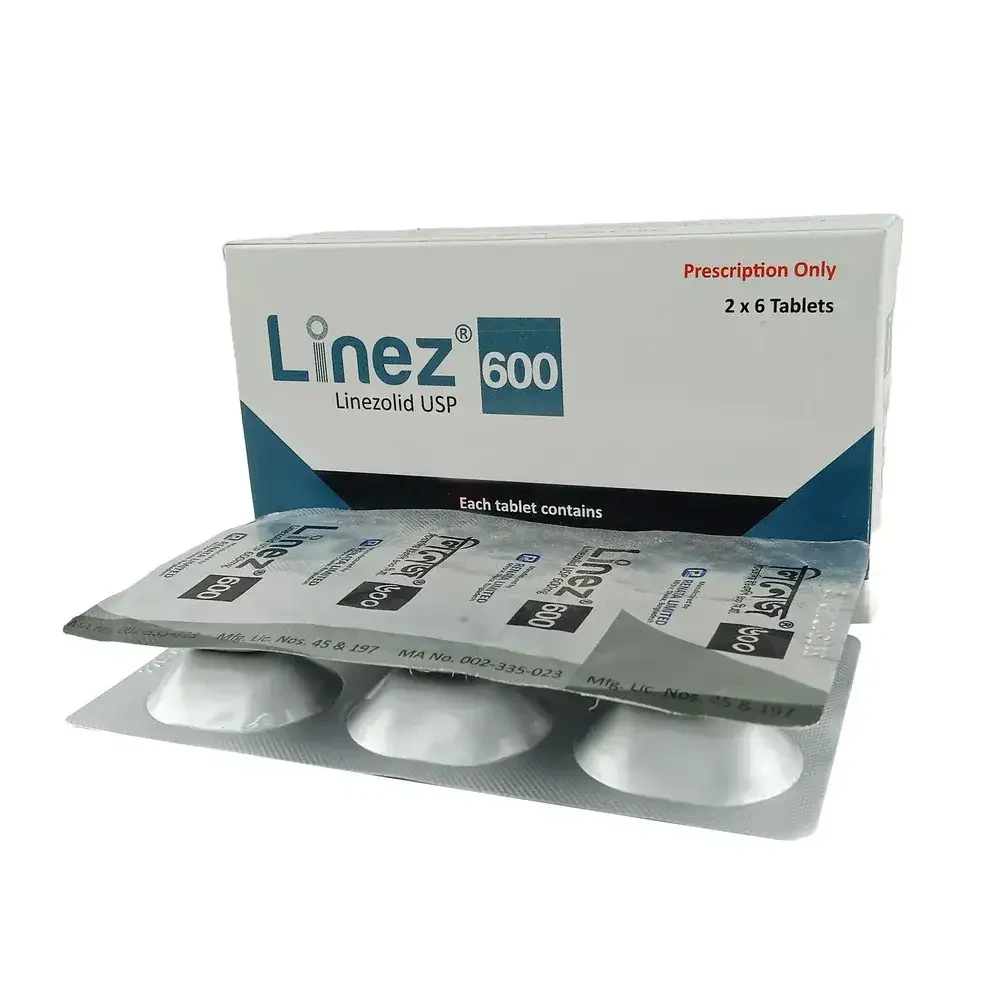
Introduction
Linlid Tablet 600 mg is a synthetic antibiotic which is used for the treatment of infections caused by aerobic Gram-positive bacteria. Its effects are bacteriostatic against both enterococci and staphylococci and bactericidal against most isolates of streptococci. Linlid Tablet 600 mg exerts its antibacterial activity by inhibiting the initiation of bacterial protein synthesis - more specifically, it binds to the 23S ribosomal RNA of the 50S subunit and, in doing so, prevents the formation of the 70S initiation complex which is essential for bacterial reproduction.
Linlid Tablet 600 mg was initially approved in 2000 and was the first member of the oxazolidinone antibiotic class.
Uses
Linlid Tablet 600 mg is an oxazolidinone antibiotic used to treat infections by susceptible strains of aerobic Gram-positive bacteria.
Linlid Tablet 600 mg is indicated in adults and children for the treatment of infections caused by susceptible Gram-positive bacteria, including nosocomial pneumonia, community-acquired pneumonia, skin and skin structure infections, and vancomycin-resistant Enterococcus faecium infections. Examples of susceptible bacteria include Staphylococcus aureus, Streptococcus pneumoniae, Streptococcus pyogenes, and Streptococcus agalactiae.
Linlid Tablet 600 mg is not indicated for the treatment of Gram-negative infections, nor has it been evaluated for use longer than 28 days.
Associated Conditions
Pharmacodynamics
Linlid Tablet 600 mg is an oxazolidinone antibacterial agent effective against most strains of aerobic Gram-positive bacteria and mycobacteria. It appears to be bacteriostatic against both staphylococci and enterococci and bactericidal against most isolates of streptococci. Linlid Tablet 600 mg has shown some in vitro activity against Gram-negative and anaerobic bacteria but is not considered efficacious against these organisms.
Linlid Tablet 600 mg is a reversible and non-selective inhibitor of monoamine oxidase (MAO) enzymes and can therefore contribute to the development of serotonin syndrome when administered alongside serotonergic agents such as selective serotonin re-uptake inhibitors (SSRIs) or tricyclic antidepressants (TCAs). Linlid Tablet 600 mg should not be used for the treatment of catheter-related bloodstream infections or catheter-site infections, as the risk of therapy appears to outweigh its benefits under these circumstances.
Mechanism of Action
Linlid Tablet 600 mg exerts its antibacterial effects by interfering with bacterial protein translation. It binds to a site on the bacterial 23S ribosomal RNA of the 50S subunit and prevents the formation of a functional 70S initiation complex, which is essential for bacterial reproduction, thereby preventing bacteria from dividing.
Point mutations in the bacterial 23S rRNA can lead to linezolid resistance, and the development of linezolid-resistant Enterococcus faecium and Staphylococcus aureus have been documented during its clinical use. As antimicrobial susceptibility patterns are geographically distinct, local antibiograms should be consulted to ensure adequate coverage of relevant pathogens prior to use.
Absorption
Linlid Tablet 600 mg is extensively absorbed following oral administration and has an absolute bioavailability of approximately 100%. Maximum plasma concentrations are reached within approximately 1 to 2 hours after dosing (Tmax) and range from 8.1-12.9 mcg/mL after single doses and 11.0-21.2 mcg/mL after multiple dosing.
The absorption of orally administered linezolid is not significantly affected by co-administration with food and it may therefore be given without regard to the timing of meals.
Volume of Distribution
At steady-state, the volume of distribution of linezolid in healthy adults is approximately 40-50 liters.
Protein Binding
Plasma protein binding of linezolid is approximately 31% - primarily to serum albumin - and is concentration-dependent.
Route of Elimination
Urinary excretion is the primary means by which linezolid and its metabolic products are excreted. Following the administration of a radiolabeled dose of linezolid under steady-state conditions, approximately 84% of radioactivity was recovered in the urine, of which approximately 30% is unchanged parent drug, 40% is the hydroxyethyl glycine metabolite, and 10% is the aminoethoxyacetic acid metabolite. Fecal elimination is comparatively minor, with no parent drug observed in feces and only 6% and 3% of an administered dose found in the feces as the hydroxyethyl glycine metabolite and the aminoethoxyacetic acid metabolite, respectively.
Half Life
The elimination half-life is estimated to be between 5 and 7 hours.
Clearance
Total clearance of linezolid is estimated to be 100-200 mL/min, the majority of which appears to be non-renal. Mean renal clearance is approximately 40 mL/min, which suggests net tubular reabsorption, while non-renal clearance is estimated to account for roughly 65% of total clearance, or 70-150 mL/min on average. Variability in linezolid clearance is high, particularly for non-renal clearance.
Toxicity
Clinical signs of overdosage observed in rats were decreased activity and ataxia (2000 mg/kg/day) and in dogs were vomiting and tremors (3000 mg/kg/day). Treatment of overdose should involve symptomatic and supportive measures and may include hemodialysis if clinically necessary.
Food Interactions
- Avoid tyramine-containing foods and supplements. Avoid food containing high amounts of tyramine (>100mg). Tyramine-containing foods include cheese, red wine, fava beans, pickled foods, cured foods, and alcoholic beverages.
- Take with or without food. Co-administration with food does not significantly alter the pharmacokinetics of linezolid.
Dosage
| Infection | Dosage, route and frequency of administration | ||
| Pediatric patients* (birth through 11 years of age) |
Adults and adolescent (12 years and older) |
Recommended duration of treatment (consecutive days) | |
| Nosocomial pneumonia | 10 mg/kg orally or intravenously every 8 hours | 600 mg orally or intravenously every 12 hours |
10 to 14 |
| Community-acquired pneumonia, including concurrent bacteremia | |||
| Complicated skin and skin structure infections | |||
| Complicated skin and skin structure infections | 10 mg/kg orally or intravenously every 8 hours | 600 mg orally or intravenously every 12 hours | 14 to 28 |
| Uncomplicated skin and skin structure infections | less than 5 years: 10 mg/kg orally every 8 hours 5-11 years: 10 mg/kg orally every 12 hours |
Adults: 400 mg orally every 12 hours Adolescents: 600 mg orally every 12 hours | 10 to 14 |
| * Neonates less than 7 days: Most pre-term neonates less than 7 days of age (gestational age less than 34 weeks) have lower systemic linezolid clearance values and larger AUC values than many full-term neonates and older infants. These neonates should be initiated with a dosing regimen of 10 mg/kg every 12 hours. Consideration may be given to the use of 10 mg/kg every 8 hours regimen in neonates with a sub-optimal clinical response. All neonatal patients should receive 10 mg/kg every 8 hours by 7 days of life. | |||
Intravenous administration: Linlid Tablet 600 mg IV infusion should be inspected visually against a light source for particulate matter prior to administration. Linlid Tablet 600 mg IV infusion may exhibit a yellow color that can intensify over time without adversely affecting potency. Do not use this intravenous infusion vial in series connections. Additives should not be introduced into this solution. Discard unused portion after single use.
Hepatic impairment: No dose adjustment is recommended for patients with mild-to-moderate hepatic impairment. The pharmacokinetics of Linlid Tablet 600 mg in patients with severe hepatic impairment have not been evaluated.
Use in children and adolescents: The dose of linezolid for children and adolescents have been described in dose and administration section. The use of linezolid for the empiric treatment of pediatric patients with central nervous system infections is not recommended