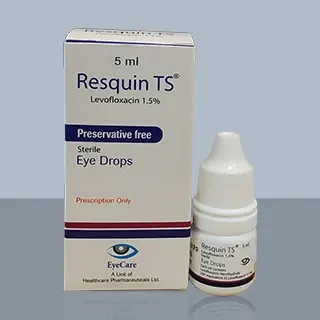
Brand Name Leflox TS
Type Ophthalmic Solution
Weight 1.5%
Generic Levofloxacin (Ophthalmic)
Manufacturer ACI Limited
Price 5 ml drop: ৳ 128.00

About Leflox TS

Leflox TS Ophthalmic Solution (ACI Limited) is a brand medicine containing the generic Levofloxacin (Ophthalmic) . Current listed price in Bangladesh: 5 ml drop: ৳ 128.00.

Medical information for Leflox TS Ophthalmic Solution 1.5%

Uses, dosage, side effects, and safety details below apply to Leflox TS Ophthalmic Solution 1.5% (generic: Levofloxacin (Ophthalmic)). This is general information — consult a doctor before use.

Introduction

Levofloxacin ophthalmic solution is a fluoroquinolone antibiotic used to treat bacterial infections of the eye, such as conjunctivitis and corneal ulcers. It works by inhibiting bacterial DNA gyrase and topoisomerase IV, essential enzymes for bacterial DNA replication, transcription, and repair.

Uses

Levofloxacin ophthalmic solution is used for:

  • Treating bacterial conjunctivitis (pink eye)
  • Managing bacterial keratitis (corneal infections)
  • Addressing other eye infections caused by susceptible strains of bacteria

Mechanism of Action

Levofloxacin works by inhibiting bacterial DNA gyrase and topoisomerase IV. These enzymes are crucial for the supercoiling of DNA, which is necessary for DNA replication and transcription. By interfering with these processes, levofloxacin prevents bacterial cell division and leads to the death of the bacteria.

How Long Does It Take to Work?

Improvement in symptoms can usually be observed within 24 to 48 hours of starting levofloxacin ophthalmic treatment. However, the full course of treatment should be completed as prescribed to ensure the infection is fully eradicated and to prevent recurrence.

Absorption

Levofloxacin is minimally absorbed into systemic circulation from the ocular surface. The primary action occurs locally at the site of infection in the eye. The systemic absorption is generally low, minimizing the risk of systemic side effects.

Route of Elimination

Levofloxacin is primarily eliminated through the kidneys. The majority of the drug is excreted unchanged in the urine. Minimal amounts are metabolized in the liver before being excreted.

Dosage

0.5% eye drop: Adults and children 1 year of age and older:
  • Days 1 and 2: Instill 1-2 drops in the affected eye(s) every 2 hours while awake, up to 8 times per day.
  • Days 3 through 7: Instill 1-2 drops in the affected eye(s) every 4 hours while awake, up to 4 times per day.
1.5% eye drop: Adults and children 6 years of age and older:
  • Days 1 through 3: Instill one to two drops in the affected eye(s) every 30 minutes to 2 hours while awake and approximately 4 and 6 hours after retiring.
  • Day 4 through treatment completion: Instill one to two drops in the affected eye(s) every 1 to 4 hours while awake.
Children <1 year: Safety and effectiveness of Levofloxacin below 1 year of age have not been established.

The standard dosage for levofloxacin ophthalmic solution is:

  • For bacterial conjunctivitis: 1 to 2 drops in the affected eye(s) every 2 to 4 hours while awake, for the first 2 days, then 1 to 2 drops 4 times daily for the next 5 days.
  • For bacterial corneal ulcers: 1 to 2 drops every 30 to 60 minutes while awake, for the first 2 days, then 1 to 2 drops every 1 to 2 hours while awake for the next 5 days.

Dosage may be adjusted based on the severity of the infection and response to treatment. Always follow the specific instructions provided by a healthcare provider or the product label.

Administration

To administer levofloxacin ophthalmic solution:

  • Wash hands thoroughly before use.
  • Shake the bottle well if instructed.
  • Place 1 to 2 drops in the affected eye(s) as prescribed.
  • Do not touch the dropper tip to any surface, including the eye, to avoid contamination.
  • Close the eye gently and apply gentle pressure to the inner corner of the eye to help the medication remain in contact with the surface of the eye.

Side Effects

Common side effects may include:

  • Eye irritation or discomfort
  • Redness or swelling of the eye
  • Temporary blurred vision
  • Increased sensitivity to light

Serious side effects are rare but may include:

  • Severe allergic reactions (e.g., rash, itching, swelling, severe dizziness, trouble breathing)
  • Severe eye pain or vision changes

Toxicity

Overdose of levofloxacin ophthalmic solution is unlikely to cause severe systemic toxicity due to minimal absorption into the bloodstream. If an excessive amount is accidentally used, rinse the eye with water and consult a healthcare provider if symptoms persist.

Precautions

Precautions include:

  • Avoiding use if allergic to levofloxacin or other fluoroquinolones.
  • Monitoring for signs of an allergic reaction or severe eye irritation.
  • Consulting a healthcare provider if experiencing worsening symptoms or no improvement within a few days.

Interaction

Drug Interactions

There are no significant drug interactions specific to levofloxacin ophthalmic solution. However, caution should be exercised when using other eye medications to avoid potential interactions. Consult a healthcare provider before combining treatments.

Food Interactions

There are no known food interactions with levofloxacin ophthalmic solution, as it is applied topically and does not interact with the digestive system.

Disease Interaction

Use with caution in patients with:

  • Pre-existing eye conditions or infections that may complicate treatment
  • Severe renal impairment, as systemic absorption could be slightly increased in these cases

Pregnancy Use

Levofloxacin ophthalmic solution is categorized as a Category C drug for pregnancy. This means that risk to the fetus cannot be ruled out. Use during pregnancy should be based on a thorough assessment of potential benefits and risks, and only if clearly needed.

Lactation Use

It is not known if levofloxacin is excreted in breast milk in significant amounts. Use during lactation should be approached with caution. Consult a healthcare provider to weigh the benefits and risks before using this medication while breastfeeding.

Acute Overdose

Acute overdose from levofloxacin ophthalmic solution is unlikely to cause severe effects due to minimal systemic absorption. In the case of accidental ingestion or excessive application, rinse the eye with water and seek medical advice if any unusual symptoms occur.

Contraindication

Levofloxacin ophthalmic solution is contraindicated in individuals with:

  • Known hypersensitivity to levofloxacin or other fluoroquinolones
  • Severe allergic reactions to any components of the formulation

Use Direction

Follow the prescribed dosage and administration instructions closely. Do not exceed the recommended dose or frequency. Complete the full course of treatment to ensure the infection is fully treated and to prevent recurrence.

Storage Conditions

Store levofloxacin ophthalmic solution at room temperature, away from light and moisture. Keep the bottle tightly closed when not in use and out of reach of children. Do not use if the solution becomes discolored or if the packaging is damaged.

Volume of Distribution

The volume of distribution for levofloxacin ophthalmic solution is not directly applicable as it primarily acts locally within the eye. Systemic distribution is minimal due to the topical application.

Half Life

The half-life of levofloxacin in the systemic circulation after topical application is not well defined. Generally, the systemic half-life of levofloxacin is approximately 6 to 8 hours, but this is less relevant for the ophthalmic formulation due to minimal systemic absorption.

Clearance

Levofloxacin is primarily cleared from the body through renal excretion. The clearance rate from the systemic circulation is influenced by kidney function. Minimal systemic absorption from the ophthalmic formulation reduces systemic clearance considerations.


Frequently Asked Questions About Leflox TS Ophthalmic Solution 1.5%

1. What is levofloxacin (ophthalmic)?

Levofloxacin (ophthalmic) is an antibiotic eye drop used to treat bacterial infections of the eye, such as conjunctivitis or corneal ulcers.

2. What is levofloxacin (ophthalmic) used for?

It is used to treat:

  • Bacterial conjunctivitis (pink eye)
  • Corneal ulcers caused by susceptible bacteria
  • 3. How does levofloxacin (ophthalmic) work?

    It kills bacteria by inhibiting DNA gyrase and topoisomerase IV, enzymes essential for bacterial DNA replication, specifically targeting the infection in the eye.

    4. Is levofloxacin (ophthalmic) a prescription drug?

    Yes, it requires a prescription from a healthcare provider.

    5. Who can use levofloxacin (ophthalmic)?

    It is approved for adults and children (typically over 1 year old), but use in infants should be guided by a doctor.

    6. How is levofloxacin (ophthalmic) administered?

    It is applied as eye drops directly into the affected eye(s), following a doctor’s dosing instructions.

    7. What is the typical dosage of levofloxacin (ophthalmic)?

    Dosage varies by condition:

  • For conjunctivitis: 1-2 drops every 2 hours while awake for 2 days, then every 4 hours for 5 more days
  • For corneal ulcers: 1-2 drops every 30 minutes to 2 hours initially, then tapered
  • 8. How long does levofloxacin (ophthalmic) take to work?

    Symptoms like redness or discharge may improve within 1-3 days, but the full course must be completed.

    9. Can levofloxacin (ophthalmic) be used long-term?

    No, it’s intended for short-term use (typically 5-14 days) to treat acute infections.

    10. Does levofloxacin (ophthalmic) treat viral eye infections?

    No, it only works against bacterial infections, not viral ones like viral conjunctivitis.

    11. What are the common side effects of levofloxacin (ophthalmic)?

    Common side effects include:

  • Temporary burning or stinging
  • Eye irritation
  • Blurred vision
  • Bad taste in the mouth
  • 12. Can levofloxacin (ophthalmic) cause serious side effects?

    Rarely, it may cause severe allergic reactions or worsening eye symptoms. Seek help if this occurs.

    13. Does levofloxacin (ophthalmic) affect the whole body?

    No, its absorption into the bloodstream is minimal, so systemic effects are rare.

    14. Can levofloxacin (ophthalmic) be used with contact lenses?

    No, avoid wearing contact lenses during treatment, especially if you have an infection.

    15. What happens if I miss a dose of levofloxacin (ophthalmic)?

    Apply it as soon as you remember unless it’s nearly time for the next dose; then skip it. Don’t double up.

    16. Can I overdose on levofloxacin (ophthalmic)?

    Overdose is unlikely with eye drops, but excessive use may increase irritation. Rinse eyes with water if too much is applied.

    17. Is levofloxacin (ophthalmic) safe during pregnancy?

    It’s Category C; minimal systemic absorption suggests low risk, but consult a doctor.

    18. Can breastfeeding mothers use levofloxacin (ophthalmic)?

    Yes, it’s generally safe due to low systemic absorption, but confirm with a doctor.

    19. Does levofloxacin (ophthalmic) interact with other medications?

    Interactions are rare since it’s topical, but avoid using other eye drops at the same time unless directed.

    20. Can I use levofloxacin (ophthalmic) with makeup?

    Avoid eye makeup during treatment to prevent contamination or worsening infection.

    21. Is levofloxacin (ophthalmic) safe for people with kidney disease?

    Yes, its topical use means kidney function doesn’t significantly affect its safety.

    22. Can levofloxacin (ophthalmic) be used in liver disease?

    Yes, liver disease doesn’t impact its use due to minimal systemic absorption.

    23. How should levofloxacin (ophthalmic) be stored?

    Store at room temperature, away from heat and light. Do not freeze.

    24. Does levofloxacin (ophthalmic) expire?

    Yes, check the expiration date. Discard if expired or 28 days after opening (depending on the product).

    25. Can levofloxacin (ophthalmic) cause sensitivity to light?

    Yes, some users report temporary light sensitivity.

    26. Is levofloxacin (ophthalmic) the same as oral levofloxacin?

    No, it’s a topical formulation for the eyes, not absorbed systemically like oral levofloxacin.

    27. Can levofloxacin (ophthalmic) treat pink eye?

    Yes, if caused by bacteria susceptible to levofloxacin, not viruses or allergies.

    28. Does levofloxacin (ophthalmic) cause yeast infections?

    No, it’s unlikely since it’s applied locally and doesn’t affect body-wide flora.

    29. Can levofloxacin (ophthalmic) cause blurred vision?

    Yes, temporary blurring is common after application but should resolve quickly.

    30. Is levofloxacin (ophthalmic) gluten-free?

    Yes, as an eye drop, it doesn’t contain gluten.

    31. Can levofloxacin (ophthalmic) be used in both eyes?

    Yes, if both eyes are infected, but only as prescribed.

    32. What if I’m allergic to levofloxacin (ophthalmic)?

    Rare allergic reactions (swelling, rash) may occur. Stop use and seek medical help.

    33. Can levofloxacin (ophthalmic) cause eye pain?

    Mild stinging is normal, but severe pain may indicate a problem—contact your doctor.

    34. Does levofloxacin (ophthalmic) affect tear production?

    No, it doesn’t typically alter tear production.

    35. Can levofloxacin (ophthalmic) treat styes?

    It’s not typically used for styes unless a bacterial infection is confirmed.

    36. Is levofloxacin (ophthalmic) safe for children?

    Yes, it’s approved for children over 1 year old, with dosing adjusted by a doctor.

    37. Can levofloxacin (ophthalmic) cause a bad taste?

    Yes, some users notice a bitter taste due to drainage into the throat via the tear duct.

    38. Does levofloxacin (ophthalmic) need refrigeration?

    No, store at room temperature unless otherwise specified.

    39. Can levofloxacin (ophthalmic) be used for ear infections?

    No, it’s formulated for eyes only, not ears.

    40. What’s the difference between levofloxacin (ophthalmic) and tobramycin eye drops?

    Both are antibiotics, but levofloxacin is a fluoroquinolone with a broader spectrum, while tobramycin is an aminoglycoside.

    41. Can levofloxacin (ophthalmic) cause redness?

    It may cause mild redness as a side effect, but worsening redness could signal an issue.

    42. Is levofloxacin (ophthalmic) available as a generic?

    Yes, generic versions exist alongside brands like Quixin or Iquix.

    43. Can levofloxacin (ophthalmic) be used at night?

    Yes, follow the prescribed schedule, which may include nighttime doses.

    44. Does levofloxacin (ophthalmic) affect vision long-term?

    No, it doesn’t cause long-term vision changes when used as directed.

    45. Can levofloxacin (ophthalmic) be used after eye surgery?

    Yes, it may be prescribed to prevent or treat post-surgical infections.

    46. What should I do if it gets in my mouth?

    Rinse your mouth with water; it’s not harmful in small amounts but avoid swallowing.

    47. Can levofloxacin (ophthalmic) cause dizziness?

    No, systemic effects like dizziness are rare due to minimal absorption.

    48. Does levofloxacin (ophthalmic) interact with oral medications?

    No significant interactions occur due to its topical application.

    49. Can levofloxacin (ophthalmic) be stopped early?

    No, complete the full course to prevent bacterial resistance.

    Medical review

    Last reviewed: 30 Aug 2024

    Medically reviewed by:

    This is general information, not personal medical advice. Consult a doctor before taking any medicine.

    Taking medicines without doctor's advice can cause long-term problems.
    Dr. Setara Binte Kasem

    Dr. Setara Binte Kasem

    Gynecology, Obstetrics Specialist & Surgeon

    Call Doctor
    Dr. Pijush Kumar Kundu

    Dr. Pijush Kumar Kundu

    Neuromedicine (Brain, Nerve, Spine, Headache, Backpain) Specialist

    Call Doctor
    Related Medicines