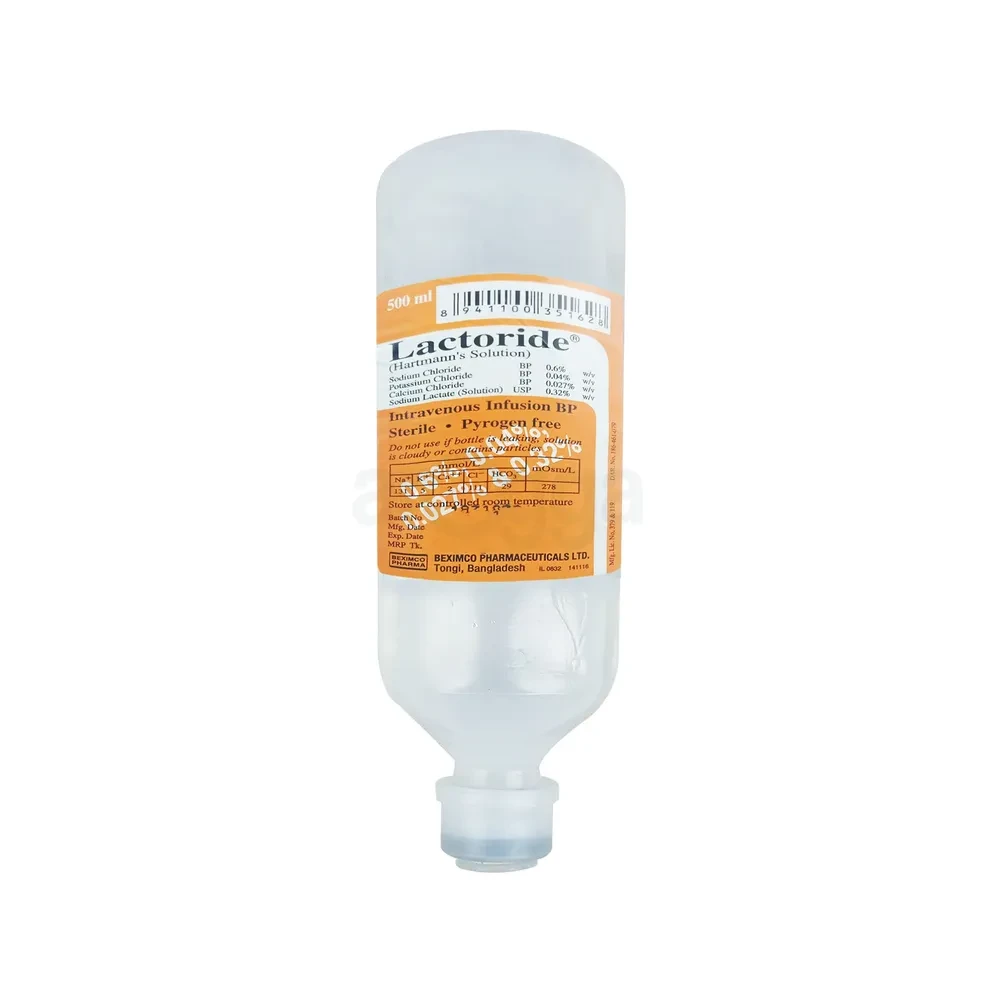
Lactoride IV Infusion
(Beximco Pharmaceuticals Ltd.)
is a brand medicine
containing the generic
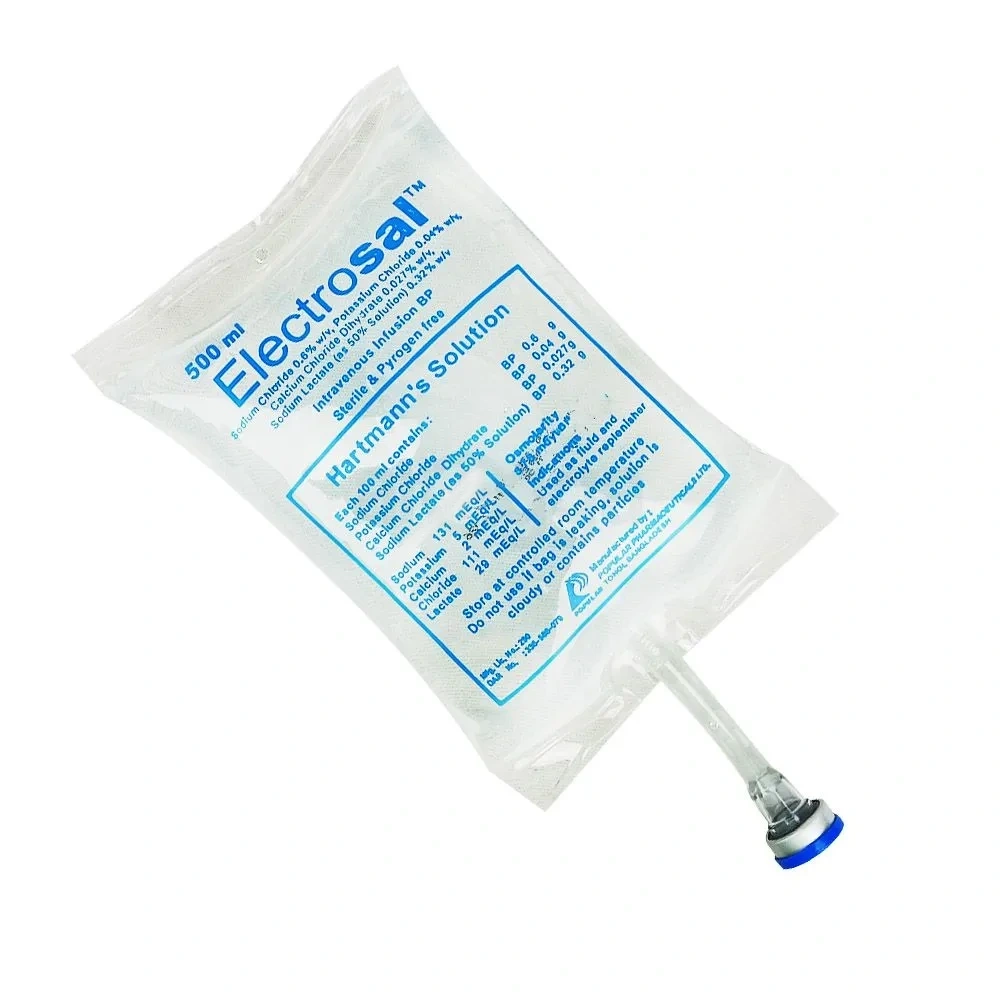
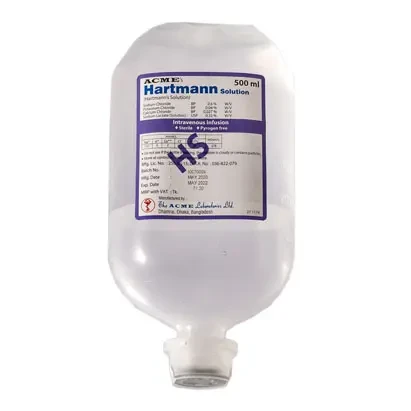
Hartmann's Solution
.
Current listed price in Bangladesh: 500 ml bag: ৳ 71.30.
Medical information for Lactoride IV Infusion
Uses, dosage, side effects, and safety details below apply to
Lactoride IV Infusion
(generic:
Hartmann's Solution).
This is general information — consult a doctor before use.
Introduction
Hartmann’s Solution is a combination of lactated Ringer’s solution and 5% glucose solution that is used for intravenous administration. This solution is mainly used for replenishing lost fluids, maintaining electrolyte balance, and restoring acid-base balance of electrolytes. It is also used to treat dehydrated or malnourished patients.
Uses for
Hartmann’s Solution is used to restore water, electrolytes, and acid-base balance in patients that are suffering from dehydration or malnutrition. This solution is also used to restore electrolyte balance when it has been disturbed, and to treat metabolic alkalosis, hypocalcemia, hypokalemia, and hypermagnesemia. In addition, this solution can be used to treat patients with burns, hypotension, and shock.
Mechanism of Action
Hartmann’s Solution is a combination of 5% dextrose, sodium chloride, and lactated Ringer’s solution. The 5% dextrose in the solution is metabolized in the body to provide energy. This energy is then used to restore electrolyte balance, water balance, and acid-base balance. The sodium chloride helps to restore the body’s electrolyte balance, while the lactated Ringer’s solution helps to treat hypokalemia, hypocalcemia, and hypermagnesemia.
How Long Does It Take to Work?
The effects of Hartmann’s Solution are usually felt in a few minutes. The full effects of the solution can take up to an hour to take effect.
Absorption
Hartmann’s Solution is rapidly absorbed through the walls of the vein it is injected into. The solution is then evenly distributed throughout the body and its effects can be felt in a few minutes.
Route of Elimination
The components of Hartmann’s Solution are rapidly eliminated from the body by the kidneys.
Dosage
The volume and rate of infusion will depend upon the requirements of the patients and the judgement of the physician. It usually varies with age, weight and clinical condition of the patient. The recommended flow rate is up to 100-drops/minute/70 kg body weight. In burn patients the dose of Hartmann's solution according to the Parkland formula: 4 ml/kg body weight% of Body surface area (BSA) burn (e.g. for a 30% BSA burn of a person having 60 kg body weight, 4 x 60 x 30 ml = 7200 ml of Hartmann's solution would be required in 24 hours). Half of this within 8 hr, the remainder over 16 hr.
The dosage of Hartmann’s Solution depends on the patient and the severity of their condition. The recommended dosage for adults is 1 liter to 2 liters of the solution per day, administered over a period of 24 hours or longer. The dosage for children should be determined by a physician.
Administration
Hartmann’s Solution is administered intravenously through a vein. It is important that the solution is injected slowly and cautiously. It should not be injected if the patient has an infection or allergic reaction.
Side Effect
The side effects of Hartmann’s Solution include headache, nausea, and vomiting. Other side effects include allergic reactions, difficulty breathing, and chest pain.
Toxicity
The toxicity of Hartmann’s Solution is low when administered according to recommended dosages. When administered in higher doses, the solution can cause toxicity, which can lead to death.
Precaution
Hartmann’s Solution should only be used under the supervision of a medical professional. It should never be used in patients who are pregnant, breastfeeding or have any allergies to the solution.
Interaction
Hartmann’s Solution interacts with other medications and supplements, including antibiotics, diuretics, and theophylline. It is important to notify your doctor of any medications you are taking before using Hartmann’s Solution.
Disease Interaction
Hartmann’s Solution may interact with certain diseases and medical conditions. These include kidney disease, liver disease, and heart disease. It is important to notify your physician of any medical condition before using Hartmann’s Solution.
Drug Interaction
Hartmann’s Solution may interact with certain drugs, such as antacids, antibiotics, diuretics, and nonsteroidal anti-inflammatory drugs (NSAIDs). It is important to notify your physician of any medication you are taking before using Hartmann’s Solution.
Food Interactions
Hartmann’s Solution is generally considered safe to use with food. However, it is important to follow relevant dietary recommendations and guidelines.
Pregnancy Use
Hartmann’s Solution should not be used in pregnant women unless recommended by a doctor.
Lactation Use
Hartmann’s Solution should not be used in lactating women unless recommended by a doctor.
Acute Overdose
An acute overdose of Hartmann’s Solution can cause symptoms such as restlessness, confusion, nausea, vomiting, and difficulty breathing. If an overdose is suspected, it is important to seek immediate medical attention.
Contraindication
Hartmann’s Solution should not be used in individuals with certain medical conditions, such as kidney disease, liver disease, and hypersensitivity. It should also not be used in individuals with infections, allergies to the solution, or pregnant or lactating women.
Use Direction
Hartmann’s Solution should be administered as directed by a physician. The solution should be injected slowly and cautiously into a vein. It must never be injected if the patient has an infection or allergy.
Storage Condition
Hartmann’s Solution should be stored at room temperature, away from direct heat and light. It must be kept in a sealed, moisture-proof container.
Volume of Distribution
The volume of distribution for Hartmann’s Solution is 0.2 L per kilogram of body weight.
Half Life
The half-life of Hartmann’s Solution is 45 minutes.
Clearance
Hartmann’s Solution is cleared from the body by the kidneys.