Introduction
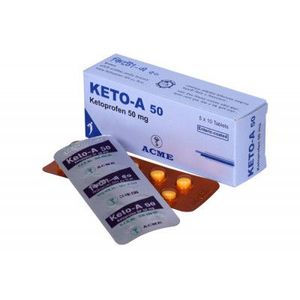
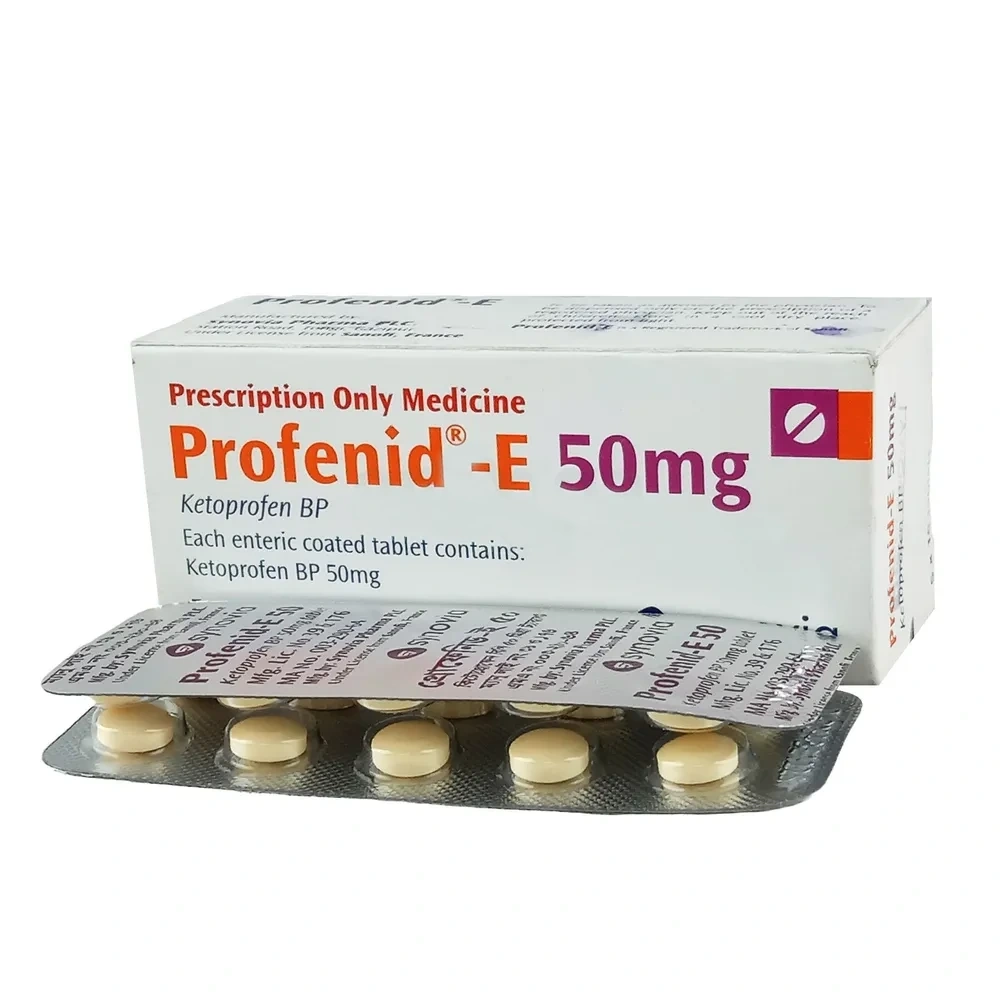
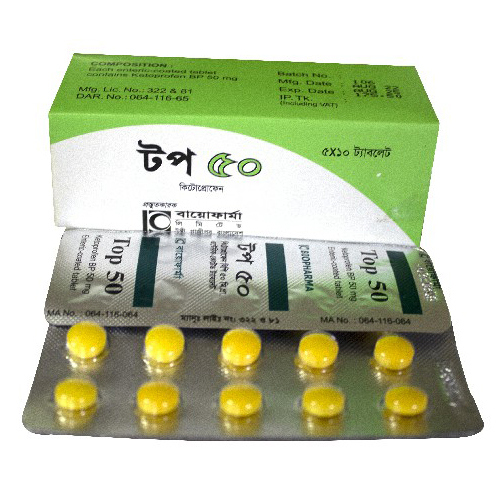
Keprofen Tablet (Enteric Coated) 50 mg, a propionic acid derivative, is a nonsteroidal anti-inflammatory agent (NSAIA) with analgesic and antipyretic properties.
Uses
Keprofen Tablet (Enteric Coated) 50 mg is an NSAID used to treat rheumatoid arthritis, osteoarthritis, ankylosing spondylitis, dysmenorrhea, mild to moderate muscle pain, postoperative pain, and postpartum pain.
For symptomatic treatment of acute and chronic rheumatoid arthritis, osteoarthritis, ankylosing spondylitis, primary dysmenorrhea and mild to moderate pain associated with musculotendinous trauma (sprains and strains), postoperative (including dental surgery) or postpartum pain.
Associated Conditions
Pharmacodynamics
Keprofen Tablet (Enteric Coated) 50 mg is a nonsteroidal anti-inflammatory agent (NSAIA) with analgesic and antipyretic properties. Keprofen Tablet (Enteric Coated) 50 mg has pharmacologic actions similar to those of other prototypical NSAIDs, which inhibit prostaglandin synthesis. Keprofen Tablet (Enteric Coated) 50 mg is used to treat rheumatoid arthritis, osteoarthritis, dysmenorrhea, and alleviate moderate pain.
Mechanism of Action
The anti-inflammatory effects of ketoprofen are believed to be due to inhibition cylooxygenase-2 (COX-2), an enzyme involved in prostaglandin synthesis via the arachidonic acid pathway. This results in decreased levels of prostaglandins that mediate pain, fever and inflammation. Keprofen Tablet (Enteric Coated) 50 mg is a non-specific cyclooxygenase inhibitor and inhibition of COX-1 is thought to confer some of its side effects, such as GI upset and ulceration. Keprofen Tablet (Enteric Coated) 50 mg is thought to have anti-bradykinin activity, as well as lysosomal membrane-stabilizing action. Antipyretic effects may be due to action on the hypothalamus, resulting in an increased peripheral blood flow, vasodilation, and subsequent heat dissipation.
Absorption
Keprofen Tablet (Enteric Coated) 50 mg is rapidly and well-absorbed orally, with peak plasma levels occurring within 0.5 to 2 hours.
Protein Binding
99% bound, primarily to albumin
Route of Elimination
In a 24 hour period, approximately 80% of an administered dose of ketoprofen is excreted in the urine, primarily as the glucuronide metabolite.
Half Life
Conventional capsules: 1.1-4 hours
Extended release capsules: 5.4 hours due to delayed absorption (intrinsic clearance is same as conventional capsules)
Clearance
- Oral-dose cl=6.9 +/- 0.8 L/h [Keprofen Tablet (Enteric Coated) 50 mg Immediate-release capsules (4 × 50 mg)]
- Oral-dose cl=6.8 +/- 1.8 L/h [Keprofen Tablet (Enteric Coated) 50 mg Extended-release capsules (1 × 200 mg)]
- 0.08 L/kg/h
- 0.7 L/kg/h [alcoholic cirrhosis patients]
Toxicity
LD50=62.4 mg/kg (rat, oral).
Symptoms of overdose include drowsiness, vomiting and abdominal pain.
Side effects are usually mild and mainly involved the GI tract. Most common adverse GI effect is dyspepsia (11% of patients). May cause nausea, diarrhea, abdominal pain, constipation and flatulence in greater than 3% of patients.
Food Interactions
- Avoid alcohol.
- Take with food. Food reduces irritation.
Dosage
Cattle:
- For deep intramuscular or intravenous use. 1 ml/33 kg body weight (3 mg/kg body weight) once daily for 3 days.
- For musculoskeletal disorder: 1 ml/45 kg body weight (2.2 mg /kg) by intravenous injection once daily
- for 3 to 5 days.
- For equine colic: 1 ml/45 kg body weight (2.2 mg/kg) by intravenous injection. A second injection may be given if colic recurs.
- Cattle: 1 bolus per 100 kg body weight (4 mg/kg) orally daily for upto 3 days. Or As directed by the Veterinary physician.