Introduction
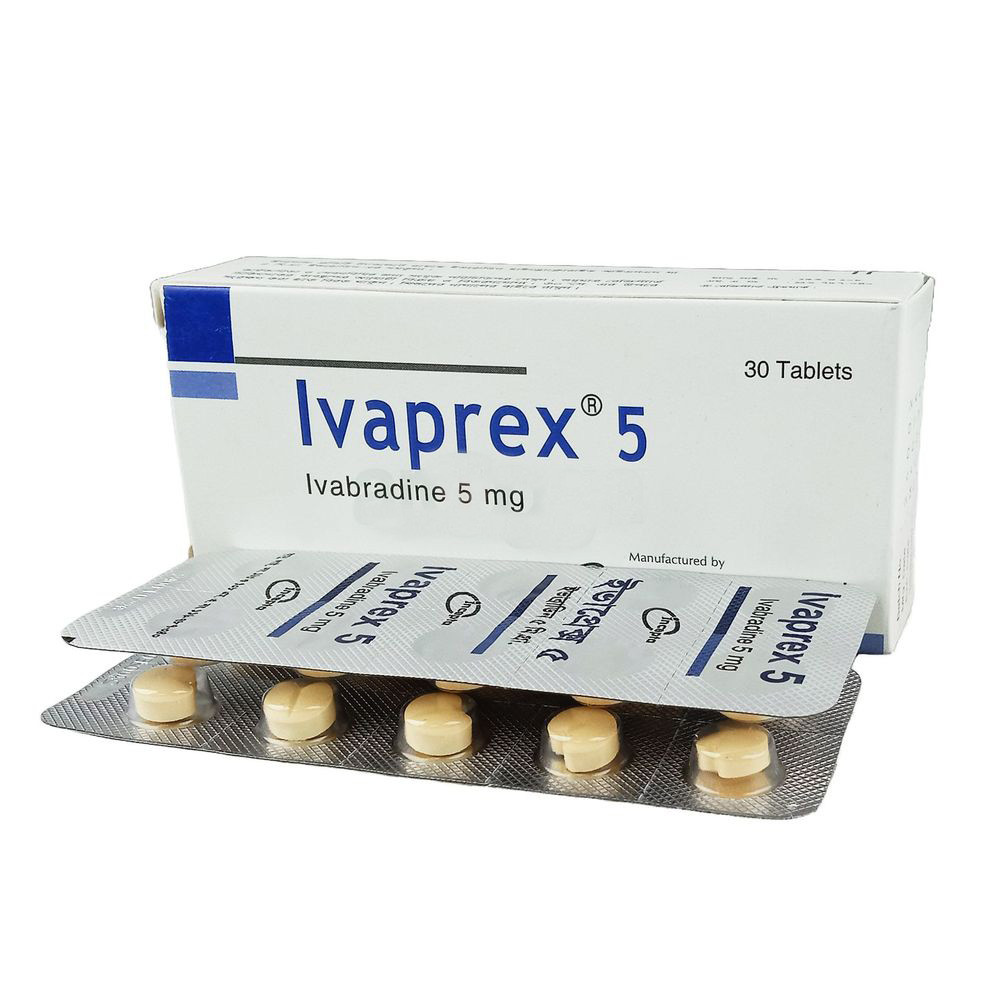
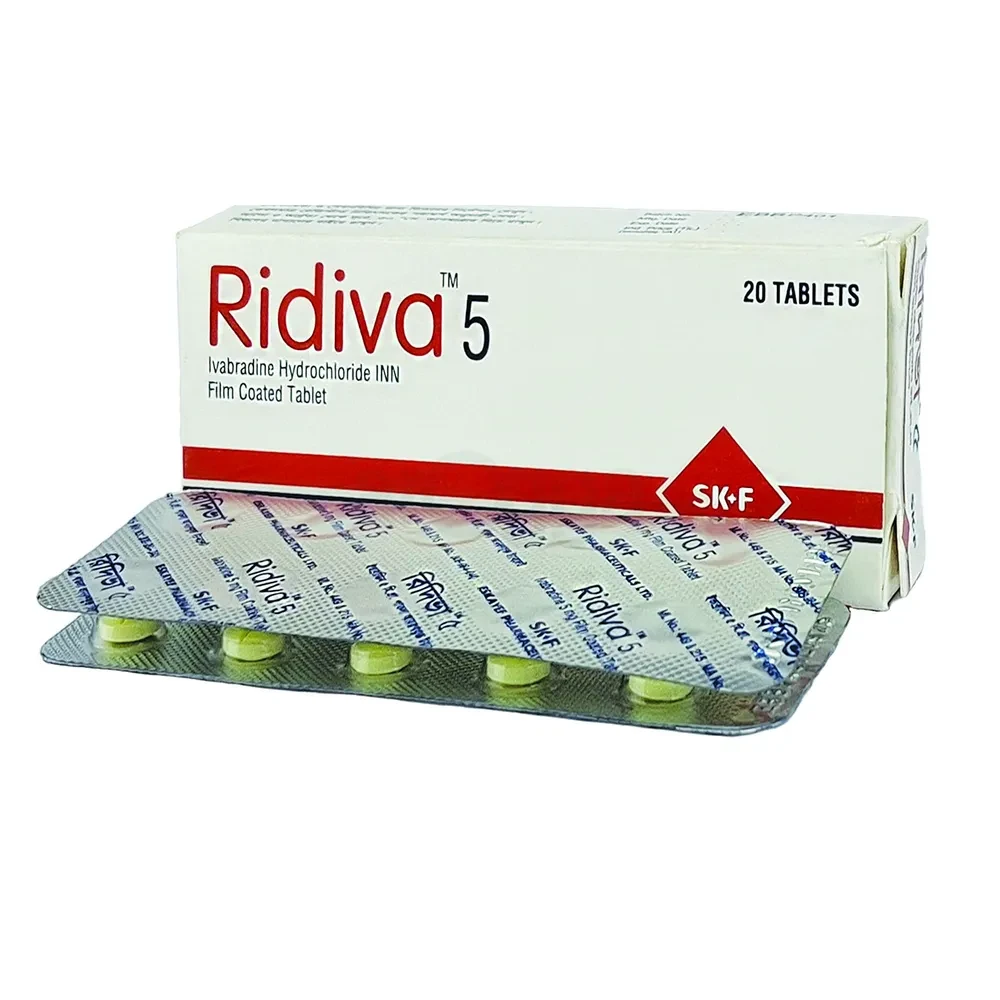
Ivaprex Tablet 5 mg is a selective heart rate-lowering agent indicated for stable angina, chronic heart failure, and pediatric dilated cardiomyopathy. It works by dose-dependently inhibiting the sinoatrial node's $I_f$ ("funny") pacemaker current, slowing heart rate and enhancing myocardial perfusion. Because it acts purely on pacemaker channels without exerting negative inotropic effects on cardiac contractility, Ivaprex Tablet 5 mg offers a safer side-effect profile than beta-blockers or non-dihydropyridine calcium channel blockers for patients requiring targeted heart rate reduction.
Uses
Ivaprex Tablet 5 mg is a HCN channel blocker used to reduce the risk of hospitalization for worsening heart failure in adult patients and for treatment of stable symptomatic heart failure as a result of dilated cardiomyopathy in pediatric patients.
Ivaprex Tablet 5 mg is indicated by the FDA to reduce the risk of hospitalization for worsening heart failure in adult patients with stable, symptomatic chronic heart failure with left ventricular ejection fraction ≤35%, who are in sinus rhythm with resting heart rate ≥70 beats per minute and either are on maximally tolerated doses of beta-blockers or have a contraindication to beta-blocker use. It is also indicated for treatment of stable symptomatic heart failure as a result of dilated cardiomyopathy for pediatric patients 6 months of age or more.
Associated Conditions
Pharmacodynamics
The funny channels (If) open during repolarization and close during depolarization, making ivabradine's activity dependent on heart rate or the closing and opening of the channels. Therefore ivabradine exhibits use-dependence and is more pharmacologically active at higher heart rates. Ivaprex Tablet 5 mg exhibits a linear dose-dependent heart-rate lowering activity (bradycardic effect) until a maximum dose of 30-40mg. At higher doses, the concentration of ivabradine tends to plateau, reducing risk of serious sinus bradycardia. It has been shown that the metabolite of ivabradine lowers heart rate as well, contributing to ivabradine's overall effect.
Mechanism of Action
Ivaprex Tablet 5 mg lowers heart rate by selectively inhibiting If channels ("funny channels") in the heart in a concentration-dependent manner without affecting any other cardiac ionic channels (including calcium or potassium). Ivaprex Tablet 5 mg binds by entering and attaching to a site on the channel pore from the intracellular side and disrupts If ion current flow, which prolongs diastolic depolarization, lowering heart rate. The If currents are located in the sinoatrial node and are the home of all cardiac pacemaker activity. Ivaprex Tablet 5 mg therefore lowers the pacemaker firing rate, consequently lowering heart rate and reducing myocardial oxygen demand. This allows for an improved oxygen supply and therefore mitigation of ischemia, allowing for a higher exercise capacity and reduction in angina episodes.
Absorption
It is recommended to take ivabradine with food to reduce variability in systemic exposure. Administration with food slows absorption by 1 hour, but increases systemic absorption by 20-30%. Ivaprex Tablet 5 mg's oral bioavailability is about 40%.
Volume of Distribution
~100 L.
Protein Binding
70% bound to plasma proteins.
Route of Elimination
Metabolites are equally excreted in feces and urine.
Half Life
2 hours.
Clearance
Total clearance is about 400ml/min; renal clearance about 70ml/min. About 4% is excreted unchanged in urine.
Toxicity
Ivaprex Tablet 5 mg may cause fetal toxicity when administered to pregnant women. Animal studies in pregnant rats have shown embryo-fetal toxicity and cardiac teratogenic effects. Effective contraception in women is recommended while using ivabradine.
Food Interactions
- Avoid grapefruit products.
Dosage
Elderly: Since ivabradine has been studied in a limited number of patients aged 75 years or more, a lower starting dose should be considered for these patients (2.5mg twice daily i.e. one half 5mg tablet twice daily) before up-titration if necessary.
Renal insufficiency: No dose adjustment is required in patients with renal insufficiency and creatinine clearance above 15ml/min. No data are available in patients with creatinine clearance below 15ml/min. Ivaprex Tablet 5 mg should therefore be used with precaution in this population.
Hepatic impairment: No dose adjustment is required in patients with mild hepatic impairment. Caution should be exercised when using ivabradine in patients with moderate hepatic impairment. Ivaprex Tablet 5 mg is contra-indicated for use in patients with severe hepatic insufficiency.
Children and adolescents: Ivaprex Tablet 5 mg is not recommended for use in children and adolescents due to a lack of data on safety and efficacy.