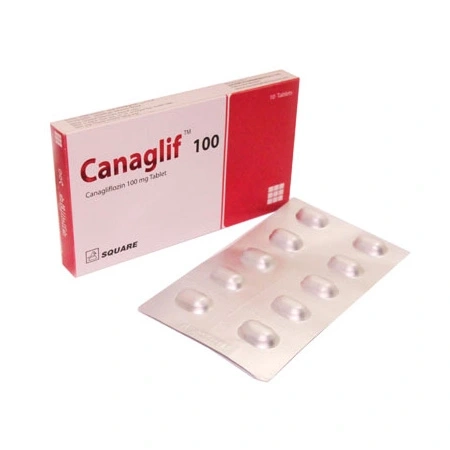
Introduction
Canagliflozin is a sodium-glucose co-transporter 2 (SGLT2) inhibitor used as an adjunct to diet and exercise to improve glycemic control in adults with type 2 diabetes mellitus. It lowers blood glucose by reducing renal glucose reabsorption, thereby increasing urinary glucose excretion.
In addition to improving glycemic control, canagliflozin reduces the risk of major cardiovascular events in patients with type 2 diabetes and established cardiovascular disease, and helps slow the progression of diabetic kidney disease in appropriate patients.
Uses
Canagliflozin is a sodium-glucose co-transporter 2 (SGLT2) inhibitor used to manage hyperglycemia in type 2 diabetes mellitus (DM). Also used to reduce the risk of major cardiovascular events in patients with established cardiovascular disease and type 2 DM.
This drug is used in conjunction with diet and exercise to increase glycemic control in adults diagnosed with type 2 diabetes mellitus .
Another indication for canagliflozin is the prevention of major cardiovascular events (myocardial infarction, stroke, or death due to a cardiovascular cause) in patients with type 2 diabetes, as well as hospitalization for heart failure in patients with type 2 diabetes.
In addition to the above, canagliflozin can be used to lower the risk of end-stage kidney disease and major increases in serum creatinine and cardiovascular death for patients with a combination of type 2 diabetes mellitus, diabetic nephropathy, and albuminuria.
It is important to note that this drug is not indicated for the treatment of type 1 diabetes mellitus or diabetic ketoacidosis .
Associated Conditions
Pharmacodynamics
This drug increases urinary glucose excretion and decreases the renal threshold for glucose (RTG) in a dose-dependent manner . The renal threshold is defined as the lowest level of blood glucose associated with the appearance of detectable glucose in the urine . The end result of canagliflozin administration is increased urinary excretion of glucose and less renal absorption of glucose, decreasing glucose concentration in the blood and improving glycemic control.
A note on type 2 diabetes and cardiovascular disease
The risk of cardiovascular events in diabetes type 2 is increased due to the damaging effects of diabetes on blood vessels and nerves in the cardiovascular system. In particular, there is a tendency for hyperglycemia to create pro-atherogenic (plaque forming) lesions in blood vessels, leading to various fatal and non-fatal events including stroke and myocardial infarction . Long-term glycemic control has been proven to be effective in the prevention of cardiovascular events such as myocardial infarction and stroke in patients with type 2 diabetes .
Mechanism of Action
The sodium-glucose co-transporter2 (SGLT2), is found in the proximal tubules of the kidney, and reabsorbs filtered glucose from the renal tubular lumen. Canagliflozin inhibits the SGLT2 co-transporter. This inhibition leads to lower reabsorption of filtered glucose into the body and decreases the renal threshold for glucose (RTG), leading to increased glucose excretion in the urine .
Absorption
Bioavailability and steady-state
The absolute oral bioavailability of canagliflozin, on average, is approximately 65% . Steady-state concentrations are achieved after 4 to 5 days of daily dose administration between the range of 100mg to 300mg .
Effect of food on absorption
Co-administration of a high-fat meal with canagliflozin exerted no appreciable effect on the pharmacokinetic parameters of canagliflozin. This drug may be administered without regard to food. Despite this, because of the potential of canagliflozin to decrease postprandial plasma glucose excretion due to prolonged intestinal glucose absorption, it is advisable to take this drug before the first meal of the day .
Volume of Distribution
This drug is extensively distributed throughout the body. On average, the volume of distribution of canagliflozin at steady state following a single intravenous dose in healthy patients was measured to be 83.5 L .
Protein Binding
Canagliflozin is mainly bound to albumin. The plasma protein binding of this drug is 99% .
Route of Elimination
After a single oral radiolabeled dose canagliflozin dose to healthy subjects, the following ratios of canagliflozin or metabolites were measured in the feces and urine :
Feces
41.5% as the unchanged radiolabeled drug
7.0% as a hydroxylated metabolite
3.2% as an O-glucuronide metabolite
Urine
About 33% of the ingested radiolabled dose was measured in the urine, generally in the form of O-glucuronide metabolites. Less than 1% of the dose was found excreted as unchanged drug in urine.
Half Life
In a clinical study, the terminal half-life of canagliflozin was 10.6 hours for the 100mg dose and 13.1 hours for the 300 mg dose .
Clearance
In healthy subjects, canagliflozin clearance was approximately 192 mL/min after intravenous (IV) administration .
The renal clearance of 100 mg and 300 mg doses of canagliflozin was measured to be in the range of 1.30 - 1.55 mL/min .
Toxicity
Overdose information
If an overdose occurs, contact the Poison Control Center. Normal supportive measures should be taken, including the removal unabsorbed drug from the gastrointestinal tract, initiating clinical monitoring of the patient, and providing supportive treatment as deemed necessary. Canagliflozin has been removed in very small quantities after a 4-hour hemodialysis session. This drug is likely not dialyzable by peritoneal dialysis .
Pregnancy and lactation
Animal data has demonstrated that canagliflozin may cause adverse renal effects in a growing fetus. Data are insufficient at this time in determining a potential canagliflozin related risk for major birth defects or possible miscarriage in humans . There are known risks, however, of uncontrolled diabetes in pregnancy . Inform female patients taking canagliflozin of the potential risk, which is increased during the second and third trimesters. This drug is not recommended during nursing .
Mutagenesis and carcinogenicity
Canagliflozin was not found to be mutagenic in both metabolically activated and inactivated states in the Ames assay. Canagliflozin showed mutagenicity in laboratory mouse lymphoma assay, but only in the activated state. Canagliflozin was not found to be mutagenic in several in vivo assays performed on rats .
The carcinogenic risk of canagliflozin was assessed in 2-year studies completed in both CD1 mice and Sprague-Dawley rats. Canagliflozin was not shown to increase tumor incidence in mouse models given doses less than or equal to 14 times the exposure from a typical 300 mg dose in humans. Despite these negative findings in mice, the incidence of several tumors increased in mice, including Leydig cell tumors, renal tubular adenomas, and adrenal pheochromocytomas .
Food Interactions
- Avoid alcohol. Excess alcohol intake may promote ketoacidosis.
- Drink plenty of fluids.
- Take before a meal. It is recommended to take this drug before the first meal of the day.