Introduction
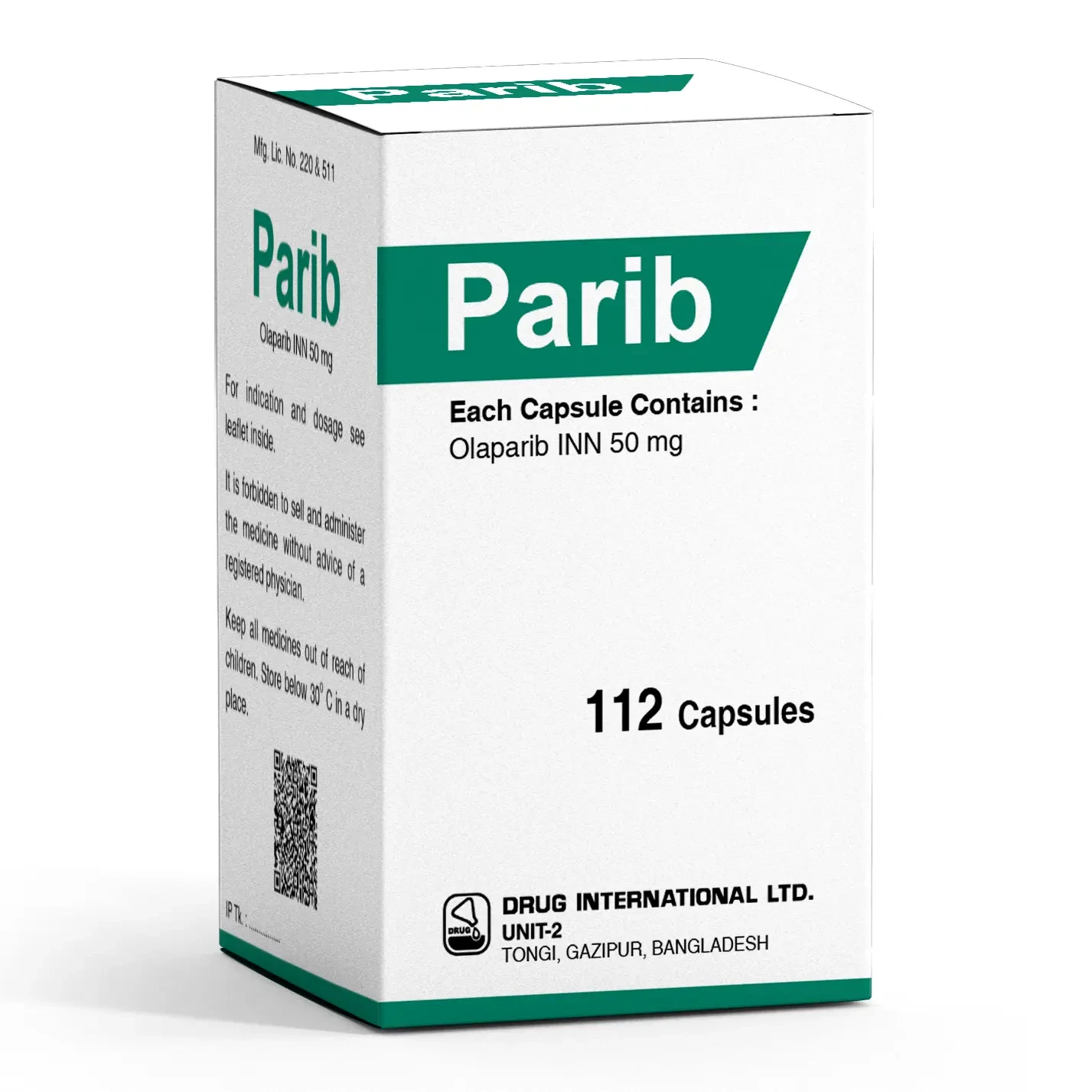
Inpoza Capsule 50 mg is a targeted anticancer medication that inhibits poly (ADP-ribose) polymerase (PARP) enzymes, including PARP1, PARP2, and PARP3, which play essential roles in DNA repair, cell cycle regulation, and cellular homeostasis. By blocking PARP activity and trapping PARP on DNA, olaparib disrupts DNA repair mechanisms, leading to the death of cancer cells, particularly those with BRCA1 or BRCA2 mutations. Preclinical studies have demonstrated that olaparib inhibits tumor growth and enhances antitumor activity, especially in BRCA-deficient cancers and following platinum-based chemotherapy. Clinical studies have also shown improved progression-free survival in patients with BRCA-mutated, HER2-negative metastatic breast cancer compared with chemotherapy alone.
Uses
Inpoza Capsule 50 mg is a chemotherapeutic agent used to treat recurrent or advanced ovarian cancer and metastatic breast cancer in patients with specific mutations and prior history of chemotherapy.
Inpoza Capsule 50 mg is a poly (ADP-ribose) polymerase (PARP) inhibitor indicated for the treatment of:
Ovarian cancer, in which the medication is intended for [a] the maintenance treatment of adult patients with recurrent epithelial ovarian, fallopian tube or primary peritoneal cancer, who are in complete or partial response to platinum-based chemotherapy, or [b] for the treatment of adult patients with deleterious or suspected deleterious germline BRCA-mutated (gBRCAm) advanced ovarian cancer who have been treated with three or more prior lines of chemotherapy . Select patients for therapy based on an FDA-approved companion diagnostic for olaparib .
Breast cancer, in which the medication is intended for use in patients with deleterious or suspected deleterious gBRCAm, human epidermal growth factor receptor 2 (HER2)-negative metastatic breast cancer who have previously been treated with chemotherapy in the neoadjuvant, adjuvant or metastatic setting. Patients with hormone receptor (HR)-positive breast cancer should have been treated with a prior endocrine therapy or be considered inappropriate for endocrine treatment . Select patients for therapy based on an FDA-approved companion diagnostic for olaparib .
Associated Conditions
Pharmacodynamics
The effect of olaparib on cardiac repolarization was assessed in 119 patients following a single dose of 300 mg and in 109 patients following multiple dosing of 300 mg twice daily . No clinically relevant effect of olaparib on QT interval was observed .
Mechanism of Action
Inpoza Capsule 50 mg is an inhibitor of poly (ADP-ribose) polymerase (PARP) enzymes, including PARP1, PARP2, and PARP3. PARP enzymes are involved in normal cellular homeostasis, such as DNA transcription, cell cycle regulation, and DNA repair . Inpoza Capsule 50 mg has been shown to inhibit growth of select tumor cell lines in vitro and decrease tumor growth in mouse xenograft models of human cancer both as monotherapy or following platinum-based chemotherapy . Increased cytotoxicity and anti-tumor activity following treatment with olaparib were noted in cell lines and mouse tumor models with deficiencies in BRCA . In vitro studies have shown that olaparib-induced cytotoxicity may involve inhibition of PARP enzymatic activity and increased formation of PARP-DNA complex, resulting in disruption of cellular homeostasis and cell death .
Absorption
Following oral administration, the absorption of olaparib is very rapid and can reach a peak concentration ranging between 4.7 and 9.1 mcg/ml after 1-3 hours. The reported AUC of olaparib after a dose of 200 mg is of 25.8 mcg.h/L and this AUC can be increased by 26% with constant administration. The consumption of a high-fat diet with olaparib can only decrease the tmax but do not have an effect in the peak concentration.
Volume of Distribution
After administration of a dose of 100 mg/kg, the reported volume of distribution was of 40.3 L.
Protein Binding
In vitro studies have reported that the plasma protein binding of olaparib was reported to be of 82%.
Route of Elimination
From the administered dose, approximately 86% of the administered dose is recovered after 7 days from which 44% is found in the urine and 42% is obtained in feces.
Half Life
The reported elimination half-life ranges between 5 to 11 hours.
Clearance
The total clearance of olaparib was reported to be 4.6 L/h.
Toxicity
The most commonly reported side effects reported during clinical trials included cough, constipation, dysgeusia, peripheral deem, back pain, dizziness, headache, urinary tract infection, dyspnea, and rash . Myelodysplastic syndrome/Acute Myeloid Leukemia (MDS/AML) was reported in 2% of patients with deleterious or suspected deleterious germline BRCA-mutated advanced cancers . The majority of cases were fatal and the duration of therapy with olaparib in patients who developed secondary cancers varied from 2 years . Complete blood count should be tested at baseline and monthly following therapy initiation to monitor for MDS/AML . Pneumonitis, including fatal cases, occurred in Label . Patients should be monitored for new or worsening respiratory symptoms such as dyspnea, fever, cough, or wheezing . Inpoza Capsule 50 mg was found to be teratogenic and causes embryo-fetal toxicity in rats . It should, therefore, be avoided during pregnancy and its use should be combined with effective contraception during treatment .
Food Interactions
- Avoid grapefruit products. Grapefruit inhibits the CYP3A metabolism of olaparib, which may increase its serum concentration.
- Avoid St. John's Wort. This herb induces the CYP3A metabolism of olaparib and may reduce its serum concentration.
- Take with or without food.
Dosage
Recommended Dosing: The recommended dose of Inpoza Capsule 50 mg is 400 mg (eight 50 mg capsules) taken orally twice daily with or without food, for a total daily dose of 800 mg. Continue treatment until disease progression or unacceptable toxicity. If a patient misses a dose of Inpoza Capsule 50 mg, instruct patients to take their next dose at its scheduled time. Swallow capsule whole. Do not chew, dissolve, or open capsule. Do not take capsules which appear deformed or show evidence of leakage.
Dosage Modifications for Adverse Reactions: To manage adverse reactions, consider interruption of treatment or dose reduction. The recommended dose reduction is 200 mg (four 50 mg capsules) taken twice daily, for a total daily dose of 400 mg. If a further dose reduction is required, then reduce to 100 mg (two 50 mg capsules) taken twice daily, for a total daily dose of 200 mg.
Dose Modifications for Use with CYP3A Inhibitors: Avoid concomitant use of strong and moderate CYP3A inhibitors and consider alternative agents with less CYP3A inhibition. If the inhibitor cannot be avoided, reduce the Inpoza Capsule 50 mg dose to 150 mg (three 50 mg capsules) taken twice daily for a strong CYP3A inhibitor or 200 mg (four 50 mg capsules) taken twice daily for a moderate CYP3A inhibitor.
Dose Modifications for Patients with Renal Impairment: Patients with mild renal impairment (ClCr 51-80 mL/min as estimated by Cockcroft-Gault equation) do not require an adjustment in Inpoza Capsule 50 mg dosing. In patients with moderate renal impairment (ClCr 31-50 mL/min) the recommended dose reduction is to 300 mg (six 50 mg capsules) twice daily, for a total daily dose of 600 mg. The pharmacokinetics of Inpoza Capsule 50 mg have not been evaluated in patients with severe renal impairment or end-stage renal disease (ClCr ≤30 mL/min). Or as directed by the registered physician.
Pediatric Use: The safety and efficacy of Inpoza Capsule 50 mg has not been established in pediatric patients.