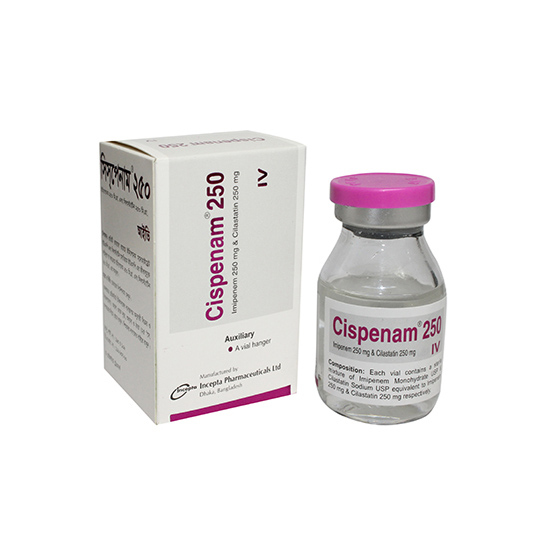
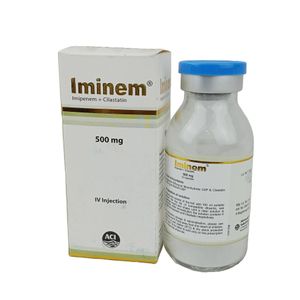
Introduction
Imipen IV Injection (250 mg+250 mg)/vial is a combination drug that was developed for the treatment of various bacterial infections. It is a bactericidal antibiotic in the beta-lactam class and is used for the treatment of Gram-positive and Gram-negative infections.
Uses
Imipen IV Injection (250 mg+250 mg)/vial is used for the treatment of serious infections, such as lower respiratory tract infections, sepsis, urinary tract infections, bacterial meningitis, and skin and soft tissue infections due to sensitive microorganisms.
Mechanism of Action
Imipen IV Injection (250 mg+250 mg)/vial works by inhibiting the synthesis of bacteria's cell wall. The drug combines with the bacterial penicillin-binding proteins, leading to a break in the synthesis of the cell wall and consequent death of the bacteria.
How Long Does it Take to Work?
Imipen IV Injection (250 mg+250 mg)/vial generally takes effect within an hour of ingesting the drug. It is important to complete the entire course of the drug, even if symptoms subside, in order to ensure the infection is fully eradicated.
Absorption
Imipen IV Injection (250 mg+250 mg)/vial has a bioavailability of approximately 82%, with peak concentrations occurring approximately 1.5-3 hours after ingestion.
Route of Elimination
Imipen IV Injection (250 mg+250 mg)/vial is excreted predominantly by the kidneys, with up to 95% of the ingested dosage being eliminated within the first 72 hours. A small percentage of the drug is eliminated in feces.
Dosage
The dosage in adult patients: This should be based on suspected or confirmed pathogen susceptibility.For adult patients with normal renal function (creatinine clearance of greater than or equal to 90 mL/min), the recommended dosage regimens are: 500 mg every 6 hours OR 1000 mg every 8 hours OR 1000 mg every 6 hours.
A reduction in dose must be made for a patient with a creatinine clearance of less than 90 mL/min.
Patients with creatinine clearances of less than 15 mL/min should not receive this combination unless hemodialysis is instituted within 48 hours.
Reconstitute this vial with appropriate diluent and dilute the reconstituted suspension with an appropriate infusion solution before administering by intravenous infusion.
Recommended Dosage in Pediatric Patients for Non-CNS Infections:
Greater than or equal to 3 Months of Age: 15-25 mg/kg in every 6 hours
Less than or equal to 3 months of age (Greater than or equal to 1,500 g body weight):
- 4 weeks to 3 months of age: 25 mg/kg in every 6 hours
- 1 to 4 weeks of age: 25 mg/kg in every 8 hours
- Less than 1 week of age: 25 mg/kg in every 12 hours
Imipen IV Injection (250 mg+250 mg)/vial is available as an injectable solution, an oral tablet, or an oral suspension. The dosage and frequency of administration varies depending on the indication being treated, the age and weight of the patient, and the severity of the infection.
Administration
Imipen IV Injection (250 mg+250 mg)/vial is administered through intravenous, intramuscular, or subcutaneous injections. It can also be administered orally as tablets or as a suspension.
Side Effects
Common side effects of Imipen IV Injection (250 mg+250 mg)/vial include nausea, vomiting, dizziness, tiredness, headache, diarrhea, and rash. Serious side effects may include inflammation of bones and joints, low white or red blood cell counts, and kidney damage.
Toxicity
Imipen IV Injection (250 mg+250 mg)/vial is generally well-tolerated in therapeutic doses even in people with kidney impairment. A toxic response to the drug can occur in cases of overdose, overdose with pre-existing kidney impairment, or in cases where the drug is taken for too long.
Precautions
Patients taking Imipen IV Injection (250 mg+250 mg)/vial should be monitored for the emergence of any serious side effects. Other precautions to take include informing the doctor before starting the medication if the patient is pregnant, breastfeeding, or has a history of kidney impairment, and using compatible diluents when administering the drug via injection.
Interactions
Interactions with other drugs may occur when taking Imipen IV Injection (250 mg+250 mg)/vial. For example, the drug can interact with other antibiotics, antacids, probenecid, and diuretics. Patients should inform their doctor of any and all medications they are taking before starting treatment with Imipen IV Injection (250 mg+250 mg)/vial.
Disease Interactions
Imipen IV Injection (250 mg+250 mg)/vial is generally not recommended for patients with a history of kidney impairment or neurological disorders. As with drug interactions, it is important to inform the doctor about any pre-existing medical conditions before starting the medication.
Drug Interactions
Certain drugs may interact with Imipen IV Injection (250 mg+250 mg)/vial. This includes antibiotics, blood thinners, and certain diuretics. Patients should inform their doctor about any and all medications they are taking before starting treatment with Imipen IV Injection (250 mg+250 mg)/vial.
Food Interactions
Imipen IV Injection (250 mg+250 mg)/vial should be taken on an empty stomach 1 hour before or 2 hours after eating. Patients should not take the drug with food or dairy products, as these can interfere with its absorption.
Pregnancy Use
Imipen IV Injection (250 mg+250 mg)/vial should generally not be used during pregnancy unless its benefits outweigh any potential risks, as the drug can cause harm to a developing fetus.
Lactation Use
Imipen IV Injection (250 mg+250 mg)/vial is not recommended for use during breastfeeding, as it can enter the baby's bloodstream via breastmilk.
Acute Overdose
In cases of acute overdose, patients should be given emergency medical treatment and supportive care. This includes flushing the stomach, administering activated charcoal, and monitoring vital signs until the drug has been cleared from the body.
Contraindication
Imipen IV Injection (250 mg+250 mg)/vial should not be used by patients with an allergy to beta-lactam antibacterial drugs. It should also be avoided in patients with a history of seizures or kidney impairment.
Use Direction
Imipen IV Injection (250 mg+250 mg)/vial should be taken according to the doctor's instructions and the instructions on the medication. Patients should not take the medication for longer than prescribed, and they should inform the doctor if symptoms have not improved after 48 hours.
Storage Condition
Imipen IV Injection (250 mg+250 mg)/vial should be stored at room temperature away from direct sunlight, and it should be kept out of the reach of children.
Volume of Distribution
Imipen IV Injection (250 mg+250 mg)/vial has a volume of distribution of 0.4-0.9 L/kg.
Half Life
Imipen IV Injection (250 mg+250 mg)/vial has a half-life of approximately 1 hour.
Clearance
The elimination clearance of Imipen IV Injection (250 mg+250 mg)/vial in adults is 0.51-1.0 L/h, with a 0.75 L/h clearance rate being the most commonly reported clearance rate.
Dosage Information in Detail
Adult Dosage:
- The usual dose of Imipen IV Injection (250 mg+250 mg)/vial for adults is 500 mg intravenously or intramuscularly every 6 hours.
- For serious infections, the dosage may be increased to 1,000 mg every 6 hours.
- The maximum daily dose should not exceed 4 g in adults.
Pediatric Dosage:
- Imipen IV Injection (250 mg+250 mg)/vial dosage for pediatric patients is determined by body weight. The usual dosage range is 10 mg/kg to 20 mg/kg every 6-8 hours.
- The maximum daily dose should not exceed 80 mg/kg per day.