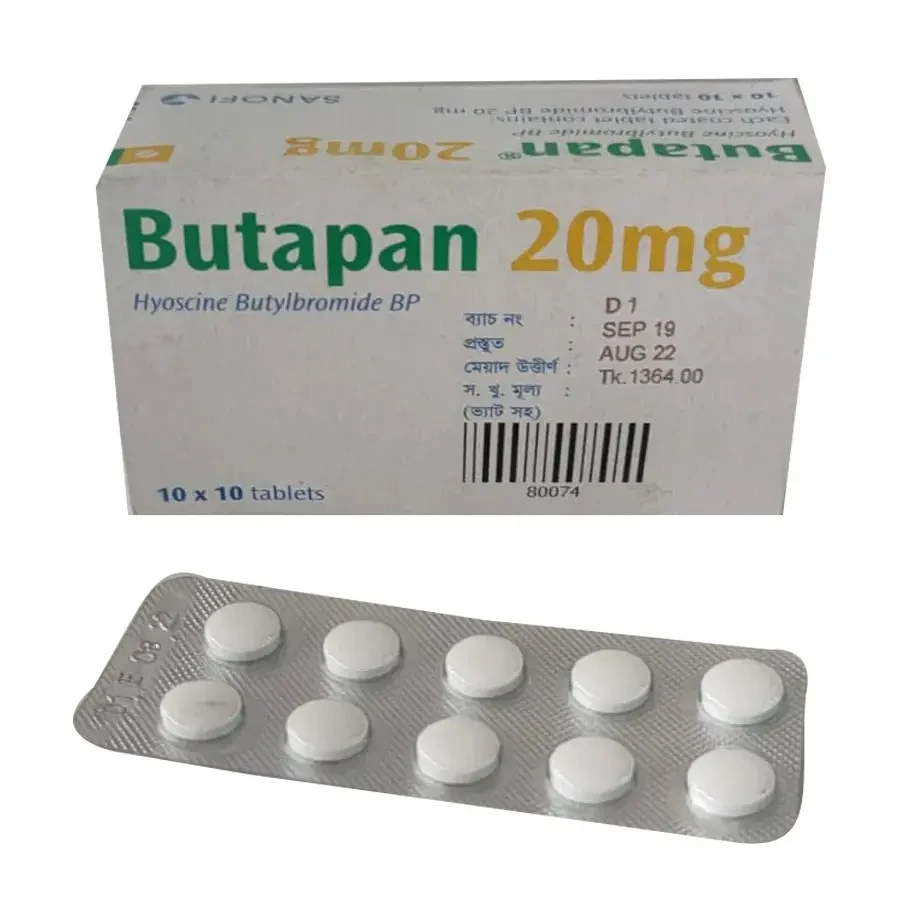
| Brand Name | Hysomide |
|---|---|
| Type | Tablet |
| Weight | 20 mg |
| Generic | Hyoscine Butylbromide |
| Manufacturer | Opsonin Pharma Ltd. |
| Price | Unit: ৳ 13.64 (10 x 10: ৳ 1,364.00) Strip: ৳ 136.40 |
About Hysomide
Hysomide Tablet (Opsonin Pharma Ltd.) is a brand medicine containing the generic Hyoscine Butylbromide . Current listed price in Bangladesh: Unit: ৳ 13.64 (10 x 10: ৳ 1,364.00) Strip: ৳ 136.40.
Medical information for Hysomide Tablet 20 mg
Uses, dosage, side effects, and safety details below apply to Hysomide Tablet 20 mg (generic: Hyoscine Butylbromide). This is general information — consult a doctor before use.
Frequently Asked Questions About Hysomide Tablet 20 mg
1. What is hyoscine butylbromide?
Hyoscine butylbromide is an antispasmodic drug that relaxes smooth muscles in the gastrointestinal, biliary, and urinary tracts to relieve spasms and associated pain.
2. What is hyoscine butylbromide used for?
It is used to treat:
3. How does hyoscine butylbromide work?
It blocks muscarinic receptors, reducing smooth muscle contractions and relieving spasms in the gut and other organs.
4. Is hyoscine butylbromide a prescription drug?
It’s available over-the-counter (OTC) in some countries (e.g., 10 mg tablets) and by prescription for higher doses or injections.
5. Who can take hyoscine butylbromide?
It’s suitable for adults and children over 6, but not for those with glaucoma, myasthenia gravis, or certain bowel obstructions.
6. How is hyoscine butylbromide taken?
It is available as oral tablets, or as an injection (administered by a healthcare provider) for severe cases.
7. What is the typical dosage of hyoscine butylbromide?
Dosage varies:
8. How long does hyoscine butylbromide take to work?
Oral tablets work within 15-30 minutes; injections act faster, within 5-10 minutes.
9. Can hyoscine butylbromide be taken long-term?
It’s usually for short-term relief; long-term use should be monitored by a doctor due to side effects.
10. Does hyoscine butylbromide treat infections?
No, it relieves symptoms like spasms but doesn’t treat underlying infections.
11. What are the common side effects of hyoscine butylbromide?
Common side effects include:
12. Can hyoscine butylbromide cause drowsiness?
Yes, drowsiness is possible, though less common than with hyoscine hydrobromide (used for motion sickness).
13. Does hyoscine butylbromide affect the eyes?
It may cause blurred vision or difficulty focusing due to its anticholinergic effects.
14. Can hyoscine butylbromide be taken with food?
Yes, it can be taken with or without food; food doesn’t significantly affect absorption.
15. What happens if I miss a dose of hyoscine butylbromide?
Take it as soon as you remember unless it’s near the next dose; then skip it. Don’t double up.
16. Can I overdose on hyoscine butylbromide?
Yes, overdose may cause severe dry mouth, rapid heartbeat, or confusion; seek medical help if suspected.
17. Is hyoscine butylbromide safe during pregnancy?
It’s not recommended unless prescribed by a doctor; limited data suggests caution, especially in the first trimester.
18. Can breastfeeding mothers take hyoscine butylbromide?
It’s not advised unless necessary; small amounts may pass into breast milk—consult a doctor.
19. Does hyoscine butylbromide interact with other medications?
Yes, it interacts with:
20. Can I drink alcohol while taking hyoscine butylbromide?
Avoid excessive alcohol; it may increase drowsiness or worsen stomach irritation.
21. Is hyoscine butylbromide safe for people with kidney disease?
Yes, it’s generally safe, but consult a doctor in severe cases as it’s excreted by the kidneys.
22. Can hyoscine butylbromide be used in liver disease?
Yes, it’s metabolized minimally by the liver, so it’s usually safe; consult a doctor if severe.
23. How should hyoscine butylbromide be stored?
Store tablets at room temperature, away from moisture and heat; injections are stored per medical guidelines.
24. Does hyoscine butylbromide expire?
Yes, check the expiration date; expired medication may be less effective.
25. Can hyoscine butylbromide cause dry mouth?
Yes, dry mouth is a common anticholinergic side effect.
26. Is hyoscine butylbromide the same as hyoscine hydrobromide?
No, hyoscine butylbromide targets smooth muscle spasms; hyoscine hydrobromide is used for motion sickness and crosses the brain barrier more readily.
27. Can hyoscine butylbromide treat motion sickness?
No, it’s not effective for motion sickness due to limited central nervous system penetration.
28. Does hyoscine butylbromide cause constipation?
Yes, it may slow gut motility, leading to constipation in some users.
29. Can hyoscine butylbromide help with diarrhea?
It may reduce diarrhea if caused by intestinal spasms, but it’s not a primary treatment.
30. Is hyoscine butylbromide gluten-free?
Most tablet formulations are gluten-free, but check with the manufacturer.
31. Can hyoscine butylbromide tablets be crushed?
Yes, if necessary, but swallowing whole is preferred; consult a pharmacist.
32. What if I’m allergic to hyoscine butylbromide?
Allergic reactions (e.g., rash, swelling) are rare but serious; stop use and seek help.
33. Can hyoscine butylbromide affect urination?
Yes, it may cause urinary retention, especially in men with prostate issues.
34. Does hyoscine butylbromide affect blood pressure?
It may slightly increase heart rate, but significant blood pressure changes are rare.
35. Can hyoscine butylbromide treat gallstones?
It can relieve spasms and pain from gallstones but doesn’t treat the stones themselves.
36. Is hyoscine butylbromide safe for children?
Yes, for children over 6, with age-appropriate dosing under medical advice.
37. Can hyoscine butylbromide cause blurred vision?
Yes, blurred vision is a possible side effect due to its anticholinergic action.
38. Does hyoscine butylbromide need refrigeration?
No, tablets are stored at room temperature; injections may require specific storage—check the label.
39. Can hyoscine butylbromide be used for headaches?
No, it’s not indicated for headaches unless related to abdominal spasms.
40. What’s the difference between hyoscine butylbromide and dicyclomine?
Both are antispasmodics, but hyoscine butylbromide is a quaternary ammonium compound with fewer central effects than dicyclomine.
41. Can hyoscine butylbromide cause heart palpitations?
Yes, it may increase heart rate in some due to its anticholinergic properties.
42. Is hyoscine butylbromide available as a generic?
Yes, it’s available as a generic and under brands like Buscopan.
43. Can hyoscine butylbromide be taken at night?
Yes, it can be taken at any time as needed, though drowsiness may suggest nighttime use.
44. Does hyoscine butylbromide affect the liver?
It has minimal liver metabolism and rarely affects liver function.
45. Can hyoscine butylbromide be used for kidney stones?
Yes, it can relieve ureteral spasms and pain associated with kidney stones.
46. What should I do if I experience severe side effects?
Stop use and contact a doctor, especially for signs like rapid heartbeat or difficulty urinating.
47. Can hyoscine butylbromide cause fatigue?
Yes, drowsiness or fatigue may occur in some users.
48. Does hyoscine butylbromide interact with caffeine?
No significant interaction, but caffeine may counteract drowsiness.
49. Can hyoscine butylbromide be stopped abruptly?
Yes, it can be stopped without tapering, as it’s used as needed or short-term.
Full generic monograph: Hyoscine Butylbromide — uses, dosage & side effects
Medical review
This is general information, not personal medical advice. Consult a doctor before taking any medicine.
Social card


Taking medicines without doctor's advice can cause long-term problems.