Introduction
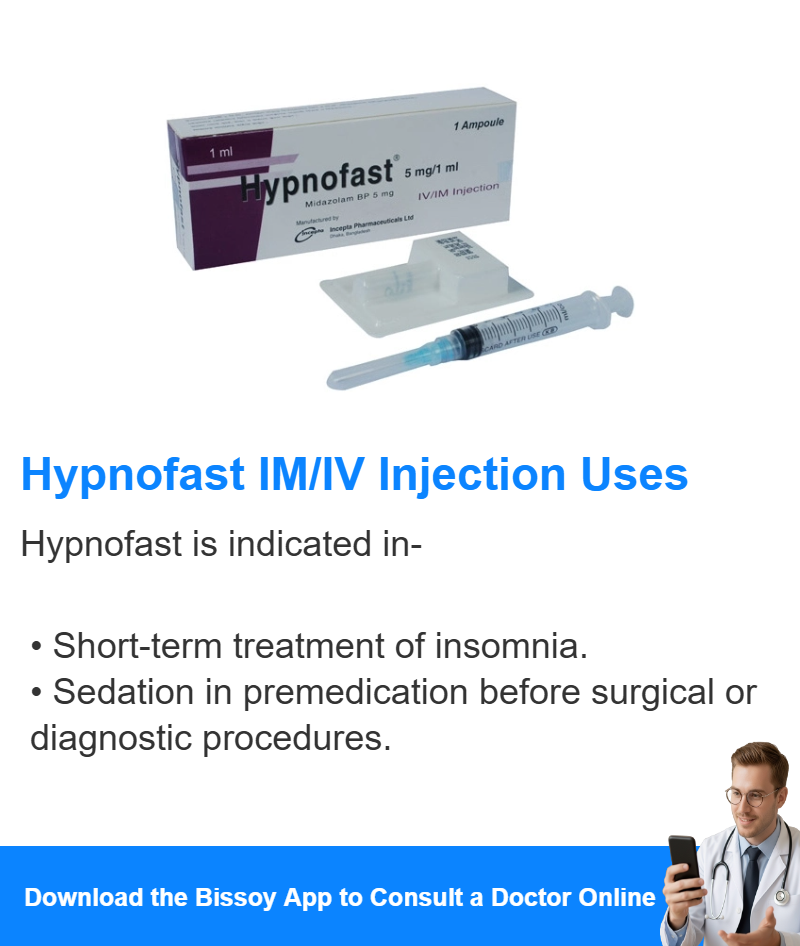
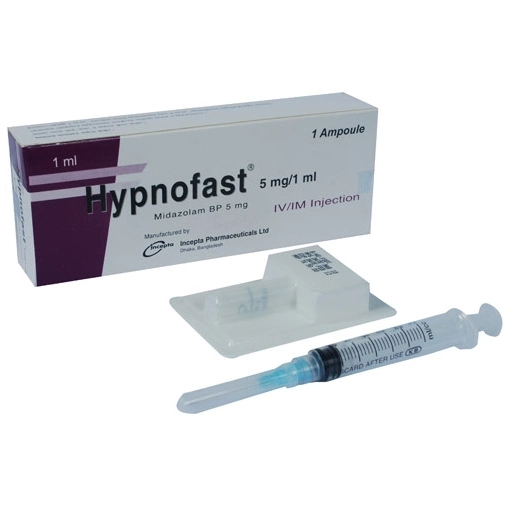
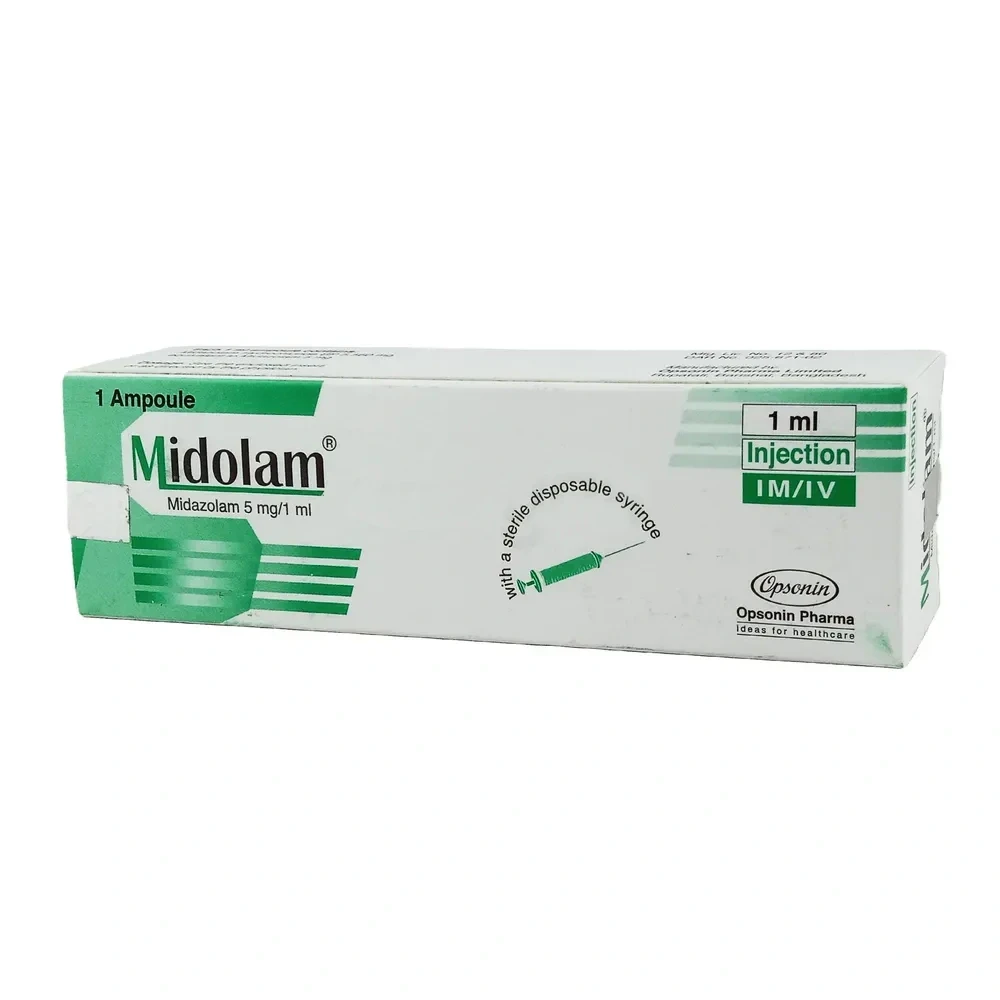
Hypnofast IM/IV Injection 5 mg/ml is a short-acting benzodiazepine with sedative, anxiolytic, hypnotic, amnesic, muscle relaxant, and anticonvulsant properties. It is used for procedural sedation, induction of anesthesia, preoperative sedation, and the treatment of acute seizures, including status epilepticus. It can be administered by oral, intranasal, rectal, intramuscular, or intravenous routes.
Due to its rapid onset and short duration of action, midazolam is widely used in emergency and procedural settings. It should be administered with appropriate monitoring because it may cause respiratory depression and sedation, particularly when used with other central nervous system depressants.
Uses
Hypnofast IM/IV Injection 5 mg/ml is a short-acting injectable benzodiazepine with rapid onset that is commonly used in seizures, anesthesia and anxiety disorders.
Intravenous
Indicated for promoting preoperative sedation, anxiolysis, anesthesia induction, or amnesia.
Intramuscular
Indicated for the treatment of status epilepticus in adults.
Nasal
Indicated for the acute treatment of intermittent, stereotypic episodes of frequent seizure activity (i.e., seizure clusters, acute repetitive seizures) that are distinct from a patient’s usual seizure pattern in patients with epilepsy 12 years of age and older.
Associated Conditions
Pharmacodynamics
General effects
Hypnofast IM/IV Injection 5 mg/ml is a short-acting benzodiazepine central nervous system (CNS) depressant. Pharmacodynamic properties of midazolam and its metabolites, which are similar to those of other benzodiazepine drugs, include sedative, anxiolytic, amnestic, muscle relaxant, as well as hypnotic activities. Benzodiazepines enhance the inhibitory action of the amino acid neurotransmitter gamma-aminobutyric acid (GABA). Receptors for GABA are targeted by many important drugs that affect GABA function and are commonly used in the treatment of anxiety disorder, epilepsy, insomnia, spasticity, and aggressive behavior.
Sedation and memory
The onset of sedation after intramuscular administration in adults is 15 minutes, with maximal sedation occurring 30-60 minutes after injection. In one study of adults, when tested the following day, 73% of the patients who were administered midazolam intramuscularly had no recollection of memory cards shown 30 minutes following drug administration; 40% had no recollection of the memory cards shown 60 minutes after drug administration. Onset time of sedative effects in pediatric patients begins within 5 minutes and peaks at 15-30 minutes depending upon the dose administered. In the pediatric population, up to 85% had no memory of pictures shown after receiving intramuscular midazolam compared to 5% of the placebo control group.
Sedation in both adult and pediatric patients is reached within 3 to 5 minutes post intravenous (IV) injection. The time of onset is affected by the dose administered and the simultaneous administration of narcotic pre-medication. Seventy-one (71%) percent of the adult patients in clinical endoscopy studies had no memory of insertion of the endoscope; 82% of the patients had no memory of withdrawal of the endoscope.
Anesthesia induction
When midazolam is administered intravenously (IV) for anesthetic induction, induction of anesthesia occurs in about 1.5 minutes when narcotic pre-medication has been given and in 2 to 2.5 minutes without narcotic pre-medication/ other sedative pre-medication. Impairment in a memory test was observed in 90% of the patients.
Mechanism of Action
The actions of benzodiazepines such as midazolam are mediated through the inhibitory neurotransmitter gamma-aminobutyric acid (GABA), which is one of the major inhibitory neurotransmitters in the central nervous system. Benzodiazepines increase the activity of GABA, thereby producing a sedating effect, relaxing skeletal muscles, and inducing sleep, anesthesia, and amnesia. Benzodiazepines bind to the benzodiazepine site on GABA-A receptors, which potentiates the effects of GABA by increasing the frequency of chloride channel opening. These receptors have been identified in different body tissues including the heart and skeletal muscle, although mainly appear to be present in the central nervous system.
Absorption
Oral Absorption: Rapidly absorbed after oral administration. The absolute bioavailability, if given intramuscularly (IM), is greater than 90% . Due to first pass metabolism, only 40-50% of the administered oral dose reaches the circulation. The absolute bioavailability of the midazolam syrup in pediatric patients is about 36%.
Intramuscular Absorption: The mean peak concentration (Cmax) and time to peak (Tmax) following the IM dose was 90 ng/mL (20% CV) and 0.5 hour (50% CV).
Rectal administration: After rectal administration midazolam is absorbed rapidly. Maximum plasma concentration is reached within 30 minutes. The absolute bioavailability is approximately 50%.
Intranasal Administration: Hypnofast IM/IV Injection 5 mg/ml is absorbed rapidly after intranasal administration. Mean peak plasma concentrations are reached within 10.2 to 12.6 minutes. The bioavailability is between 55 and 57%.
Volume of Distribution
Female gender, old age, and obesity may increase the volume of distribution. Hypnofast IM/IV Injection 5 mg/ml may also cross the placenta and has been detected in human milk and cerebrospinal fluid.
Intravenous administration
1.24 to 2.02 L/kg [pediatric patients (6 months to 12
Intramuscular administration
The mean apparent volume of distribution of midazolam after a single IM dose of 10 mg midazolam in healthy adults was 2117 (±845.1) mL/kg.
Protein Binding
Hypnofast IM/IV Injection 5 mg/ml is approximately 97% bound to plasma protein, mainly albumin, in adults. The 1-hydroxy metabolite is approximately 89% bound to plasma protein.
Route of Elimination
The α-hydroxymidazolam glucuronide conjugate of midazolam is excreted in urine. No significant amount of parent drug or metabolites is found in urine before beta-glucuronidase and sulfatase deconjugation, suggesting that the urinary metabolites are excreted mainly as conjugates. The amount of midazolam excreted unchanged in the urine when given intravenously is less than 0.5%. 45% to 57% of the dose was excreted in the urine as 1-hydroxymethyl midazolam conjugate.
Plasma clearance of midazolam is higher in patients that remain in supine position, because of a 40-60 percent increase in hepatic blood flow during supination. Pregnancy may also increase the metabolism of midazolam.
Half Life
Intravenous: healthy adults = 1.8 to 6.4 hours (mean of 3 hours).
Intramuscular: Following IM administration of 10 mg midazolam, mean (±SD) elimination half-life was 4.2 (±1.87) hours.
Clearance
Intramuscular: apparent total body clearance, 367.3 (±73.5) mL/hr/kg. Intravenous: total clearance (Cl), 0.25 to 0.54 L/hr/kg
Toxicity
LD50=215 mg/kg, in rats.
Overdose
Signs of overdose include sedation, somnolence, confusion, impaired coordination, diminished reflexes, coma, and deleterious effects on vital signs. Serious cardiorespiratory adverse reactions have occurred, sometimes ending in death or permanent neurologic effects, after the administration of midazolam.
A note on cardiac and respiratory depression
After administration of midazolam, continuous monitoring of respiratory and cardiac function is recommended until the patient is in stable condition. Serious and life-threatening cardiorespiratory adverse reactions, including hypoventilation, airway obstruction, apnea, and hypotension have been reported with the use of midazolam. Patients should be monitored in a setting with immediate access to resuscitative drugs if they are required. Resuscitation equipment and personnel trained in their use and skilled in airway management should be available when midazolam is administered.
The usual recommended intramuscular pre-medicating doses of midazolam do not depress the ventilatory response to carbon dioxide stimulation to a clinically significant extent in adults. Intravenous induction doses of midazolam depress the ventilatory response to carbon dioxide stimulation for at least 15 minutes longer than the duration of ventilatory depression following administration of thiopental in adults. Impairment of ventilatory response to carbon dioxide is more severe in adult patients diagnosed with chronic obstructive pulmonary disease (COPD).
A note on dependence
When midazolam is used in long-term sedation in the ICU (intensive care unit) or other settings, physical dependence on midazolam may develop. The risk of dependence increases with dose and duration of treatment; this risk is also greater in patients with a medical history of substance abuse.
Special caution should be exercised when administering midazolam in the following populations
High-risk patients include adults over 60 years of age, chronically ill or debilitated patients, which may include patients with chronic respiratory insufficiency, patients with chronic renal failure, impaired hepatic function or with impaired cardiac function, pediatric patients (especially those with cardiovascular instability). These high-risk patients require lower dosages and should be monitored on a continuous basis for early signs of alterations of vital functions, so that appropriate management may be administered.
Mutagenesis
Hypnofast IM/IV Injection 5 mg/ml was negative for genotoxicity during in vitro and in vivo assays.
Impairment of Fertility
When midazolam (0, 1, 4, or 16 mg/kg) was given orally to male and female rats before and during mating and continuing in females throughout gestation and lactation, no adverse effects on male or female fertility were observed. Hypnofast IM/IV Injection 5 mg/ml plasma exposures (AUC) at the highest dose tested were approximately 6 times that in humans at the recomended human dose.
Food Interactions
- Avoid grapefruit products.
Dosage
- For adults: 7.5-15 mg daily.
- In elderly and debilitated patients: The recommended dose is 7.5 mg.
- In premedication: 15 mg of Hypnofast IM/IV Injection 5 mg/ml should be given 30-60 minutes before the procedure.
- Endoscopic or Cardiovascular Procedures: In healthy adults, the initial dose is approximately 2.5 mg. In cases of severe illness and in elderly patients, the initial dose must be reduced to 1 to 1.5 mg.
- Induction of Anesthesia: The dose is 10-15 mg.
- Adult: 0.07-0.1 mg/kg body weight. The usual dose is about 5 mg.
- Children: 0.15-0.20 mg/kg
- Elderly and debilitated patients: 0.025-0.05 mg/kg
- For preoperative sedation: Rectal administration of the ampoule solution (0.35-0.45 mg/kg) 20-30 min. before induction of general anesthesia.