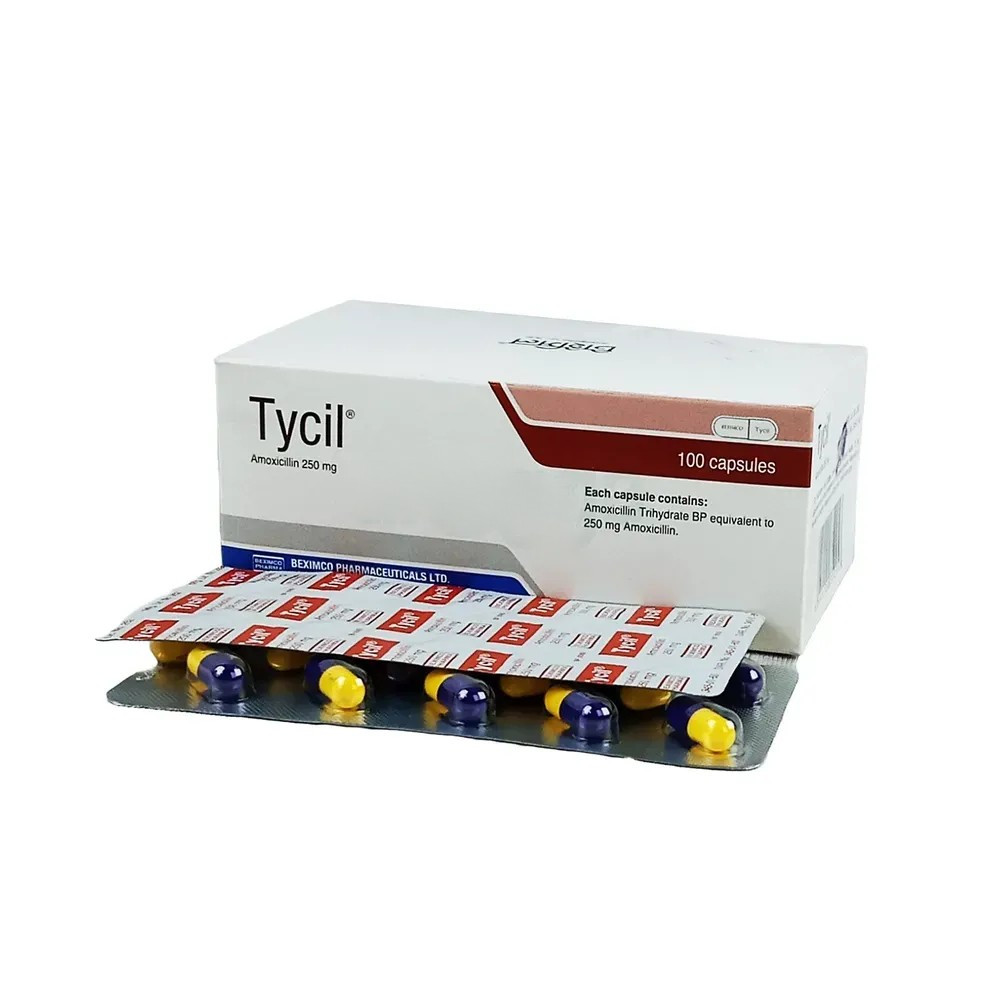
Introduction

Hiconcil Capsule 250 mg is a broad-spectrum penicillin antibiotic used to treat a wide range of bacterial infections. It is effective against various Gram-positive and Gram-negative bacteria. Amoxicillin is commonly prescribed for infections of the respiratory tract, urinary tract, skin, and soft tissues, as well as for certain sexually transmitted infections.

Uses

Amoxicillin is used to treat numerous bacterial infections, including:

  • Respiratory tract infections (e.g., pneumonia, bronchitis)
  • Urinary tract infections (e.g., cystitis, pyelonephritis)
  • Skin and soft tissue infections (e.g., cellulitis, impetigo)
  • Otitis media (ear infections)
  • Sinusitis
  • Helicobacter pylori eradication in peptic ulcer disease (usually in combination with other medications)
  • Gonorrhea (a sexually transmitted infection)
Brand Name Hiconcil
Type Capsule
Weight 250 mg
Generic Amoxicillin Trihydrate
Manufacturer Medimet Pharmaceuticals Ltd.
Available in English বাংলা

Mechanism of Action

Amoxicillin works by inhibiting the synthesis of bacterial cell walls. It binds to penicillin-binding proteins (PBPs) located on the bacterial cell wall, preventing the cross-linking of peptidoglycan layers. This disruption weakens the cell wall, leading to cell lysis and death of the bacteria.

How Long Does It Take to Work?

Amoxicillin generally begins to work within a few hours after administration. For most infections, clinical improvement is seen within 48 to 72 hours. However, it may take several days to achieve full therapeutic effects, depending on the severity and type of infection.

Absorption

Amoxicillin is well-absorbed from the gastrointestinal tract. It reaches peak plasma concentrations approximately 1 to 2 hours after oral administration. The bioavailability of amoxicillin is approximately 75% to 90%, making it highly effective when taken orally.

Route of Elimination

Amoxicillin is primarily eliminated via the kidneys. It is excreted in the urine as unchanged drug, with about 60% to 70% of the dose being excreted within 6 to 8 hours after administration. A small portion is also metabolized in the liver.

Dosage

Adult: 250 mg three times daily, increasing up to 500 mg three times daily for severe infections.

Children (up to 10 years of age) : 125 mg three times daily, increasing up to 250 mg three times daily for severe infections.
  • Severe or recurrent purulent respiratory infection: 3 gm every 12 hours.
  • Otitis media: Recommended dose is 1 g three times daily for adult and 40 mg/kg body weight daily in 3 divided doses for children (max. 3 g daily).
  • Pneumonia: Recommended dose is 500-1000 mg three times daily.
  • Dental abscess: Recommended dose is 3 gm, repeated after 10-12 hours.
  • Urinary tract infections: Recommended dose is 3 gm, repeated after 10-12 hours.
  • Gonorrhoea: Single dose of 2-3 gm with Probenecid 1 gm is recommended (Probenecid is contraindicated in children under 2 years).
  • In renal impairment: it may be necessary to reduce the total daily dosage.

The dosage of amoxicillin depends on the type and severity of the infection:

  • For adults and children over 40 kg: 500 mg every 8 hours or 875 mg every 12 hours. For more severe infections, the dose may be increased to 1 gram every 8 hours.
  • For children (depending on weight): 20 to 40 mg/kg/day divided into 3 doses. The maximum recommended dose is typically 1 gram per day.
  • For Helicobacter pylori eradication: 1 gram twice daily in combination with other agents for 10 to 14 days.

Administration

Amoxicillin is administered orally in the form of tablets, capsules, or liquid suspension. It can be taken with or without food, but taking it with food may help reduce gastrointestinal discomfort. Extended-release formulations are available for certain indications.

Side Effects

Common side effects of amoxicillin include:

  • Nausea
  • Diarrhea
  • Rash
  • Headache
  • Abdominal pain

Serious side effects can include:

  • Severe allergic reactions (e.g., anaphylaxis, angioedema)
  • Clostridium difficile-associated diarrhea
  • Hepatic dysfunction (elevated liver enzymes)
  • Blood dyscrasias (e.g., eosinophilia, thrombocytopenia)

Toxicity

Signs of amoxicillin toxicity may include gastrointestinal symptoms such as severe nausea, vomiting, and diarrhea. In severe cases, it may lead to kidney damage or liver dysfunction. Treatment for overdose typically involves supportive care, hydration, and symptomatic management. Hemodialysis may be used in severe cases to accelerate elimination.

Precautions

Precautions for amoxicillin use include:

  • Monitor for signs of allergic reactions, particularly if there is a history of penicillin allergy.
  • Use with caution in patients with renal impairment, as dosage adjustments may be necessary.
  • Monitor for gastrointestinal adverse effects, especially if there is a history of gastrointestinal disease.
  • Long-term use may lead to superinfection by non-susceptible organisms, including fungi.

Interaction

Amoxicillin may interact with several medications, including:

  • Probenecid, which can increase amoxicillin levels by decreasing its renal clearance.
  • Oral contraceptives, where efficacy may be reduced, though evidence is mixed.
  • Anticoagulants (e.g., warfarin), which may have an increased risk of bleeding when used concurrently with amoxicillin.

Disease Interaction

Amoxicillin should be used with caution in patients with:

  • Renal impairment, as dosing adjustments may be required.
  • Gastrointestinal diseases, particularly colitis or other chronic conditions.
  • Mononucleosis, where amoxicillin can cause a rash.

Drug Interaction

Drug interactions to be aware of include:

  • Anticoagulants such as warfarin, which may require monitoring and dose adjustment.
  • Live bacterial vaccines (e.g., typhoid vaccine), which may be less effective when used with amoxicillin.
  • Other antibiotics, which can have additive or antagonistic effects on bacterial flora.

Food Interactions

Food interactions are minimal with amoxicillin. It can be taken with or without food. However, taking it with food may help reduce gastrointestinal discomfort.

Pregnancy Use

Amoxicillin is classified as a Category B drug for pregnancy. It is generally considered safe to use during pregnancy, but it should be used only if the potential benefits outweigh the risks. Always consult a healthcare provider before use during pregnancy.

Lactation Use

Amoxicillin is excreted into breast milk in small amounts. It is generally considered safe for use during lactation, but it is important to monitor the infant for any potential adverse effects, such as gastrointestinal upset or rash. Consult a healthcare provider for advice if concerns arise.

Acute Overdose

Acute overdose of amoxicillin may lead to gastrointestinal symptoms such as severe nausea, vomiting, and diarrhea. Management typically involves supportive care, hydration, and symptomatic treatment. In severe cases, hemodialysis may be considered to help remove the drug from the body.

Contraindication

Amoxicillin is contraindicated in individuals with:

  • Known hypersensitivity to amoxicillin or other penicillins.
  • Severe allergic reactions to beta-lactam antibiotics.

Use Direction

Amoxicillin should be taken exactly as prescribed by a healthcare provider. Complete the full course of therapy, even if symptoms improve before finishing the medication, to ensure eradication of the infection and to prevent resistance. Follow the prescribed dosage and frequency, and do not alter the dose without consulting a healthcare provider.

Storage Conditions

Store amoxicillin tablets or suspension at room temperature, away from moisture and direct sunlight. Keep the medication in its original container and out of reach of children. Liquid forms should be refrigerated and shaken well before use. Follow any specific storage instructions provided by the manufacturer or pharmacist.

Volume of Distribution

The volume of distribution of amoxicillin is approximately 0.3 L/kg. This indicates that the drug is distributed throughout various body tissues and fluids, including the respiratory tract, urinary tract, and skin.

Half Life

The half-life of amoxicillin is approximately 1 to 1.5 hours in healthy adults. This relatively short half-life necessitates multiple daily doses to maintain effective drug levels in the body.

Clearance

Amoxicillin is primarily cleared from the body via the kidneys. The clearance rate is approximately 0.7 to 1 L/hour in healthy adults. In individuals with renal impairment, the clearance may be reduced, necessitating dose adjustments.

See in details version Hiconcil Capsule 250 mg also Hiconcil Capsule 250 mg in bangla

Some Frequently Asked Questions About Hiconcil Capsule 250 mg

*** Taking medicines without doctor's advice can cause long-term problems.
Related Medicines