Introduction
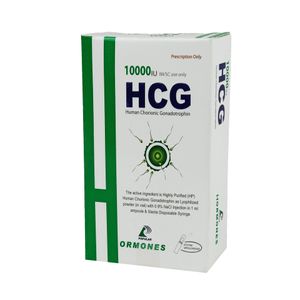
HCG IM Injection 5000 IU/vial (hCG) is a hormone produced by the placenta during pregnancy. It is also used as a medication in various clinical settings. In medicine, hCG is utilized for its role in fertility treatments and in managing certain hormonal imbalances.
Uses
hCG is used in various therapeutic contexts, including:
- Fertility treatments: To stimulate ovulation in women undergoing assisted reproductive technologies and to treat male infertility.
- Hormonal therapy: To treat hypogonadism and certain other conditions related to hormone production.
- Weight loss: Though not widely recommended due to lack of strong evidence, some use hCG as part of a weight-loss regimen.
Mechanism of Action
hCG mimics the action of luteinizing hormone (LH), which plays a crucial role in regulating reproductive processes. In women, it stimulates the ovaries to produce eggs and maintain the corpus luteum, which supports early pregnancy. In men, it stimulates the testes to produce testosterone and sperm.
How Long Does It Take to Work?
The effects of hCG can vary depending on the use:
- For fertility treatments, ovulation typically occurs within 36 to 48 hours after administration.
- In men, hCG therapy for testosterone production may take several weeks to show noticeable effects.
Absorption
hCG is administered via injection, either intramuscularly or subcutaneously. Once injected, it is absorbed into the bloodstream where it exerts its hormonal effects.
Route of Elimination
hCG is metabolized and cleared from the body primarily through the kidneys. It is excreted in the urine, and its levels can be measured to monitor therapy effectiveness.
Dosage
After addition of the solvent to the freeze-dried substance, the reconstituted Human Menopausal Gonadotrophin solution should be slowly administered intramuscularly.In the female: Ovulation induction and preparation of follicles for puncture: Usually, one injection of 5000- 10000IU Human Menopausal Gonadotrophin to complete treatment with an FSH-containing preparation.
Luteal phase support: Two repeat injections of 2500 to 5000IU. Each may be given within nine days following ovulation or embryo transfer (for example on day 3, 6 and 9 after ovulation induction).
Threatened & habitual abortion: 5000IU Human Menopausal Gonadotrophin will be given as deep intramuscular injection twice weekly from the time of diagnosis (all before the 7th week of gestation)
In the male: Hypogonadotropic hypogonadism: 2500 to 5000 IU Human Menopausal Gonadotrophin, two times per week. If the main complaint is sterility, additional doses of an FSH-containing (50IU FSH) are to be administered daily or two to three times a week. This treatment should be continued for at least three months before any improvement in spermatogenesis can be expected. During this treatment testosterone replacement therapy should be suspended. Once achieved, the improvement may in some cases be maintained by Human Menopausal Gonadotrophin alone.
The dosage of hCG depends on the specific indication:
- For fertility treatment, doses typically range from 5,000 to 10,000 IU, administered once or multiple times based on the treatment protocol.
- For managing hypogonadism, doses may vary, often starting from 1,000 to 2,000 IU, administered several times a week.
Administration
hCG is administered via injection, with common routes being intramuscular or subcutaneous. The administration technique and frequency depend on the condition being treated and the specific protocol prescribed by the healthcare provider.
Side Effects
Common side effects of hCG include:
- Injection site reactions such as pain, redness, or swelling.
- Headaches, nausea, or fatigue.
- In women, ovarian hyperstimulation syndrome (OHSS) in rare cases.
Toxicity
Toxicity from hCG is rare when used appropriately. Overuse or misuse may lead to more severe side effects or complications such as OHSS. Regular monitoring by a healthcare provider can help mitigate risks and manage any adverse effects.
Precautions
Precautions include:
- Monitoring for signs of OHSS in women undergoing fertility treatments.
- Assessing hormone levels and patient response regularly.
- Not using hCG in individuals with certain health conditions, such as uncontrolled thyroid disorders or specific types of cancer.
Interaction
hCG may interact with other medications and therapies. It is important to inform healthcare providers of all current medications and treatments to avoid potential interactions and manage any combined effects.
Disease Interaction
Special caution is needed for patients with:
- Endocrine disorders that may affect hormone levels.
- History of hormone-sensitive cancers, such as breast or prostate cancer.
Drug Interaction
hCG can interact with other hormone therapies and medications. Potential interactions should be discussed with a healthcare provider to adjust doses and manage any combined effects effectively.
Food Interactions
There are no specific food interactions with hCG. However, maintaining a balanced diet is important for overall health and effectiveness of the treatment.
Pregnancy Use
hCG is used in fertility treatments to support early pregnancy. However, its use during pregnancy is generally restricted to specific medical indications under careful supervision. Consult a healthcare provider for guidance on its use in pregnancy-related conditions.
Lactation Use
hCG is considered safe during lactation, but it is important to consult with a healthcare provider to ensure that the medication does not interfere with breastfeeding or affect the infant.
Acute Overdose
Acute overdose of hCG is unlikely with proper dosing, but if an overdose occurs, it may cause severe side effects such as OHSS or hormone imbalances. Immediate medical attention should be sought in the event of an overdose.
Contraindication
hCG is contraindicated in:
- Individuals with hypersensitivity to hCG or any of its components.
- Patients with hormone-sensitive cancers or severe endocrine disorders.
Use Direction
Follow the prescribed dosage and administration instructions carefully. Regular monitoring and follow-up with a healthcare provider are essential for effective and safe use of hCG. Ensure that any concerns or side effects are reported promptly.
Storage Conditions
hCG should be stored according to the manufacturer’s guidelines, typically in a refrigerator (2°C to 8°C). Avoid freezing and protect from light. Proper storage helps maintain the stability and efficacy of the medication.
Volume of Distribution
The volume of distribution for hCG is not typically measured as it is a hormone administered to affect specific physiological processes. Its action is localized primarily to the reproductive system and hormonal regulation.
Half Life
hCG has a biological half-life of approximately 24 to 36 hours, depending on the route of administration and individual patient factors. This indicates the time required for half of the drug to be cleared from the bloodstream.
Clearance
hCG is cleared from the body mainly through renal excretion. Its clearance rate is influenced by the individual’s renal function and overall health. Monitoring is important to ensure effective and safe levels of the hormone in the body.